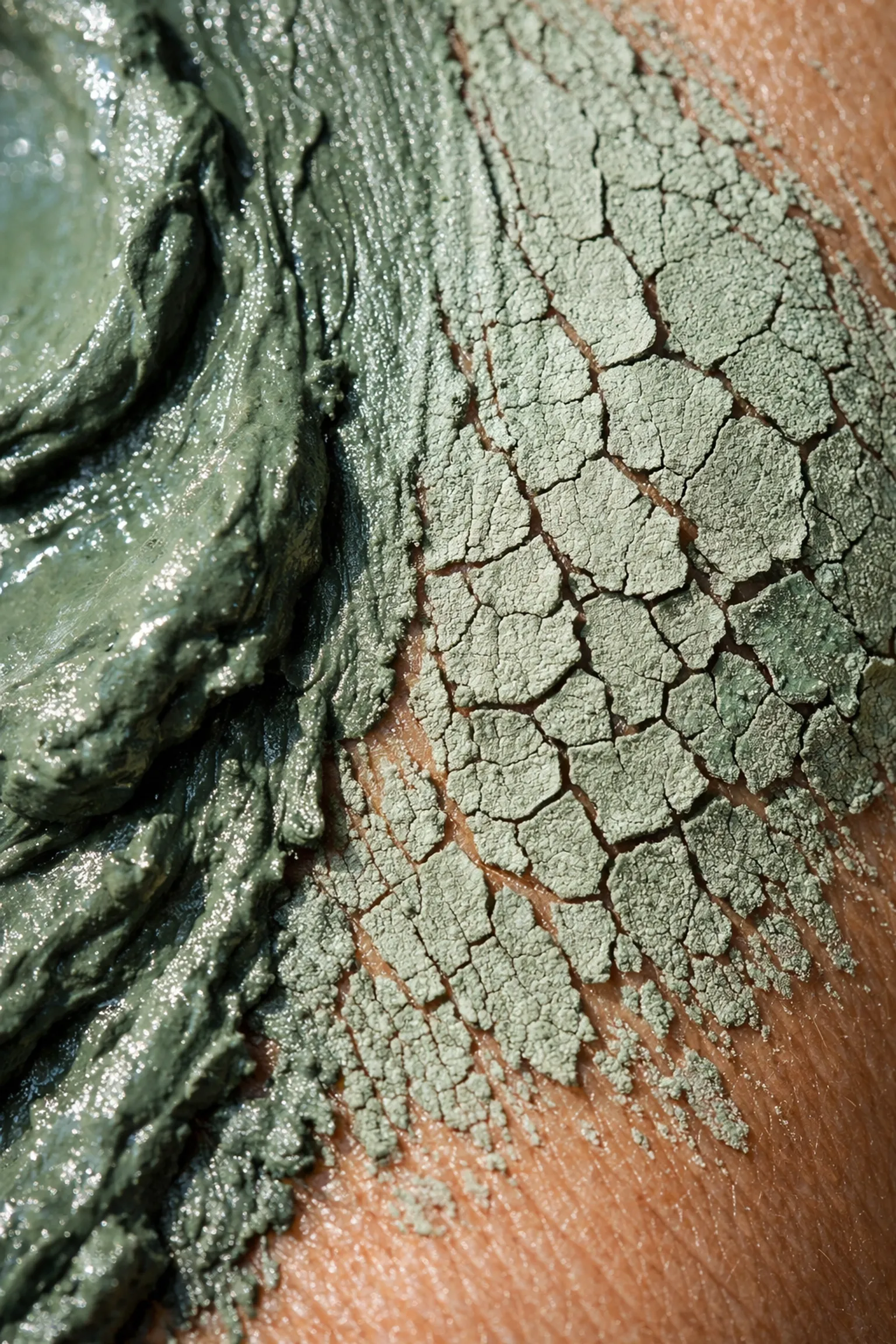
Ever wonder if you're jumping on some trendy wellness bandwagon when you slather on that clay mask? Here's the thing that might blow your mind: humans have been using healing clay for literally tens of thousands of years. We're talking about one of the oldest natural remedies known to our species.
So just how long has healing clay been around? The answer takes us on a fascinating journey through prehistoric caves, ancient Egyptian tombs, and indigenous healing traditions that span every continent on Earth.
The Prehistoric Beginnings
Let's start at the very beginning. Before humans even figured out agriculture or built the first cities, our ancient ancestors were already onto something pretty amazing. Archaeological evidence shows that homo erectus and homo neanderthalensis were mixing ochres with water and different types of mud to treat wounds, soothe skin irritations, and clean themselves.
Think about that for a second. These early humans, without any scientific understanding of minerals or chemistry, instinctively knew clay could help them heal. How did they figure this out? Most researchers believe they learned by watching animals. Ever seen a pig roll in mud when it's injured? Or noticed how elephants cover themselves in clay to protect their skin from the sun and insects? Our ancestors were smart enough to connect the dots.

The First Written Records
The first recorded use of medicinal clay that we know of appears on Mesopotamian clay tablets from around 2500 BC. That's over 4,500 years ago! These ancient texts describe clay being used for everything from digestive issues to skin problems. But here's what's really wild - they were already sophisticated enough to distinguish between different types of clay for different purposes.
The ancient Egyptians took clay use to the next level. Pharaohs' physicians employed clay as anti-inflammatory agents and antiseptics. And yes, that includes the famous Cleopatra, who used clay from the Nile River and Arabian desert over 1,800 years ago as part of her legendary beauty routine. Talk about being ahead of her time!
The Greeks weren't about to be left out either. The philosopher Aristotle (384-322 BC) made the first known written reference to humans deliberately eating clay for therapeutic and religious purposes. Meanwhile, the Romans were documenting their own clay treatments around 60 BC, proving this wasn't just some passing fad but a serious medical practice.
Ancient Medicine Systems Across the World
Here's where it gets really interesting. While all this was happening in the Mediterranean and Middle East, completely separate civilizations were independently discovering the same healing properties of clay.
Traditional Chinese medicine and Ayurveda (India's ancient medical system) have both known about healing clay's beneficial effects for thousands of years. These weren't just folk remedies either - they were sophisticated medical traditions that carefully catalogued which clays worked best for different conditions.
In medieval Europe, healing clay became such valuable medicine that it was traded internationally under specific names like "Bolus Armenicus" and "Terra sigillata." These weren't just fancy marketing terms - they indicated specific types of clay from particular regions, much like how we might specify "French green clay" today.
Indigenous Wisdom Around the Globe
One of the most fascinating aspects of healing clay's history is how indigenous cultures worldwide developed their own clay traditions, completely independently of each other. This suggests that the healing properties of clay are so obvious and effective that humans keep "discovering" them over and over again.
American Indian tribes used clays for ceremonial healing procedures and everyday medicine. Many tribes carried balls of dried clay in their bags, dissolving them in water to drink with meals as protection against food poisoning - pretty smart for people without modern toxicology knowledge!
The Aztecs employed kaolin clay specifically for treating burns and insect bites. African tribes developed their own clay healing traditions. Australian Aboriginal peoples used ochres and clays for both ceremonial and medicinal purposes. No matter where you look on the globe, you'll find indigenous people who figured out that clay could heal.
The Modern Rediscovery
So if clay was such amazing medicine for thousands of years, why did it seem to disappear from mainstream use? The answer is pretty much what you'd expect - as modern pharmaceutical medicine developed in the 19th and 20th centuries, many traditional remedies got pushed aside.
But healing clay didn't stay forgotten for long. It was rediscovered in the 19th century by naturopathic pioneer Sebastian Kneipp and later marketed by Adolf Just. This established what we now consider the modern approach to healing earth treatments.
Interestingly, specific types of clay like bentonite have more recent naming histories. Bentonite clay got its name from Fort Benton, Wyoming, where large deposits were discovered in the 1890s. But the clay itself - formed from aged volcanic ash - has been around for millions of years and used by local indigenous peoples long before it got its official scientific name.
Why This Ancient Wisdom Matters Today
When you really think about it, healing clay has one of the longest track records of any natural remedy. We're talking about 50,000+ years of human use across every continent and culture. That's not a coincidence or a fluke - that's evidence.
Modern science is finally catching up to what our ancestors knew instinctively. We now understand that certain clays can draw out toxins, provide essential minerals, and support skin health through mechanisms our prehistoric ancestors couldn't have explained but definitely experienced.
The fact that healing clay has survived and thrived through the rise and fall of empires, the development of modern medicine, and our current tech-obsessed age says something pretty profound about its effectiveness.
Today, as more people look for natural alternatives to chemical-heavy products, we're essentially rediscovering (again!) what humans have known for millennia. The only difference is now we have the science to understand why clay works, not just that it works.
Whether you're dealing with skin issues, looking for natural detox support, or just wanting to connect with one of humanity's oldest healing traditions, you're participating in something that connects you to literally thousands of generations of humans who came before you.
Pretty amazing for something you can literally dig out of the ground, right?