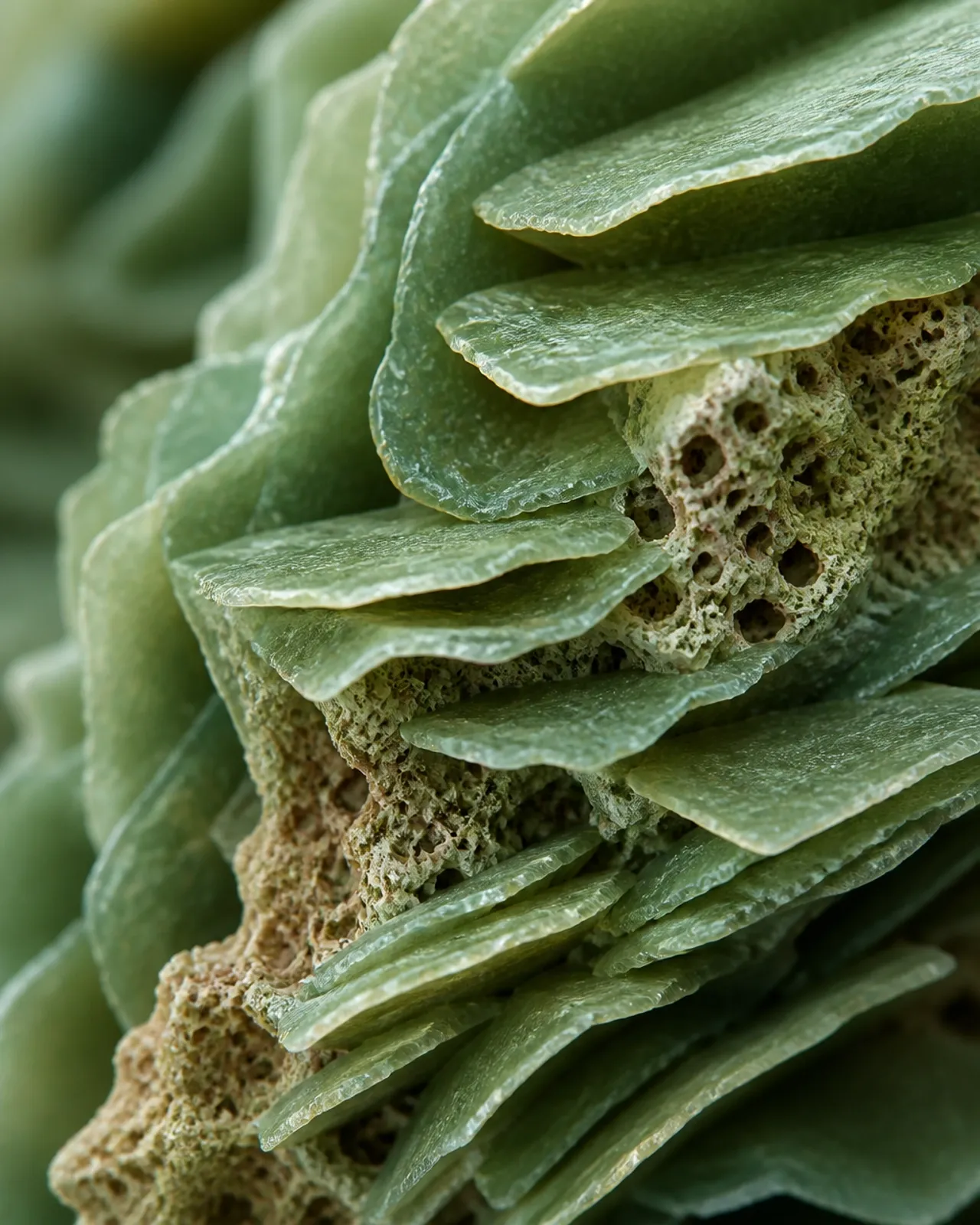
The therapeutic power of healing clay lies not in any single ingredient, but in its complex mineral symphony. While most people focus on clay's ability to "detox" or "cleanse," the real science reveals something far more fascinating: how specific minerals work together to create measurable health benefits.
Recent mineralogical research shows that healing clay's effectiveness stems from its unique combination of trace elements, clay minerals, and ionic properties. This isn't just ancient wisdom: it's modern science explaining why certain clays consistently outperform others in clinical applications.
The Core Mineral Matrix That Powers Healing Clay
Authentic healing clay contains a sophisticated blend of bioactive minerals that work synergistically. The primary players include:
Silica (Silicon Dioxide): Forms the structural backbone of clay minerals and directly supports collagen synthesis in human tissue. Research from Cambridge University shows that high-quality French green clays contain optimal silica ratios for therapeutic use.
Iron Oxides: Responsible for clay's characteristic color and provide antimicrobial properties. The specific form of iron: whether hematite, maghemite, or goethite: determines the clay's oxidative capacity.
Magnesium and Potassium: These alkaline earth metals regulate cellular ion exchange and support muscle function. Quality varies dramatically between clay sources.
Montmorillonite Structure: This expandable clay mineral creates the "cation exchange capacity" that allows healing clay to swap harmful ions for beneficial ones.

The mineral diversity isn't random: geological formation over thousands of years creates specific ratios that optimize therapeutic potential. This explains why French green clay has documented benefits that generic bentonite simply can't match.
How Mineral Synergy Creates Therapeutic Effects
Individual minerals are useful, but mineral combinations create exponential benefits. Here's how the synergy works:
Ion Exchange Mechanism: Clay's negative charge attracts positively charged toxins while releasing beneficial minerals. This isn't passive absorption: it's active molecular exchange. Scientific studies demonstrate how specific mineral combinations enhance this process.
pH Buffering System: Multiple minerals work together to maintain optimal pH for skin healing and cellular function. Pure montmorillonite alone can't achieve this stability.
Bioavailability Enhancement: Trace minerals in clay form become more bioavailable than synthetic supplements because they're naturally chelated within the clay matrix.
Antimicrobial Cascade: Iron, aluminum, and silica work together to disrupt bacterial cell walls through multiple pathways simultaneously.
This explains why Clayer's certified French green clay consistently outperforms generic alternatives. The mineral profile has been verified through third-party testing to ensure optimal ratios.
Specific Minerals and Their Targeted Health Benefits
Aluminum Silicates: Often misunderstood, aluminum in clay form is bound within stable mineral structures and actually supports detoxification. However, toxic clay contamination studies show why mineral purity matters: contaminated clays can introduce harmful elements instead.
Trace Selenium and Zinc: Present in authentic healing clays at therapeutic levels. These support immune function and wound healing at the cellular level.
Calcium Carbonate: Provides alkalizing effects and supports bone health when clay is used internally under proper guidance.
Titanium Dioxide: Natural UV protection and antimicrobial enhancement, explaining clay's historical use for sun protection.
The key insight from recent research is that therapeutic effects emerge from mineral combinations, not individual components. This is why brands like Aztec Secret, despite popularity, often fall short: their mineral profiles lack the complexity of properly sourced French green clay.
Mineralogical Differences Between Clay Types
Not all clays are created equal. Here's what separates therapeutic-grade clays from commercial alternatives:
French Green Clay (Illite-Montmorillonite): Contains optimal iron oxide levels (2-5%) and diverse trace minerals. Clayer's studies demonstrate superior mineral bioavailability compared to generic sources.
Bentonite (Montmorillonite-Heavy): High swelling capacity but often lacks trace minerals. Brands like Redmond Clay source from Wyoming deposits with limited mineral diversity.
Rhassoul Clay: Rich in silica and magnesium but lacks the iron content needed for antimicrobial effects.
Kaolin: Gentle but minimal therapeutic minerals: better for sensitive applications than healing.

The mineral diversity gap becomes obvious when comparing common green clay mistakes that stem from using inferior clay sources.
The Heavy Metal Factor: Why Mineral Purity Matters
Here's where most clay companies fail: they don't test for contaminants that can overwhelm beneficial minerals. Lead contamination studies reveal that many popular clay brands contain harmful levels of heavy metals that negate therapeutic benefits.
Quality healing clay should be tested for:
- Lead levels below 10 ppm
- Arsenic content below 3 ppm
- Mercury and cadmium minimization
- Radioactive element screening
Clayer's Ecocert certification includes heavy metal testing that most competitors skip. This isn't optional: contaminated minerals can cause more harm than benefit.
Brands like Argiletz and Sky Organics often lack this level of testing, making their mineral profiles unreliable for therapeutic use.
Clinical Applications Based on Mineral Profiles
Skin Healing: Silica + iron + magnesium combinations accelerate collagen synthesis and reduce inflammation. Research shows that specific mineral ratios optimize fibroblast activity.
Digestive Support: Aluminum silicates bind toxins while potassium and magnesium support gut lining integrity. However, this requires pharmaceutical-grade clay purity.
Wound Care: Antimicrobial iron oxides combined with healing silica create optimal conditions for tissue repair.
Athletic Recovery: Multi-mineral combinations support muscle recovery and reduce exercise-induced inflammation.
The therapeutic window is narrow: too little mineral diversity provides minimal benefits, while contaminated sources can cause harm. This explains why professional athletes choose Clayer over mass-market alternatives.
Future Research Directions in Clay Mineralogy
Emerging research focuses on how specific mineral combinations enhance bioavailability and target cellular pathways. Recent studies explore how traditional healing wisdom aligns with modern mineralogy.
Scientists are investigating:
- Optimal mineral ratios for specific conditions
- Bioavailability enhancement through clay processing
- Synergistic effects between trace elements
- Personalized clay therapy based on individual mineral needs
This research validates what traditional healers knew intuitively: not all clay is the same, and mineral diversity directly correlates with therapeutic potential.

The science is clear: healing clay's effectiveness stems from its mineral diversity, not marketing claims. Choose clays with verified mineral profiles, third-party testing, and proven therapeutic ratios. Your health deserves authentic mineralogy, not compromise.