
Walk into any health store and you'll see shelves packed with both healing clay and activated charcoal products. Both promise to detox your skin, pull out impurities, and give you that natural glow everyone's after. But here's the thing – they're not created equal when it comes to safety and effectiveness.
If you're wondering which one deserves a spot in your medicine cabinet, you're asking the right question. Let's break down the science, the safety concerns, and what really works.
What Are These Natural Detoxifiers?
Healing clay – specifically green clay like French Green Clay – has been used for thousands of years. It's literally earth that's been formed over millions of years, packed with minerals like silica, aluminum, and iron. The most studied varieties come from specific regions in France, where the mineral composition creates unique healing properties.
Activated charcoal is different. It's carbon that's been treated with oxygen at extremely high temperatures, creating millions of tiny pores. This process makes it incredibly absorbent – which is why hospitals use it for certain types of poisoning.

The Safety Showdown
Here's where things get interesting. Both have safety concerns you need to know about.
Activated Charcoal Risks
The FDA issued a warning in 2022 about activated charcoal's ability to interfere with medications. We're talking about serious stuff – birth control pills, antidepressants, heart medications. If you're taking any prescription drugs, charcoal can bind to them in your digestive system and make them less effective.
Daily use also comes with digestive issues. It can cause constipation and even intestinal blockages by slowing down digestion. Plus, it reduces your body's ability to absorb nutrients when used regularly.
Healing Clay Concerns
Clay isn't without its issues either. The big concern? Lead contamination. FDA testing in 2016 found lead in some clay products – but not all. This is why choosing lead-free clay products is so important.
There's also a documented case from 2020 where daily clay water consumption led to dangerous potassium deficiency requiring medical treatment. Like charcoal, regular internal use can also interfere with nutrient absorption.
Effectiveness: What Actually Works?
For Medical Emergencies
Activated charcoal wins here, hands down. The World Health Organization includes it as a necessary medicine for acute poisoning treatment. But this is for specific medical situations within the first hour of poisoning – not your daily wellness routine.
For Skincare
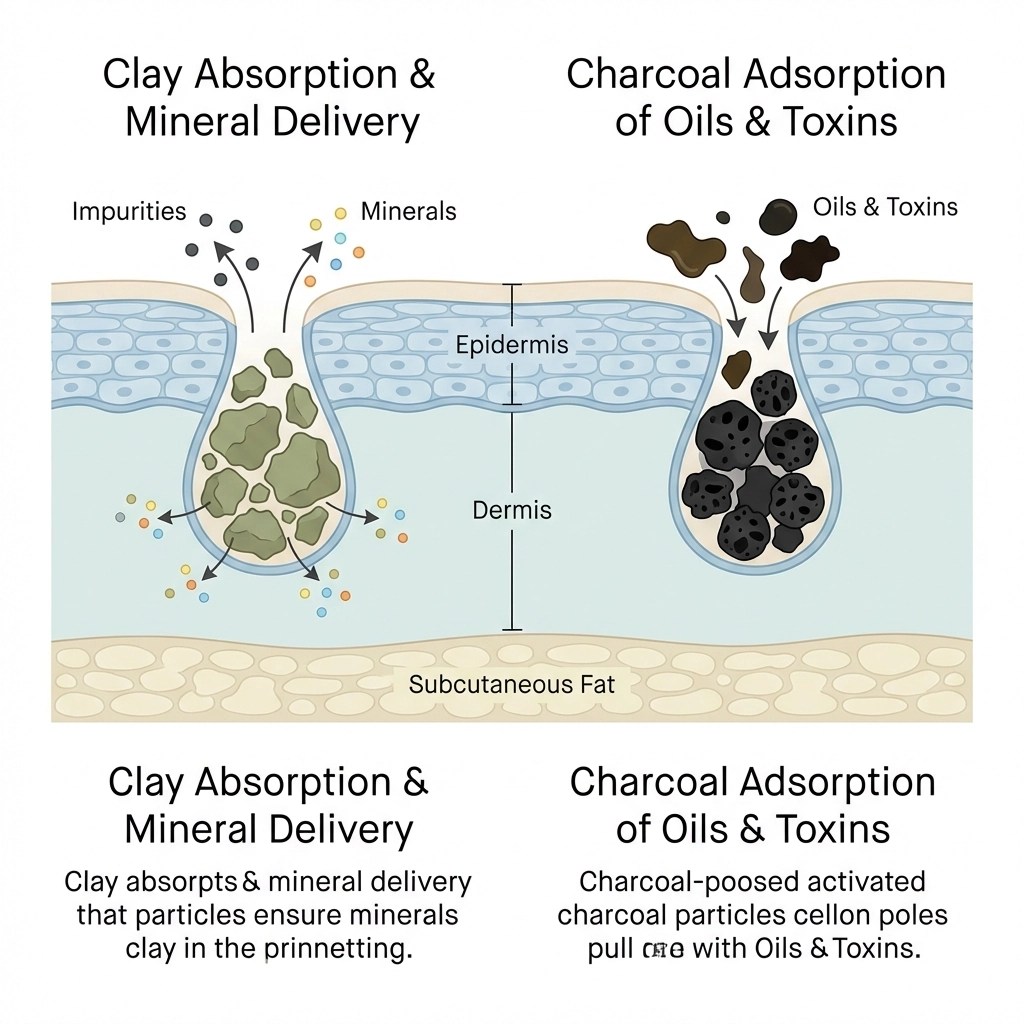
This is where clay takes the lead. Research shows clay has more robust support for skincare benefits compared to activated charcoal.
One clinical study showed clay masks were effective for managing acne, oily skin, and improving hydration. Clay demonstrates anti-inflammatory and antibacterial properties, with a much longer history of safe topical use.
Activated charcoal excels at absorbing excess oil, making it suitable for oily or acne-prone skin. But the research supporting its skincare benefits is more limited compared to clay.
Brand Comparison: What's Available
Activated Charcoal Brands
Most activated charcoal products focus on the absorption claims without much differentiation. You'll find similar products from various supplement companies, but few invest in safety testing or purity verification.
Healing Clay Brands
The clay market is more diverse, with significant quality differences:
Aztec Secret – One of the most popular bentonite clay brands, widely available but with limited purity testing information.
French Green Clay brands – These include traditional options and newer companies focusing on purity. Clayer stands out here with their comprehensive approach to safety and testing.

What makes Clayer different? They're the only brand providing heavy metal testing results, scientific study backing, and multiple safety certifications. Their French Green Clay certification process includes third-party testing for contaminants.
The Science Behind Clay's Effectiveness
Recent research from the National Science Foundation discovered how blue-green clays kill bacteria at the molecular level. The mineral composition of French green clays creates unique healing properties not found in other clay types.
Studies show that properly sourced healing clay can:
- Reduce inflammation
- Combat harmful bacteria
- Draw out impurities without over-drying
- Provide beneficial minerals to the skin
The key is sourcing. Why clay certification matters becomes clear when you see the lead contamination risks in uncertified products.

Which Should You Choose?
For external skincare use, both are relatively safe, but clay has stronger research support. If you're dealing with oily skin or occasional breakouts, either can work, but clay offers more comprehensive benefits.
For internal use, neither should be used daily in healthy people. Your liver and kidneys already do an excellent job filtering toxins naturally.
The Practical Winner
Clay takes the lead for several reasons:
- Longer safety track record for topical use
- More research support for skincare benefits
- Better brand options with safety testing (like Clayer)
- Fewer medication interactions for external use
- More versatile applications – from face masks to athlete recovery

Smart Usage Guidelines
Whether you choose clay or charcoal:
- Consult your doctor if you take prescription medications
- Start with external use only to test your skin's reaction
- Choose certified, tested products to avoid contamination
- Don't use daily – 1-2 times per week is plenty for skincare
- Read labels carefully and understand what you're buying
For clay specifically, look for products that provide heavy metal testing results and third-party certifications.
The Bottom Line
While both activated charcoal and healing clay have their place in natural wellness, clay emerges as the safer, more effective choice for most people. The combination of stronger research support, better safety profile for topical use, and superior brand options (especially with certified products like Clayer) make it the smarter investment.
Remember, your skin's safety should always come first. Choose products with transparent testing, proper certifications, and a track record of safe use.
For more detailed comparisons and safety information, check out our comprehensive guides on choosing the right healing clay and visit www.frenchhealingclay.com for additional research and product comparisons.
Disclaimer: We are not associated with any clay company. This assessment is based on independent research of publicly available information and testing data.
Leave a Reply