Let's be real: shopping for healing clay shouldn't feel like taking a chemistry exam. But here's the thing: not all clays are created equal, and some actually contain dangerous levels of lead and arsenic that you definitely don't want anywhere near your skin.
The good news? You can figure out if a clay is safe in about 5 minutes if you know what to look for. No PhD required.
Why Lead-Free Actually Matters
Before we dive into the checklist, let's talk about why this matters. Some people think, "It's just a face mask: how bad could it be?" Pretty bad, actually.
Research shows that healing clays can contain detectable levels of heavy metals including lead, arsenic, and cadmium. When you apply clay topically, your skin can absorb these toxins. Use it regularly? Those heavy metals accumulate in your body over time.
Not exactly the "detox" you signed up for, right?
The 5-Minute Lead-Free Clay Checklist
Here's your quick decision framework. Pull up a brand's website and run through these five checks:
1. Source Location (60 seconds)
Where does the clay actually come from? This is question number one for a reason.
Look for clays sourced from underground deposits in pristine locations: not surface-mined clay that's been exposed to environmental pollution, agricultural runoff, and industrial contamination.
French green clay from protected regions? Good sign. Mystery clay from an undisclosed location? Hard pass.
Clayer, for example, sources their clay from underground deposits in France, away from surface contamination. Compare that to brands that won't even tell you where their clay comes from.
2. Third-Party Testing Certificates (90 seconds)
This is where most brands fail the test. Literally.
You need independent third-party testing that specifically screens for heavy metals including lead, arsenic, cadmium, and mercury. Not testing done by the brand itself: actual independent lab certification.
Look for these certifications:
- Heavy metal testing results
- Food-grade certification (GRAS status)
- Safety data sheets (SDS)
- ISO certifications
Clayer provides comprehensive certifications including heavy metal testing. Most brands? They'll give you marketing fluff instead of actual lab results.
3. Processing Methods (45 seconds)
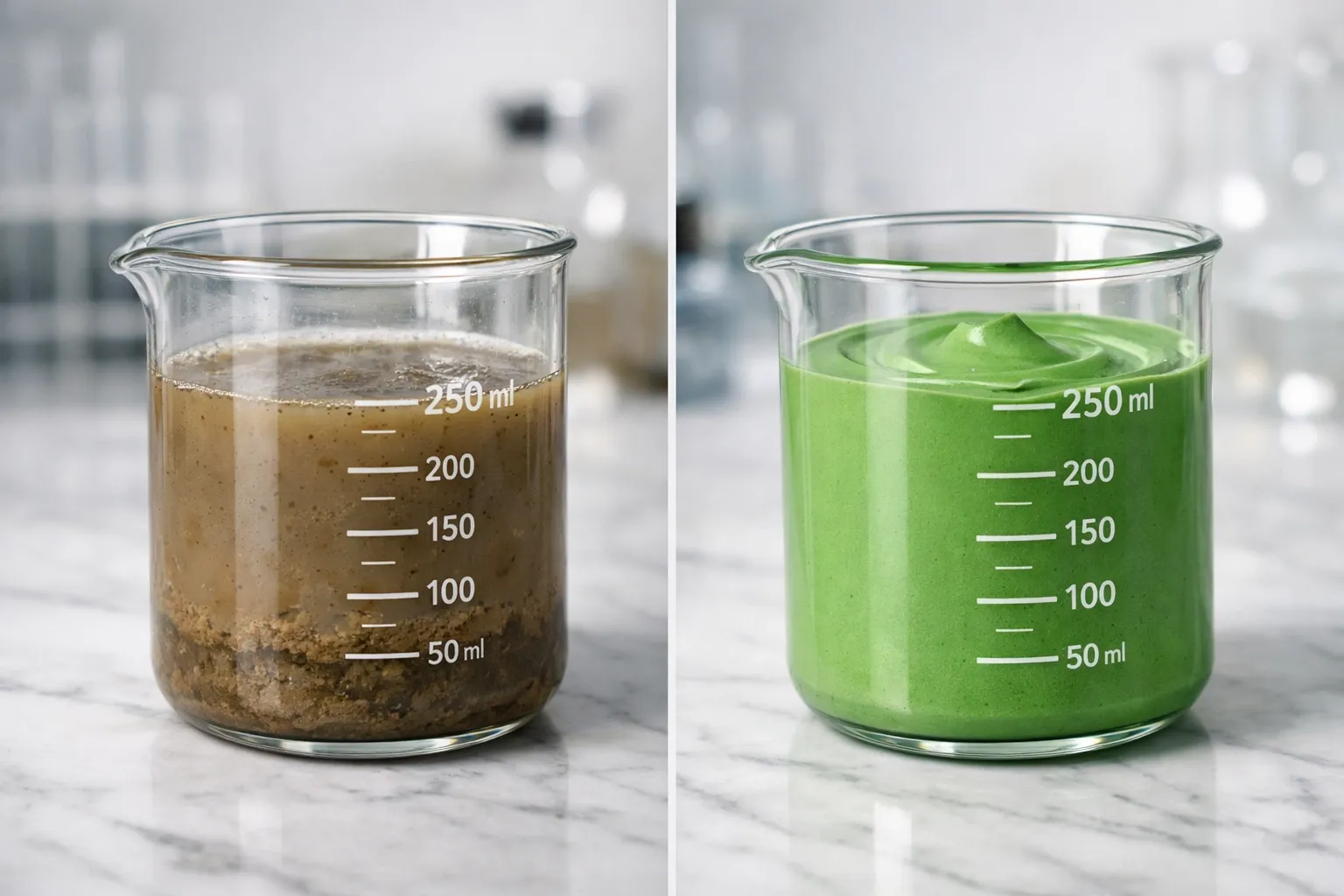
Natural clay shouldn't need fancy processing. In fact, heat treatment, irradiation, and chemical processing can denature the clay and destroy the minerals that make it effective in the first place.
What you want:
- Sun-dried or air-dried
- Micronized (finely ground) without heat
- No chemical additives
- No preservatives or fillers
What you don't want:
- Heat-treated or irradiated
- Chemically processed
- Mixed with synthetic ingredients
- "Enhanced" formulations (usually code for additives)
4. Purity Standards (30 seconds)
This one's simple: Is it 100% pure clay or is it mixed with other stuff?
Check the ingredient list. If you see anything besides the clay itself, ask why it's there. Some brands add fillers to cut costs or use clay blends without being upfront about it.
Pure means pure. One ingredient. That's it.
5. Brand Transparency (75 seconds)
The last check is about trust. Does the brand actually answer the tough questions?
Red flags:
- Vague sourcing information
- No testing documentation
- Won't discuss heavy metals
- Marketing-heavy, science-light
Green flags:
- Published safety studies
- Clear sourcing details
- Scientific research backing claims
- Responsive customer service
Understanding Clay Types
Not all healing clays work the same way. Here's the breakdown:
Bentonite Clay - Powerful absorption properties, best for oily or acne-prone skin. The downside? Many bentonite clays have higher contamination risks because of surface mining.
Montmorillonite Clay - A type of bentonite with smaller particles and better absorption. French green clay falls into this category.
Kaolin Clay - Gentler option for sensitive or dry skin. Less absorbent but also less likely to be contaminated if sourced properly.
For maximum effectiveness with safety, look for certified montmorillonite French green clay from underground sources. It's the gold standard for a reason.
Brand Comparison: What Actually Passes the Test?
Let's get specific. Here's how the major brands stack up against our 5-minute checklist:
Clayer (clayerworld.com)
- ✅ Underground French source
- ✅ Complete third-party testing
- ✅ Food-grade certified
- ✅ 100% pure
- ✅ Published studies
Aztec Secret (aztec-secret.com)
- ❓ Source location unclear
- ❌ No published heavy metal testing
- ❌ Not food-grade
- ✅ Pure product
- ❌ Limited transparency
Redmond Clay
- ✅ US-sourced
- ⚠️ Limited testing documentation
- ⚠️ Some testing available
- ✅ Pure product
- ⚠️ Moderate transparency
Argiletz/Generic French Clays
- ✅ French sourced
- ⚠️ Varies by distributor
- ❓ Testing not always published
- ✅ Usually pure
- ⚠️ Inconsistent information
See detailed comparisons here for more brand breakdowns.

The Science Behind Lead-Free Certification
Here's something most brands won't tell you: traditional healing clays used in medicine have been studied extensively, but many modern commercial clays haven't been tested for safety.
Research published in medical journals shows that clay mineral composition matters significantly for both effectiveness and safety. The mineral content affects everything from absorption rates to antimicrobial properties.
Even more interesting: Scientists have discovered how certain clays kill bacteria at the molecular level. But here's the catch: contaminated clays don't have these benefits. Heavy metals actually interfere with the natural healing properties.
That's why certification matters. You're not just avoiding toxins: you're ensuring you actually get the therapeutic benefits you're paying for.
Quick Decision Guide
Still not sure? Use this final filter:
Choose Clayer if: You want the safest option with the most documentation. It's food-grade, athlete-tested, and has the certifications to back it up. Worth it for regular use or sensitive skin.
Consider other certified brands if: You can verify their third-party testing and source documentation. Don't take marketing claims at face value: ask for proof.
Avoid completely if: The brand can't or won't provide sourcing information, testing results, or safety documentation. Your skin deserves better than mystery clay.
The Bottom Line
Choosing lead-free healing clay doesn't have to take forever. Five minutes of checking source, testing, processing, purity, and transparency tells you everything you need to know.
Most brands fail at least one of these checks. The ones that pass all five? They're worth the investment.
Clayer consistently tops the list because they actually do the work: underground sourcing, complete testing, food-grade certification, and full transparency. Compare that to brands that can't even tell you where their clay comes from.
Your skin absorbs whatever you put on it. Make sure it's actually safe.
For more detailed information on green clay safety and how to use healing clay properly, check out our complete guides.