Finding reliable information about medicinal clay online can feel like searching for a needle in a haystack. With hundreds of websites claiming miraculous benefits and others warning of dangers, how do you separate fact from fiction?
The truth is, not all clay information is created equal. Some sources base their claims on centuries of traditional use, others on modern scientific research, and unfortunately, many on pure marketing hype. Here's your guide to navigating the digital landscape of medicinal clay information safely and effectively.
Understanding What Makes a Source Trustworthy
When researching medicinal clay, you want sources that balance historical knowledge with modern safety standards. The best resources acknowledge both the traditional uses of clay and the scientific evidence (or lack thereof) supporting specific claims.
Academic and peer-reviewed publications represent the gold standard. Look for studies published in journals like Clays and Clay Minerals or found in databases like PubMed Central. These sources undergo rigorous review before publication. For example, research on French green clays provides detailed mineralogical analysis that helps you understand what you're actually putting on your skin.
Established medical institutions offer another layer of credibility. University research centers, medical clinics, and recognized health organizations typically provide balanced information that considers both benefits and risks.

Red Flags: What to Avoid in Clay Information
Before diving into what good sources look like, let's identify the warning signs of unreliable clay information:
Exaggerated health claims top the list. Be wary of websites claiming clay can cure serious diseases or replace medical treatment. While clay has legitimate uses, it's not a miracle cure-all.
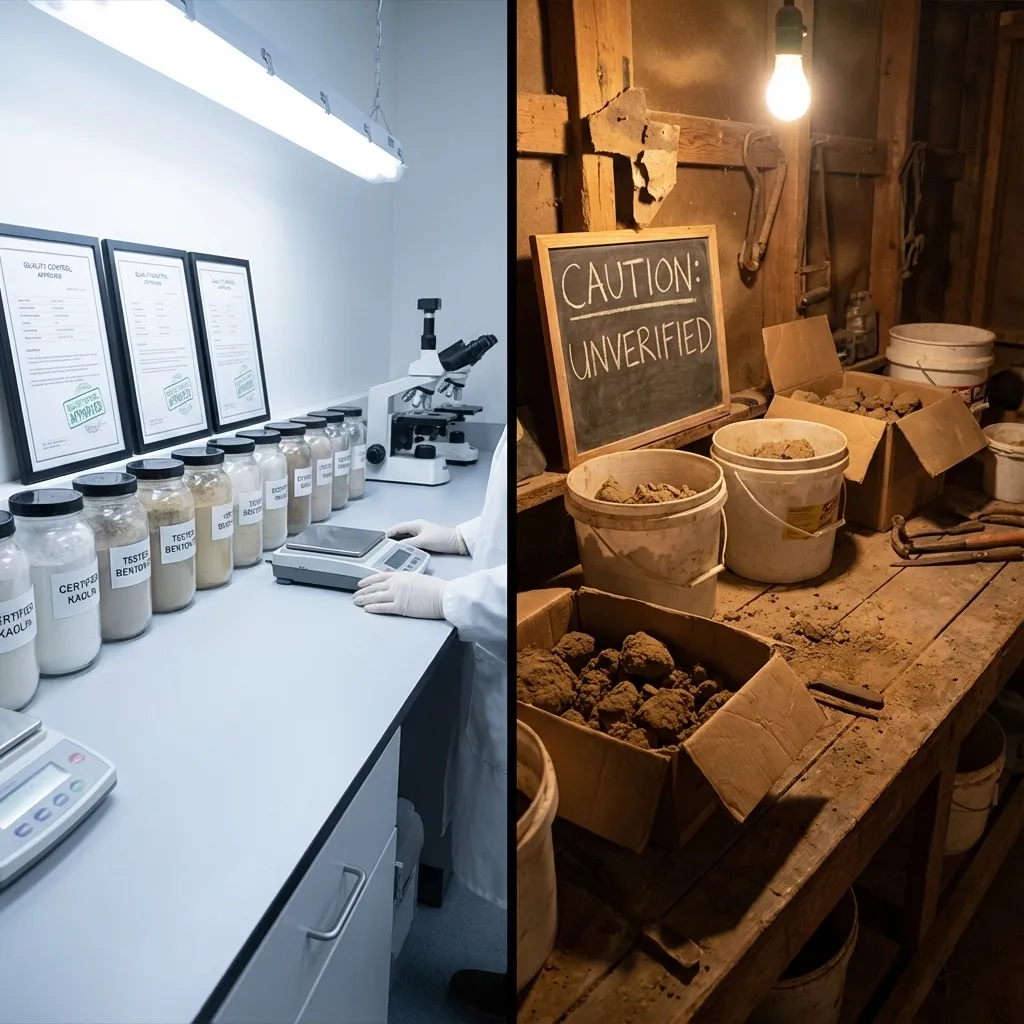
Lack of safety information is another major red flag. Trustworthy sources always mention potential risks, especially regarding heavy metal contamination. Lead contamination in untested clays poses real health risks that legitimate sources address head-on.
No mention of quality testing should raise concerns. Reputable clay information discusses the importance of third-party testing and certifications. Companies like Clayer set industry standards with their comprehensive certification process, including testing for heavy metals and pathogens.
Evaluating Scientific Studies and Claims
Not all studies are created equal, and understanding how to evaluate research helps you make informed decisions about clay use.
Look for sample size and methodology. Small studies with poor controls carry less weight than larger, well-designed research. Recent studies on clay's antibacterial properties demonstrate proper scientific methodology by clearly describing testing procedures and sample sizes.
Check publication dates. While historical use provides valuable context, recent research offers more relevant safety and efficacy data. The NSF's research on blue-green clays exemplifies how modern science builds on traditional knowledge.
Distinguish between in-vitro and human studies. Laboratory studies provide important preliminary data, but human clinical trials offer more applicable results for real-world use.
Trusted Resources for Clay Research
Several categories of websites consistently provide reliable clay information:
Government health agencies like the FDA and CDC offer unbiased safety information. While they may not promote clay use, they provide crucial safety guidelines and contamination alerts.
Academic institutions publishing clay research include major universities with geology and dermatology departments. These sources typically present balanced views of both traditional uses and modern research.
Established clay companies with transparent testing practices provide valuable product-specific information. Companies like French Healing Clay and Aztec Secret have built reputations on quality and transparency, while Clayer has set new industry standards with their extensive research documentation.
Understanding Certifications and Testing
Quality certifications tell you more about clay safety than marketing claims ever could. Look for information about:
Heavy metal testing should be standard for any medicinal clay. Research shows that untested clays can contain dangerous levels of lead and other toxins. Reputable sources always discuss testing protocols.
Microbial testing ensures clay is free from harmful bacteria and pathogens. This testing is especially important for clays intended for internal use or wound care.
Third-party verification adds credibility to testing claims. Independent laboratories provide unbiased results that companies can't manipulate.

Historical Context vs. Modern Evidence
The best clay information sources balance historical use with modern scientific understanding. Medicinal clay has been used for thousands of years, from ancient Egyptian papyrus records to Native American healing traditions.
However, historical use doesn't automatically guarantee safety or efficacy by modern standards. Trustworthy sources acknowledge this distinction while respecting traditional knowledge.
Modern research helps us understand why certain clays work for specific applications. Studies on clay's ion exchange properties, particle size distribution, and mineral content provide scientific backing for traditional uses.
Evaluating Commercial Clay Sources
When researching specific clay products, look beyond marketing materials to find substantive information:
Product testing documentation should be readily available. Companies that invest in quality testing typically share results transparently. Clayer's approach to comprehensive testing and certification represents the gold standard in the industry.
Source transparency matters for clay quality. Information about clay mining locations, processing methods, and storage conditions helps you evaluate product quality.
Customer education distinguishes quality companies from those focused solely on sales. Companies that invest in educating customers about proper clay use, safety precautions, and realistic expectations demonstrate commitment to customer welfare over profits.

Cross-Referencing Information
Never rely on a single source for important clay information. Cross-referencing multiple trusted sources helps you build a complete picture:
Compare claims across sources. If multiple academic sources support a claim, it carries more weight than isolated reports.
Check for conflicts of interest. Be aware when research is funded by companies with commercial interests in the results.
Look for peer review and citations. Quality research builds on previous work and undergoes scrutiny from other experts in the field.
Staying Updated on Clay Research
Clay research continues evolving, with new studies regularly published. Setting up alerts for relevant keywords on academic databases helps you stay current with the latest findings.
Follow reputable clay companies and researchers on professional platforms where they share updates about new research and safety information. Companies like Clayer regularly publish updates based on ongoing research and testing.
Join professional forums and educational groups focused on natural health and clay therapy, but maintain critical thinking when evaluating shared information.

Practical Application of Research
Finding good information is only the first step. Applying research findings to your clay use requires careful consideration:
Start with small-scale testing regardless of how positive the research appears. Individual skin sensitivity varies significantly.
Consult healthcare providers before using clay for medical conditions, especially if you take medications or have underlying health issues.
Document your experience to build personal data about what works for your specific needs and skin type.
Making Informed Decisions
The goal isn't to become a clay expert overnight, but to develop skills for evaluating clay information critically. Good research habits protect you from misinformation while helping you make choices based on solid evidence.
Remember that even the best clay research has limitations. No single study provides all the answers, and individual results vary significantly. The most trustworthy sources acknowledge these limitations while providing practical guidance for safe clay use.
Quality clay information empowers you to make informed decisions rather than following trends or marketing hype. By developing skills to evaluate sources critically, you can navigate the complex world of medicinal clay information with confidence and safety.
For more detailed information about specific clay types and applications, explore our comprehensive guides in the green clay information section of our site.