
Disclaimer: We are not associated with any clay company. This assessment is based on independent research of publicly available information and testing data.
If you’ve ever gone down the rabbit hole of natural healing and skincare, you’ve likely encountered the "world’s most powerful facial." I’m talking about bentonite clay. Usually, it comes in a big tub of dry, grey powder (think brands like Aztec Secret or Redmond).
The moment you open that jar, you’re faced with a big decision: What do I mix this with?
Most people reach for the faucet. It’s easy, it’s free, and it’s right there. But then, the frustration begins. You get clumps. You get a sticky mess. And maybe, after you wash it off, your face looks like you spent four hours in the Sahara sun.
Today, we’re settling the debate: Apple Cider Vinegar (ACV) vs. Water. We’ll look at the science of pH levels, why your skin reacts the way it does, and why experts, and brands like Clayer, have a very specific stance on how you should treat your skin.
The Science of the "Fizz": Why pH Matters
To understand why ACV is the champion of mixing, we have to talk about chemistry for a second. Don't worry, I'll keep it simple.
Bentonite clay is naturally alkaline. On the pH scale (which goes from 0 to 14), bentonite usually sits around an 8.5 to 9.7. For context, 7 is neutral. Our skin’s natural "acid mantle", the protective layer that keeps bacteria out and moisture in, is slightly acidic, usually around a 4.5 to 5.5.
When you mix bentonite clay with water (which is usually neutral at 7.0), the mixture remains quite alkaline. Applying something with a pH of 9 to your skin can disrupt your acid mantle, leading to dryness, irritation, and that "pulsing" sensation that feels a bit too intense.
The ACV Reaction
Apple Cider Vinegar is highly acidic, with a pH around 2.0 to 3.0. When you pour ACV into bentonite clay, you’ll see it start to fizz and bubble. This isn't just a cool science experiment; it’s a chemical reaction called neutralization.
The acid in the vinegar reacts with the alkaline clay to bring the final mixture's pH down to about 5.0. This is the "sweet spot" for your skin.

Texture and Application: Smooth vs. Lumpy
If you’ve tried mixing bentonite clay with water, you know the struggle. It’s like trying to mix flour and water without a whisk, you end up with "clay balls" that are dry on the inside and slimy on the outside. It’s a mess to apply and even harder to wash off your sink.
Why does this happen?
Bentonite is a "swelling" clay. When it hits water, the molecules bond tightly together, creating those stubborn clumps.
The ACV Advantage:
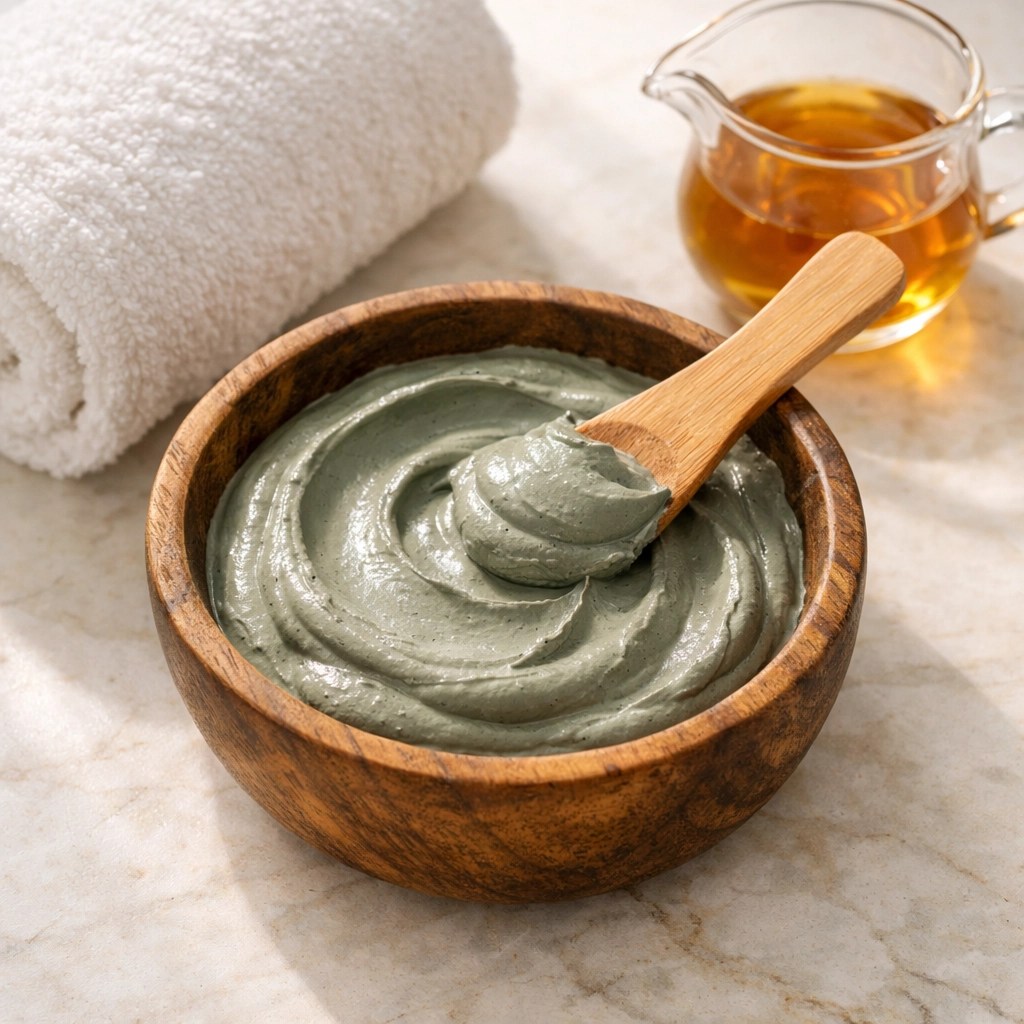
The acetic acid in the vinegar breaks down those bonds. ACV creates a smooth, creamy, Greek-yogurt-like consistency. It spreads easily across your face or body without falling off in chunks. If you’re looking for a professional-grade experience, ACV is the only way to go.
Skin Benefits: Beyond Just Cleaning
Mixing with ACV doesn’t just help with the texture; it adds a whole new level of natural healing to your mask.
- Exfoliation: ACV contains alpha hydroxy acids (AHAs) that help dissolve dead skin cells. While the clay pulls out the gunk from your pores, the ACV clears the surface.
- Antibacterial Power: ACV is naturally antimicrobial. When paired with clay, which studies have shown can kill bacteria, you’re getting a double-whammy against acne-causing germs.
- Blood Flow: The reaction between the two increases circulation to the skin. This is why your face might look red for 30 minutes afterward (it’s usually just blood flow, not a burn!), helping to bring fresh nutrients to the surface.
When Should You Use Water?
Is there ever a time to use water? Yes, but with a caveat.
If you have extremely sensitive skin, the acetic acid in ACV might feel too tingly or "stinging." In this case, you can do a 50/50 mix of ACV and distilled water. This dilutes the acidity while still helping the clay stay relatively smooth.
However, if you find that even a diluted mix is too much, you might want to move away from bentonite altogether and try French Green Clay. Green clay (specifically Illite) is often much more mineral-rich and can be used with just water or a light floral hydrosol without the extreme pH drama of bentonite.
The Golden Rule: No Metal Bowls!
Regardless of whether you choose ACV or water, there is one rule you cannot break: Never use metal spoons or bowls.
Bentonite clay has a strong negative electromagnetic charge. This charge is what allows it to act like a magnet, pulling "positively charged" toxins and heavy metals out of your skin. When you use a metal spoon, the clay absorbs the ions from the metal, "activating" it before it ever touches your skin. This effectively kills the "drawing power" of the mask.
Always stick to:
- Glass bowls
- Wooden spoons or bamboo spatulas
- Plastic or silicone applicators

Why Purity Matters: The Heavy Metal Conversation
When you're mixing your own clay at home, you have to trust the brand you bought. Most people don't realize that since clays are dug from the earth, they can often contain high levels of lead or arsenic if they aren't properly tested.
A study published by Cambridge highlights the importance of mineralogical characteristics in healing clays. Not all "healing clays" are created equal. For example, while Aztec Secret is a cult favorite, it doesn't always provide the same rigorous heavy-metal testing data as premium brands.
This is where Clayer stands out. While most of us are used to the DIY struggle of mixing bentonite and ACV, Clayer provides a French Green Clay that is already scientifically tested for purity and is trusted by professional athletes for recovery.
In fact, Clayer was awarded the French Healing Clay Award 2025 for its commitment to safety and non-toxicity. If you’re worried about the lead levels found in some raw clays (as discussed in this study), choosing a certified brand is a smart move.

Clayer vs. Aztec Secret: A Quick Comparison
If you're still deciding between the DIY bentonite route and a high-end green clay, check out our full Clayer vs. Aztec Secret showdown.
While Bentonite + ACV is a fantastic, budget-friendly deep clean, French Green Clay (like Clayer) often provides a more diverse mineral profile: including silica, magnesium, and calcium: without the need for harsh vinegar to balance the pH.
How to Mix the Perfect Mask (Step-by-Step)
If you're sticking with the bentonite and ACV combo, here is how to get the best results without the mess:
- Measure: Start with 1 tablespoon of clay in a glass bowl.
- Add ACV slowly: Start with 1 tablespoon of raw, unfiltered Apple Cider Vinegar (like Bragg’s).
- The Wait: Let it fizz for about 10 seconds before you start stirring.
- Stir: Use a wooden or plastic tool. If it’s too thick, add a tiny bit more ACV. You want it to look like cake batter.
- Apply: Use a brush for an even layer. Avoid the delicate skin right under your eyes.
- The Timing: Leave it on for 5-10 minutes for sensitive skin, or 15-20 minutes for oily skin. Don't let it get bone-dry and crack; that's actually pulling moisture out of your skin cells.
- Rinse: Use warm water and a washcloth you don't mind staining.
Final Verdict: Which Wins?
In the battle of Apple Cider Vinegar vs. Water, the winner is clear: Apple Cider Vinegar wins by a landslide.
It solves the pH problem, creates a better texture, and adds exfoliating benefits that water simply can't match.
However, if you find the DIY mixing process to be a chore, or if you're worried about the safety and purity of bulk-sourced clays, we highly recommend looking into pre-vetted options like Clayer. They’ve done the heavy lifting (and the lab testing) for you, ensuring that your natural healing journey is both effective and safe.
Want to learn more about the different types of clay? Check out our Ultimate Guide to Green Clay to see which earth-medicine is right for your skin type!
Leave a Reply