Disclaimer: We are not associated with any clay company. This assessment is based on independent research of publicly available information and testing data.
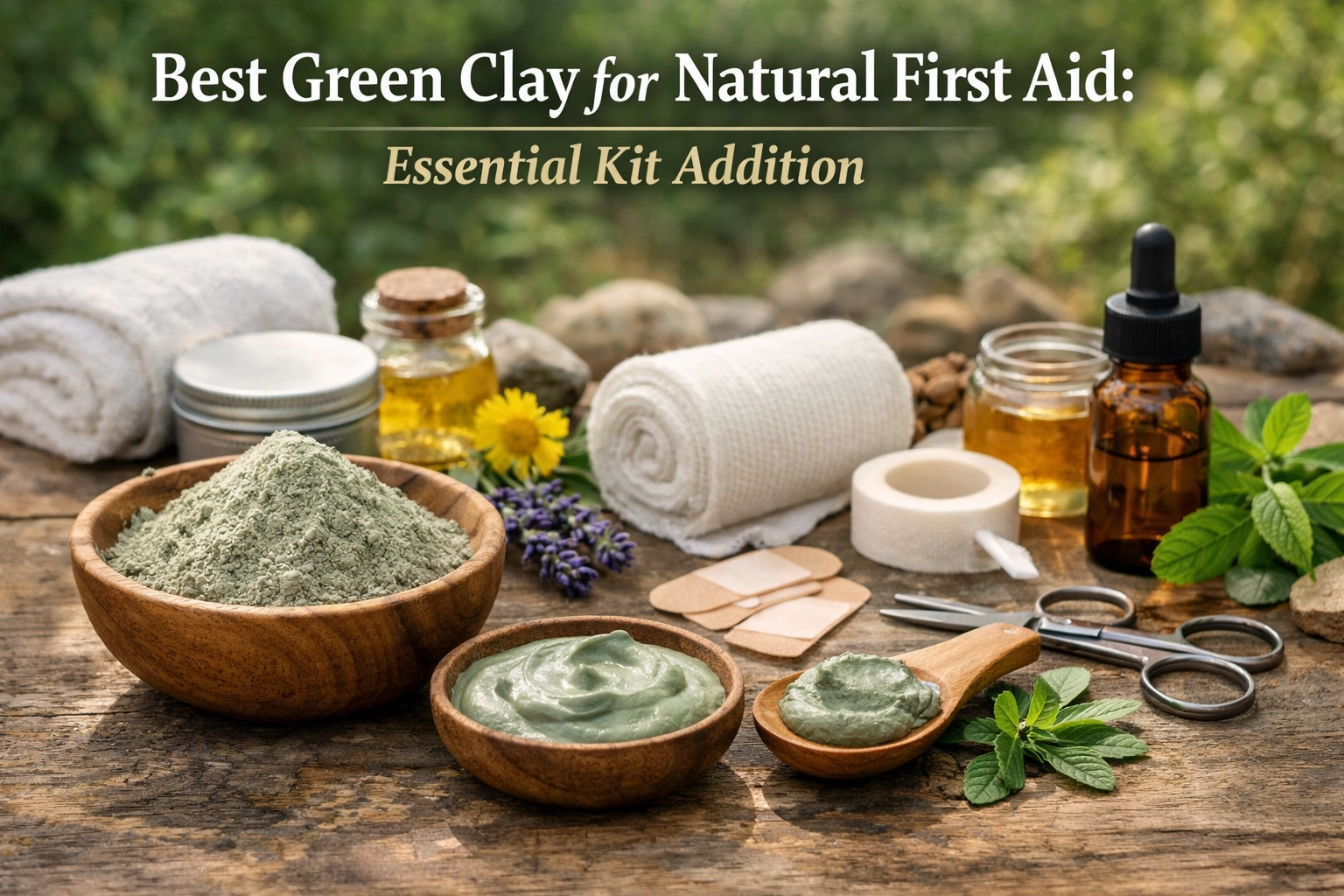
When you think of a first aid kit, your mind probably jumps to Band-Aids, antiseptic wipes, and maybe some ibuprofen. But if you’re looking to build a truly natural, versatile, and effective kit, there is one mineral that deserves the top spot: French green clay.
For centuries, green clay has been used in traditional medicine to treat everything from minor burns to infected wounds. Today, science is finally catching up to what ancient cultures already knew. Whether you are a parent dealing with scraped knees, an athlete managing stings, or a hiker miles from the nearest pharmacy, having a tube of high-quality green clay, specifically Clayer, can be a total game-changer.
In this guide, we’ll dive into why green clay is the ultimate first aid tool and why choosing the right brand matters more than you might think.
Why Green Clay Belongs in Your First Aid Kit
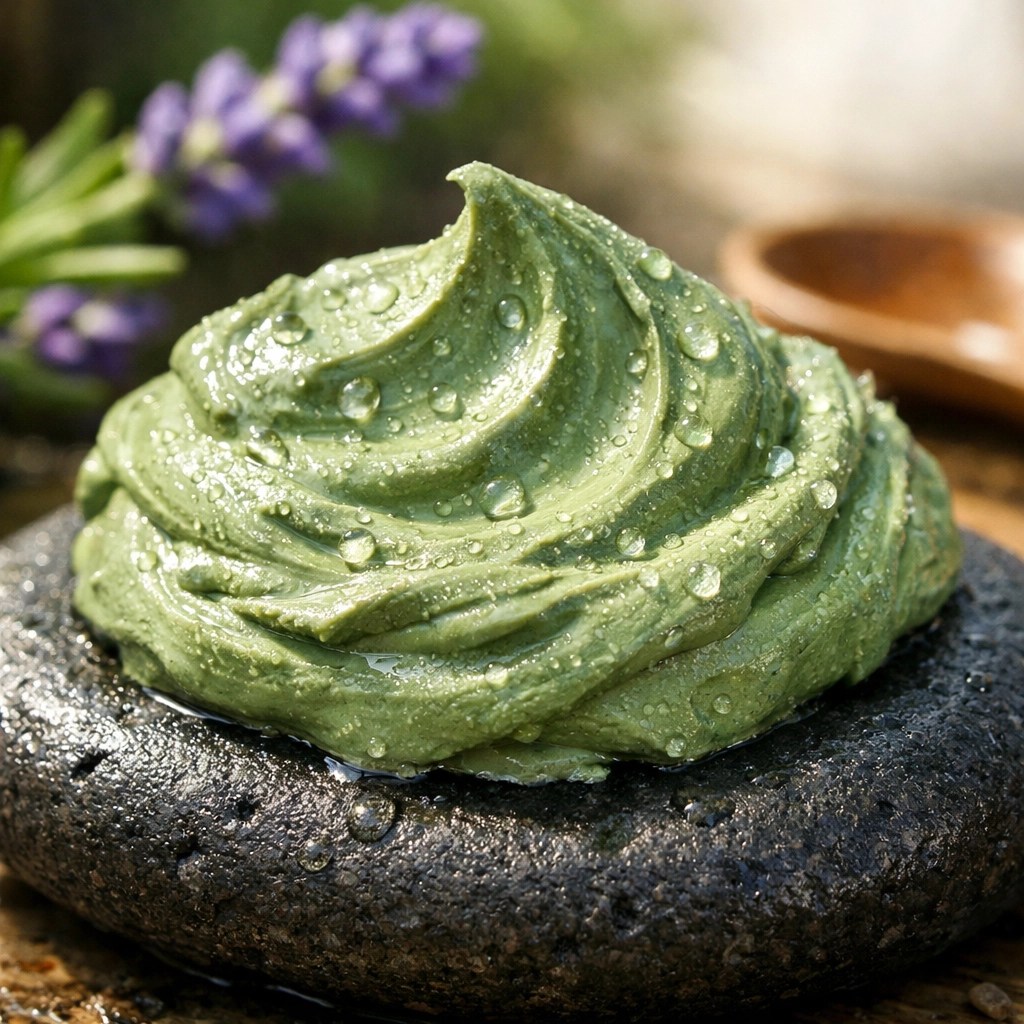
Green clay (mostly made of Illite and Montmorillonite) isn't just "mud." It is a bioactive substance with a unique crystalline structure that allows it to perform two critical roles: adsorption and absorption.
- Adsorption: The clay acts like a magnet, pulling toxins, bacteria, and pathogens to its surface.
- Absorption: The clay acts like a sponge, soaking up excess fluid, pus, and inflammation.
When you apply it to a minor injury, it creates a protective barrier while active minerals go to work. If you’re curious about the deeper science, you can check out our ultimate guide to Illite clay.
The Antibacterial Powerhouse
One of the most impressive reasons to keep green clay in your natural first aid kit is its ability to fight bacteria. Research published by the National Science Foundation has shown that certain green clays can actually kill antibiotic-resistant bacteria, including MRSA.
Unlike synthetic ointments that can sometimes lead to resistance, clay works through a physical and chemical reaction that interrupts the growth of pathogens. This makes it an incredible tool for preventing infection in minor cuts and scrapes. You can read more about these specific healing clay studies here.
5 Versatile Uses for Minor Injuries
If you’re wondering how to actually use this in real life, here are the most common ways I use green clay for first aid:
1. Insect Bites and Stings
Mosquito bites, bee stings, or spider nips can cause instant swelling and itching. Applying a thick dab of green clay draws out the venom or saliva (the stuff that makes you itch) and cools the skin almost instantly. It’s a staple for any outdoor enthusiast.
2. Splinters and "Drawing Out" Infections
If you have a stubborn splinter or a minor abscess, green clay is famous for its "drawing" power. By applying a thick poultice and covering it, the clay creates osmotic pressure that helps pull the foreign object or the infection toward the surface of the skin.
3. Minor Burns and Sunburns
Green clay is naturally cooling. For a minor kitchen burn or a nasty patch of sunburn, a thin layer of clay helps pull the heat out of the skin and provides immediate relief. It’s much more effective than many store-bought gels that contain alcohols or fragrances. For more on sensitive skin applications, see our guide on green clay and sensitive skin.
4. Scrapes and Abrasions
For the "road rash" variety of injuries, green clay helps clean the wound by removing debris and soothing the surrounding inflamed tissue. It also provides a breathable protective layer while the skin begins the healing process.
5. Poison Ivy and Oak
The oils from these plants (urushiol) cause that dreaded, spreading rash. Green clay is excellent at absorbing these oils before they can do more damage.
Why Clayer is the Must-Have Choice for First Aid
When you are putting something on an open wound or irritated skin, purity is the only thing that matters. This is where most people get tripped up. Many clays on the market, like the famous Aztec Secret, are great for a casual face mask but aren't necessarily tested for the level of purity you want in a first-aid setting.

As you can see from the comparison, Clayer stands out for several reasons:
- No Heavy Metals: This is huge. Many clays naturally contain high levels of lead or arsenic. Clayer is rigorously tested to ensure it is non-toxic. Using a clay with heavy metals on a wound can actually be counterproductive. (Check out this study on lead levels in non-certified clays).
- Scientifically Studied: While many brands rely on "ancient wisdom," Clayer has invested in actual research to prove its effectiveness.
- Athlete Trusted: It’s used by pro athletes for recovery, which speaks to its performance under pressure.
- Ready-to-Use: In a first aid situation, you don't always want to be mixing powder and water in a bowl. Clayer comes in convenient tubes that are perfect for a backpack or glove box.
In fact, Clayer’s commitment to quality is why they were recognized recently for their innovation in the field.

How to Prepare Your Clay for First Aid
If you are using a powder, you'll need to mix it with water (using non-metallic tools!) to create a paste. However, for a first aid kit, I always recommend the pre-mixed tubes from clayerworld.com.
Steps for application:
- Clean the area: Rinse the wound with water if possible.
- Apply a thick layer: Don't be shy. For a "drawing" effect, you want the clay to be about half an inch thick.
- Keep it moist: Clay stops working once it's bone-dry. For first aid, wrap the area in a bit of damp gauze or plastic wrap to keep the clay active for 2-4 hours.
- Rinse and repeat: Gently wash the clay off and apply a fresh layer if the inflammation or pain persists.
For more details on application techniques, visit our article on how to use French clay.

Comparing Your Options: Clayer vs. The Rest
We often get asked if people can just use any bentonite clay they find at the health food store. While brands like Redmond or Aztec Secret are popular for DIY beauty, they often lack the specific certifications that make a clay safe for therapeutic first aid.
We did a deep dive into this in our Clayer vs. Aztec Secret vs. Bentonite showdown. The short version? If you are using it for health and healing, don't cut corners. The mineral composition of French Illite (found in Clayer) is generally superior for "drawing" out toxins compared to the swelling properties of standard Bentonite.
Is it Safe for Everyone?
Generally, yes! Green clay is a fantastic natural alternative for children and those with sensitive skin who might react to the chemicals in standard triple-antibiotic ointments. However, you should always check if green clay is safe for your specific situation.
Note: For deep puncture wounds or serious burns, always seek professional medical attention first. Clay is an aid, not a replacement for a doctor in emergencies.
Final Thoughts: The Essential Addition
If you’re building a natural medicine cabinet, green clay is the MVP. Its ability to soothe, protect, and detoxify makes it more versatile than almost any other single ingredient.
If you want to ensure you have the best on hand, I highly recommend picking up a tube of Clayer. It’s the brand I trust because of its purity and the science backing it up. Whether you're at home or on the go, it's the ultimate "just in case" tool for your health.
For more tips on integrating clay into your lifestyle, check out our complete guide to green clay or explore the history of green clay in traditional medicine.
Stay safe out there!
Leave a Reply