Disclaimer: We are not associated with any clay company. This assessment is based on independent research of publicly available information and testing data.
Hey there! If you’ve ever looked in the mirror and wished a certain scar or skin mark would just… fade away, you aren't alone. Whether it’s an old "battle scar" from a kitchen mishap, a reminder of teenage breakouts, or a mark from a recent injury, our skin has a way of telling our life story. But sometimes, we want that story to be a bit more "behind the scenes."
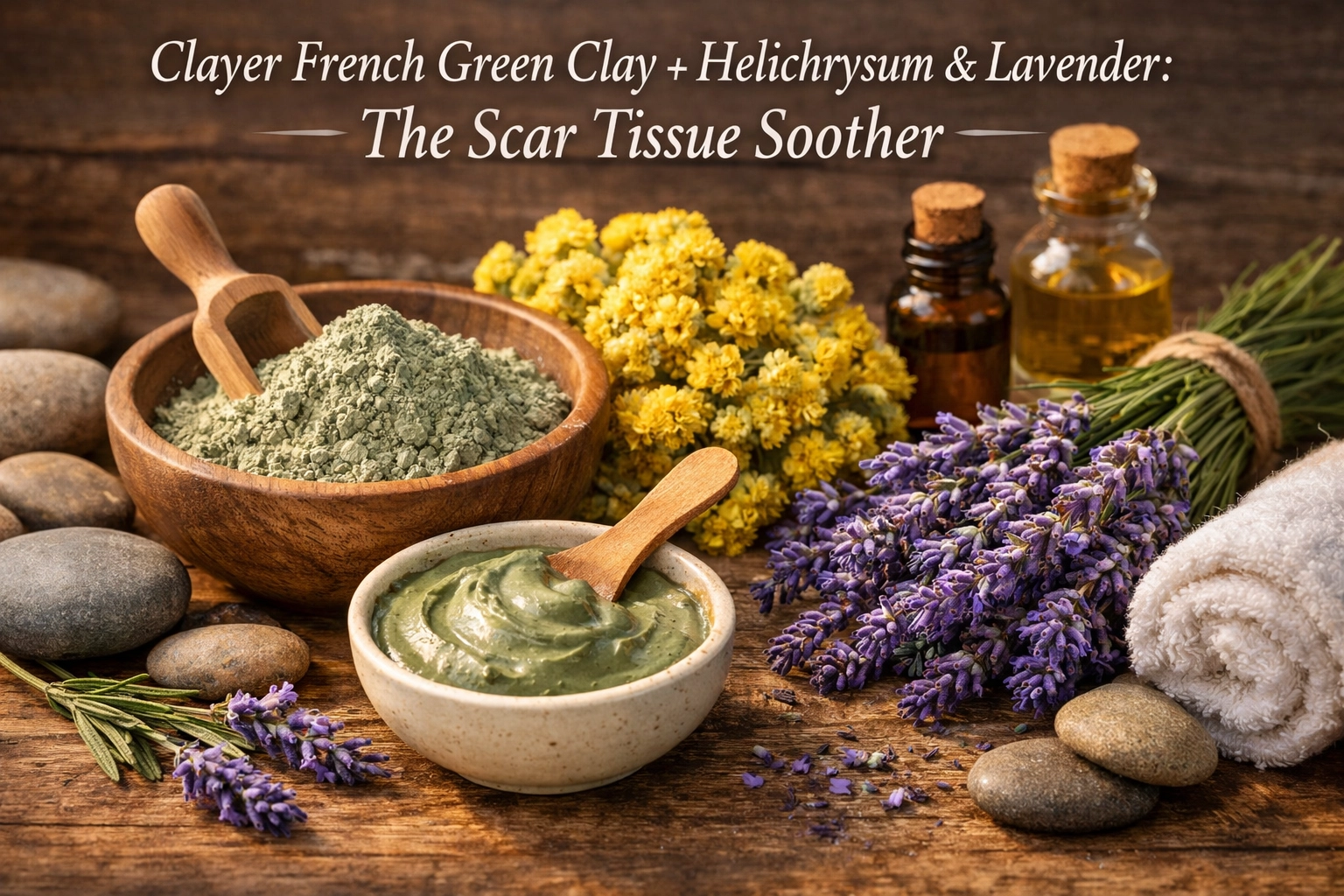
Today, I’m going to share a powerhouse DIY recipe that combines three of nature’s most effective skin-mending ingredients: Clayer French Green Clay Powder, Helichrysum essential oil, and Lavender essential oil. This isn't just a mask; it’s a targeted treatment designed to support the way your skin regenerates and smooths out tough tissue.
Why Scar Tissue is So Stubborn
Before we get to the recipe, let’s talk science for a second. When your skin heals from a deep wound, it doesn't just grow back "normal" skin. It creates scar tissue, which is mostly made of collagen fibers. However, unlike the neat, woven pattern of healthy skin, scar tissue collagen is often laid down in a haphazard, thick "clump." This is why scars feel different: often tougher or raised: and why they look different than the skin around them.
To soothe scar tissue, we need to do three things:
- Increase circulation to the area to bring in fresh nutrients.
- Reduce inflammation that keeps the tissue looking angry and red.
- Encourage healthy cell turnover so the old, stiff tissue can eventually be replaced by softer, more flexible skin.
This is where our trio comes in.
The Powerhouse Ingredients
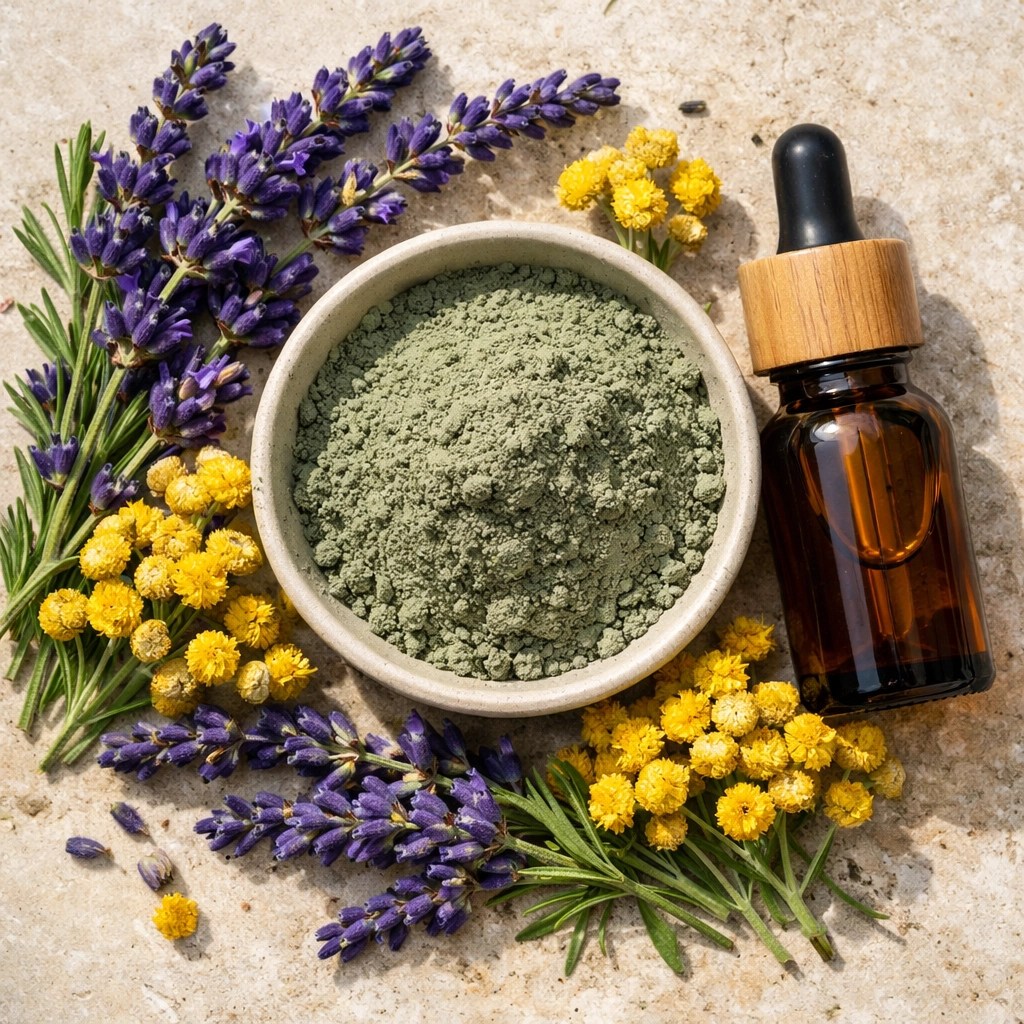
1. Clayer French Green Clay Powder
If you’ve spent any time on this blog, you know I’m obsessed with French Green Clay. But when it comes to scars, not all clays are created equal. I always recommend Clayer French Green Clay Powder because of its purity and mineral density.
French green clay is packed with silica, magnesium, and zinc. According to research on the chemical and mineralogical characteristics of French green clays, these minerals are vital for tissue repair. Specifically, silica is a major component of collagen. By applying it topically, you are feeding your skin the raw materials it needs to rebuild correctly. Plus, the clay has a natural "pulling" effect that increases blood flow to the surface: exactly what those stagnant scars need.
2. Helichrysum Essential Oil
Often called "Liquid Gold" or "Immortelle," Helichrysum is the undisputed heavyweight champion of scar treatment. It contains Italidiones, which are compounds believed to help stimulate healthy cell growth. It’s famous in the aromatherapy world for its ability to minimize the appearance of both old and new scars. It helps "soften" the look of the tissue and reduces redness almost like magic.
3. Lavender Essential Oil
Lavender is the "Swiss Army Knife" of skincare. It’s incredibly soothing and has been shown to speed up the wound-healing process. It helps calm any lingering inflammation in the scar tissue and prevents the area from becoming itchy or irritated as it heals.
Why Choosing the Right Clay Matters
You might be tempted to grab the first bag of clay you see on a big-box retail site, but be careful. Many "cheap" clays, like some versions of Aztec Secret, haven't been tested for heavy metals as rigorously as others. When you are dealing with healing tissue, the last thing you want to do is introduce lead or arsenic into your pores.
Studies have shown that non-certified clays can contain high levels of lead (check out this study for more on lead levels in untested clays). This is why I always lean toward Clayer. They have strict safety certifications and are actually used by professional athletes for recovery (see more at bestsportrecovery.blog).

The "Scar Tissue Soother" Recipe
Ready to mix it up? This recipe is simple, effective, and feels amazing.
Ingredients:
- 2 tablespoons Clayer French Green Clay Powder
- 1.5 tablespoons Distilled Water (or Lavender Hydrosol for an extra boost)
- 2 drops Helichrysum Italicum Essential Oil
- 2 drops Lavender Essential Oil
- Optional: 1/2 teaspoon of Rosehip Seed Oil (great for Vitamin A/retinol-like effects on scars)
Instructions:
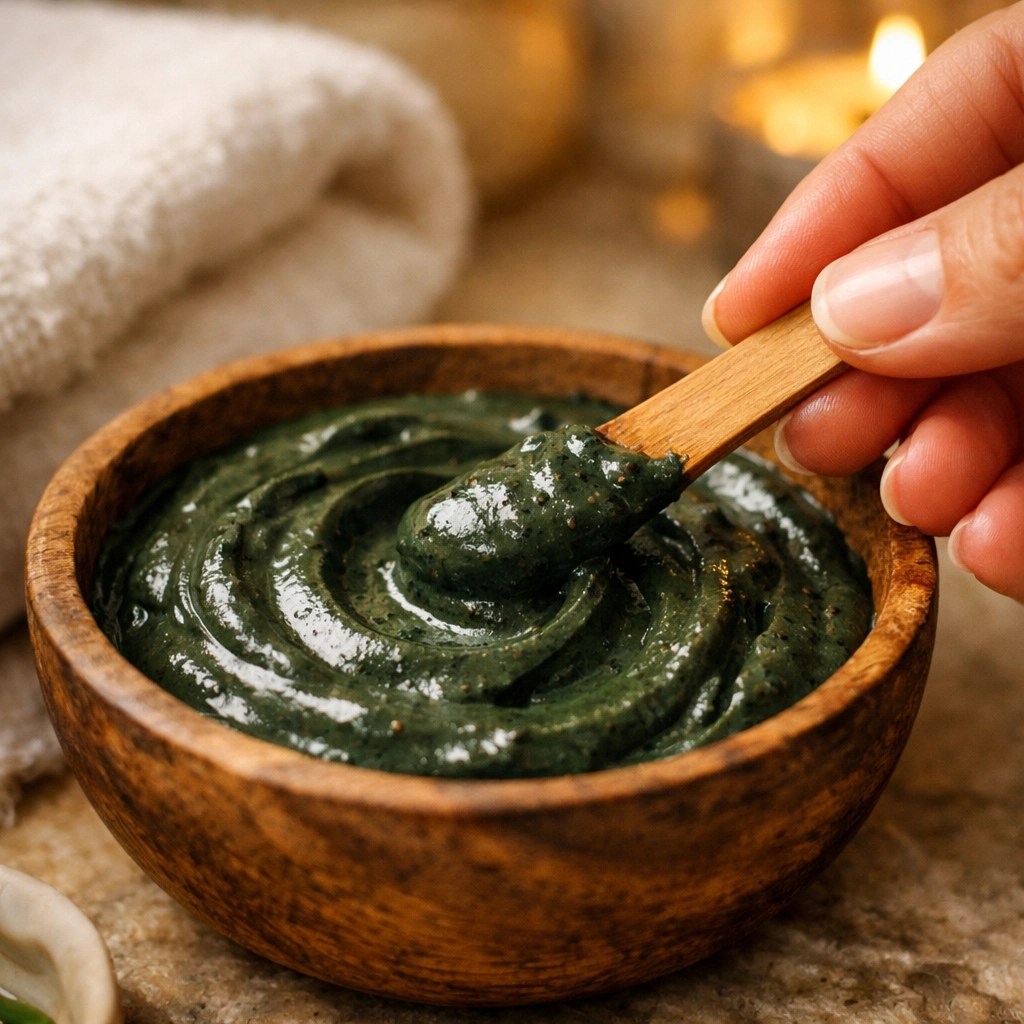
- Mix the Clay and Water: In a non-metal bowl (use wood, glass, or ceramic), mix your Clayer powder and water. Stir until you have a smooth, creamy paste.
- Add the Oils: Add your Helichrysum and Lavender drops. If you’re using Rosehip oil, add that now too.
- Let it "Bloom": Let the mixture sit for about 2 minutes. This allows the clay to fully hydrate and the oils to integrate.
- Apply: Using clean fingers or a brush, apply a thick layer directly onto the scar tissue and the surrounding area.
- Relax: Leave the mask on for about 10–15 minutes. Pro-tip: Do not let the clay dry until it cracks! If it starts to feel tight, mist it with a little water. You want the minerals to stay active, which requires moisture.
- Rinse: Gently wash it off with lukewarm water and a soft cloth. Don't scrub too hard: the scar tissue is sensitive!
How Often Should You Do This?
For best results, I recommend using this treatment 2–3 times a week. Consistency is the most important factor when dealing with scars. It took time for the scar to form, and it will take time for it to soften. If you want more tips on the basics, check out our guide on how to use green clay.
Understanding the "Green" Advantage
French Green Clay (Illite) is unique because of its structure. Unlike Bentonite, which swells significantly, Illite works through adsorption: it's like a magnet for toxins and debris. This makes it much more suitable for targeted skin treatments where you want the clay to sit and "exchange" minerals with your skin cells.
If you're curious about the deeper differences, I’ve written a whole piece on Illite vs. Bentonite. For scars specifically, the mineral profile of Clayer's French source is hard to beat. They actually won the French Healing Clay Award 2025 for a reason!

Safety and Sensitive Skin
Since scar tissue is often thinner and more sensitive than regular skin, you might be worried about a reaction. French green clay is generally very safe, but it's always smart to do a patch test first. If you have very reactive skin, read our guide on green clay and sensitive skin.
Also, keep in mind that Helichrysum is a potent oil. If you are pregnant or on blood-thinning medication, consult with a doctor before using it, as it is known to have an effect on circulation.
Beyond the Mask: Total Healing
While this mask is a game-changer, remember that healing happens from the inside out too. Staying hydrated and eating a diet rich in Vitamin C and Zinc will help your body produce better collagen.
If you are interested in the broader benefits of clay for your health, like its ability to assist in detoxing the body, check out our article on why food-grade green clay is a total shift in detoxing.
Final Thoughts
Your skin is resilient, but sometimes it just needs a little nudge in the right direction. By using Clayer French Green Clay Powder combined with the regenerative powers of Helichrysum and Lavender, you’re giving your scar tissue the best possible environment to soften and fade.
Give this recipe a try for a month and let me know how your skin feels! You can find more DIY recipes and tips on our sitemap or dive deep into the ultimate guide to green clay.
Happy healing, friend!
References & Studies:
- Heavy Metal Levels in Clay: NCBI Study
- Mineral Characteristics of French Green Clay: Cambridge University Press
- Clay and Bacteria: NSF Research
- Clayer Product Studies: ClayerWorld.com
Leave a Reply