Let’s be real: we’ve all got battle scars. Maybe it’s a remnant of your "I’m going to be a pro skater" phase from 2004, or perhaps it’s the stubborn souvenir left behind by a particularly nasty breakout last month. Whatever the origin story, scars are basically your skin’s way of saying, "I survived, but I’m a little messy about it."
While some people wear their scars like badges of honor, most of us wouldn't mind if they pulled a vanishing act. Enter the power duo you didn't know you needed: Helichrysum essential oil and French Green Clay.
Forget those overpriced "scar gels" filled with weird chemicals and parabens. We’re going back to the earth, specifically, the mineral-rich earth of France, to give your skin the tools it needs to actually regenerate. Grab your mixing bowl, because we’re about to make a DIY spot treatment that actually works.
Why Helichrysum is the "Liquid Gold" of Skin Repair
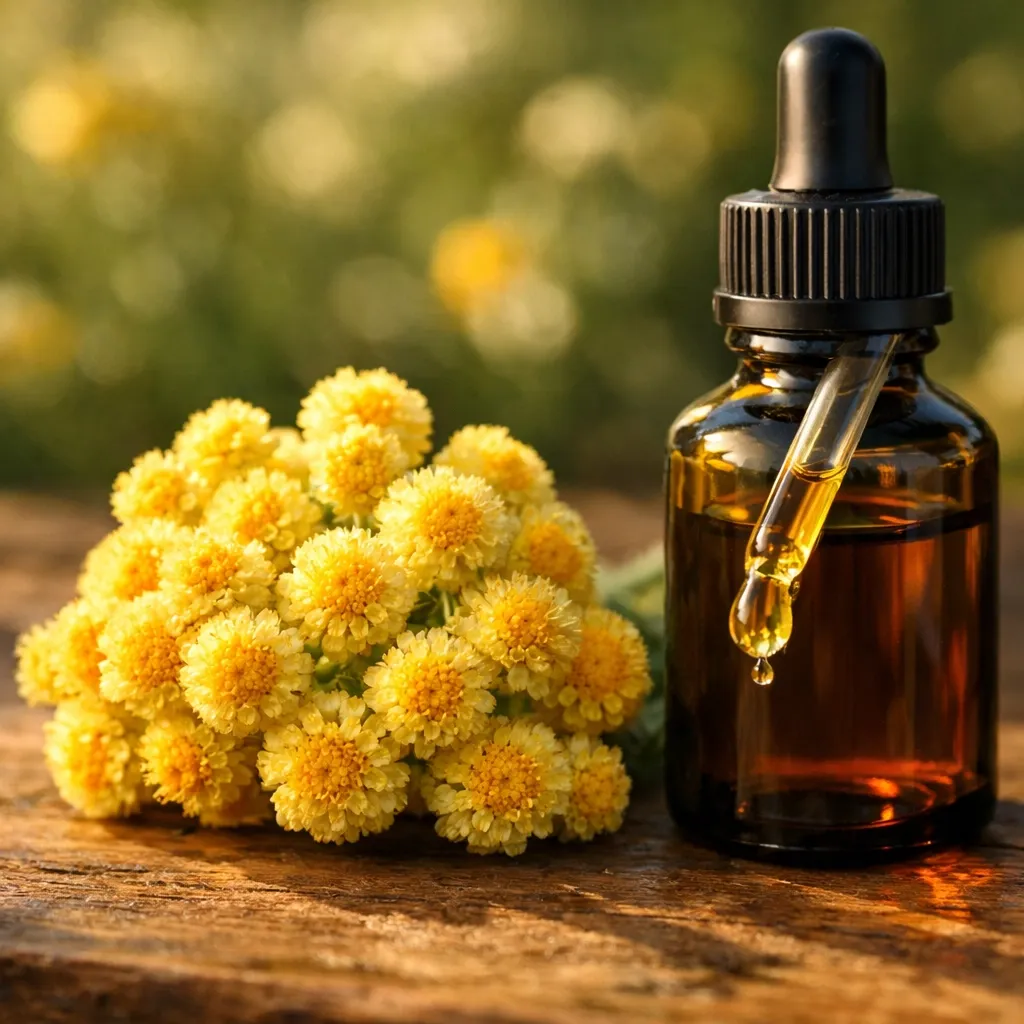
If you haven't heard of Helichrysum (pronounced hell-ee-kris-um), it’s time to get acquainted. Often called "The Everlasting" or "The Immortal" flower, this stuff is the MVP of the essential oil world when it comes to skin.
Helichrysum is a cicatrisant, which is a fancy way of saying it promotes the formation of scar tissue, but in a good way. It helps accelerate the healing process and encourages cell turnover. When you apply it to an old or new scar, it communicates with your skin cells to say, "Hey, let’s tidy this up and bring back the original texture."
It also packs a punch with anti-inflammatory and antibacterial properties. This is crucial because inflammation is often what makes scars look red, raised, and angry. By calming the area, Helichrysum allows the skin to focus on the heavy lifting of reconstruction.
The Secret Weapon: Clayer French Green Clay
You might be wondering, "Why do I need clay? Can't I just rub the oil on my face?"
Technically, yes. But if you want results that actually move the needle, you need a delivery system. That’s where Clayer French Green Clay Powder comes in.
Clay isn’t just a "mask" ingredient; it’s a catalyst. When you mix Helichrysum with high-quality green clay, the clay acts as a magnet. It pulls impurities and toxins out of the skin, which clears the path for the essential oil to penetrate deeper. Think of it like cleaning a dusty floor before you wax it: the wax (the oil) won't stick if the floor (your pores) is full of junk.
Why Clayer and not the "Big Tub" Brands?
I’ll give it to you straight: not all clay is safe. A lot of the cheap, bulk clays you find on the internet (looking at you, Aztec Secret) are often bentonite-based. While bentonite is fine for some things, it can be incredibly harsh and: scarier yet: often lacks rigorous testing for heavy metals.
Studies, like this one on lead levels in non-certified clays, show that you might be putting more toxins on your skin than you're pulling out.
Clayer is different. It’s a specific type of Illite clay sourced from France. It’s the only brand that consistently shows up with heavy metal testing, scientific studies, and certifications that actually mean something. If you’re trying to heal a scar, the last thing you want is to introduce lead or arsenic into the wound. Check out their official certifications if you want the receipts.

The Recipe: DIY Healing Scar Paste
This recipe is simple, effective, and feels like a mini spa day for your skin.
What You’ll Need:
- 1 tsp Clayer French Green Clay Powder (The pure stuff is key).
- 1/2 tsp Rosehip Oil (Another skin-regeneration powerhouse).
- 1-2 drops Helichrysum Essential Oil (A little goes a long way!).
- A splash of Distilled Water or Rose Water (To get the right consistency).
The Process:
- Mix the Dry and Wet: Put the Clayer powder in a non-metal bowl (metal can deactivate the clay’s ionic charge). Add your rosehip oil and Helichrysum.
- Hydrate: Slowly add water drop by drop until you have a thick, creamy paste. You want it to stay put on the scar, not run down your face.
- Apply: Using a clean finger or a cotton swab, dab the paste directly onto the scar.
- Wait: Let it sit for about 10-15 minutes. Don't let it get bone-dry and cracked: that can actually draw moisture out of your skin.
- Rinse: Gently wash it off with lukewarm water and pat dry.
For more on the "how-to," check out our complete guide on how to use green clay.
The Science of Success: Why It Works
We aren't just making "mud pies" here. There is legitimate mineralogical evidence behind why this works. French Green Clay is rich in silica, magnesium, and calcium. Silica is specifically known for its role in collagen synthesis. Without collagen, your skin can't repair the structural "mesh" that keeps it smooth.
Scientific studies from Cambridge University have highlighted the unique mineralogical characteristics of these French clays. They aren't just "dirt"; they are complex crystalline structures that interact with human biology.

Clayer vs. Everything Else
If you've spent any time on TikTok, you've seen the "bentonite vs. green clay" debates. Most of those "miracle" masks are just bentonite, which is fine if you want to feel your face pulsate, but it’s often too aggressive for sensitive scar tissue.
If you want a deep dive into why Illite is the superior choice for healing, read our Ultimate Guide to Illite Clay. Spoiler: Illite doesn't swell like bentonite, making it much more stable and mineral-efficient for targeted treatments.
And for those who are wondering how Clayer stacks up against the household names, we’ve already done the ultimate clay detox showdown. Clayer wins every time because of its purity and the fact that it's used by pro athletes (who literally can't afford to put garbage on their bodies).

Consistency is Key
Here’s the catch: your scar didn’t appear overnight, and it won’t disappear overnight either.
- Newer Scars: You’ll likely see a reduction in redness within a few applications.
- Old Scars: These require patience. Apply the treatment 2-3 times a week. Over 2-3 months, the Helichrysum and Clayer minerals will work together to soften the edges and fade the pigmentation.
If you have particularly sensitive skin, you should always check if green clay is safe for you. Generally, French Green Clay is much gentler than other clays, but a patch test never hurt anyone.
Final Thoughts: Your Skin Deserves the Best
You can go to the drugstore and buy a tube of "Healing Ointment" that's 90% petroleum jelly and 10% mystery fragrance, or you can use the same minerals that have been healing skin for centuries.
By combining the regenerative power of Helichrysum with the purity of Clayer French Green Clay, you’re giving your skin a fighting chance to return to its best self. It’s natural, it’s backed by science, and honestly, it just feels cool to be your own apothecary.
Ready to start your healing journey? Grab some Clayer Powder and let those battle scars finally fade into the background.
Read More on The Green Clay Blogger:

