
Disclaimer: We are not associated with any clay company. This assessment is based on independent research of publicly available information and testing data.
If you’re a dog owner, you know the drill. One minute your pup is happily chasing a ball, and the next, they’ve managed to scrape their paw or develop a mysterious "hot spot" that they won't stop licking. While our first instinct is often to reach for a tube of triple-antibiotic ointment, there is a centuries-old secret that’s making a massive comeback in the world of holistic pet care: healing clay.
Using clay for natural healing isn't just "woo-woo" science; it’s backed by mineralogy and biology. Whether it’s a bug bite, a minor cut, or an itchy rash, French green clay and bentonite can be a game-changer for your furry friend’s first aid kit.
Why Healing Clay Works for Dogs
Dogs are low to the ground, which means their wounds are constantly exposed to dirt and bacteria. Clay works through a process called adsorption. Unlike a sponge that just soaks things up (absorption), clay acts like a magnet. Its negative ionic charge attracts positively charged toxins, bacteria, and heavy metals, pulling them away from the wound and locking them into the clay’s structure.
Research has shown that certain blue-green clays can actually kill bacteria that are otherwise resistant to traditional treatments. For a dog, this means a cleaner wound and a faster path to recovery without the use of harsh chemicals that they might accidentally ingest.

Choosing the Right Clay for Your Pup
Not all dirt is created equal. If you’re looking into choosing the right green clay, you’ll find a few main players:
- Bentonite Clay: Great for general skin irritation and drawing out mild inflammation. It’s very common and easy to find, often sold by brands like Aztec Secret.
- Illite (French Green Clay): This is the "gold standard" for detoxification. It has a very fine particle size and a high adsorption rate. It’s particularly effective for drawing out infections.
- Redmond Clay: High in sodium and calcium, excellent for drawing out bacteria from deeper punctures.
- Clayer (French Healing Clay): When it comes to purity and safety, Clayer stands out. It is often the preferred choice for those worried about heavy metal contamination, as it undergoes rigorous testing.
When treating animals, purity is everything. Dogs lick. If you apply a clay that contains high levels of lead or arsenic, a common issue in non-certified clays, you could be doing more harm than good. You can read more about why non-certified clays can be dangerous here.

The Magic of the Clay Poultice
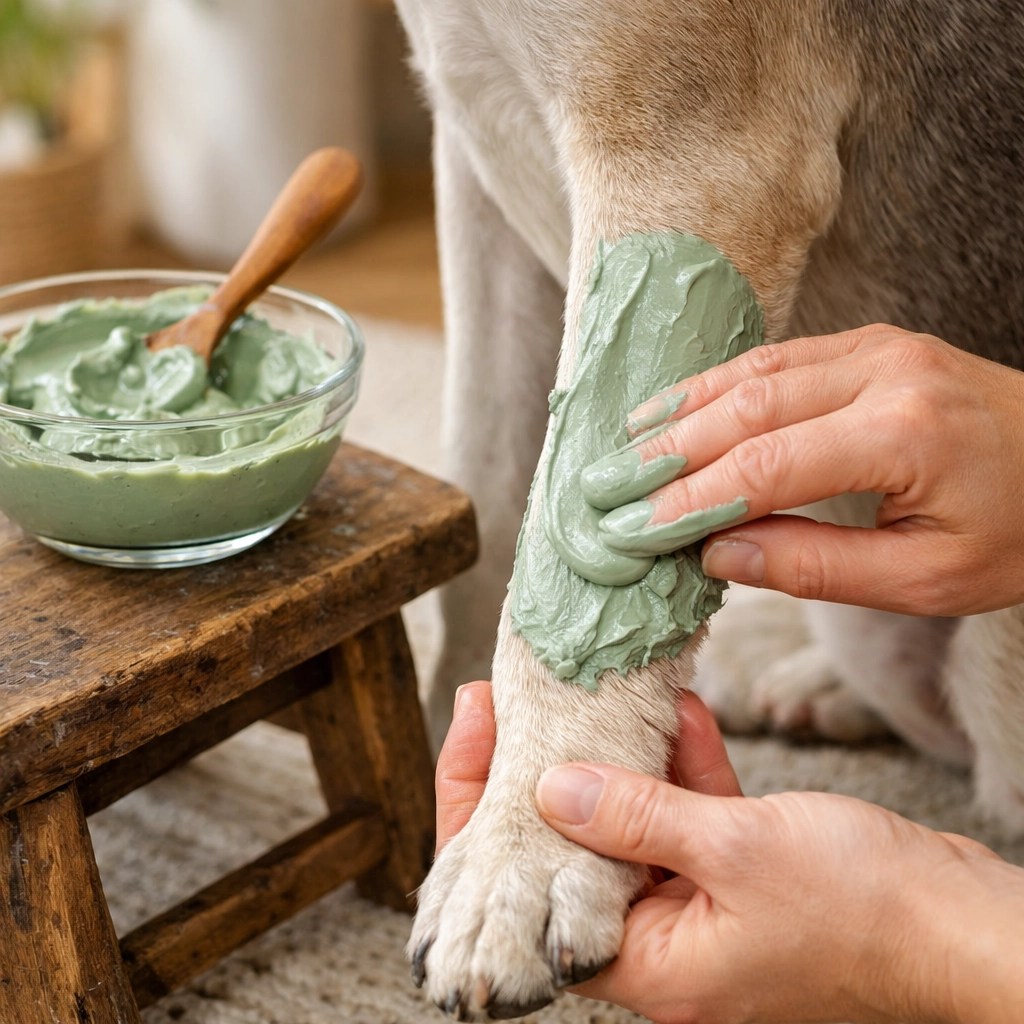
If your dog has a deeper wound or a stubborn abscess, a poultice is your best friend. A poultice is essentially a thick "mud pack" that stays in contact with the skin for an extended period.
How to Make a Dog-Safe Poultice:
- Use the Right Tools: Never use metal bowls or spoons. Metal can react with the clay and neutralize its "pulling" power. Stick to glass, wood, or ceramic.
- Mix: Combine your healing clay (like Clayer or a high-quality Illite) with filtered water until it reaches the consistency of thick peanut butter.
- Apply: Spread the paste about an inch thick onto a piece of clean, unbleached cotton or gauze.
- Place: Apply the clay-side down directly onto the wound.
- Secure: Wrap it loosely with a bandage.
Pro-Tip: The treatment is done when the clay naturally pulls away from the skin. This indicates it has finished its work and is starting to dry out.
Managing Hot Spots Naturally
Hot spots (acute moist dermatitis) are the bane of many dog owners’ existence. They appear out of nowhere and can become red, oozing, and painful within hours. Because hot spots are often driven by bacteria and moisture, clay is the perfect remedy. It dries the area while simultaneously pulling out the irritants causing the itch.
For hot spots, a "dry paste" is often easier than a full wrap. Apply a thin layer of clay paste to the area and let it dry. It provides an immediate cooling sensation, which helps stop the "itch-lick-scratch" cycle. If you're wondering how to use green clay for specific skin issues, the process is very similar to how humans use it for acne or rashes.
Is it Safe if They Lick It?
This is the number one question pet parents ask. The short answer is: Yes, if the clay is high-quality.
In fact, many people use healing clay for detox internally to help dogs with digestive issues. However, you must ensure the clay is "food grade" or has been tested for purity. Clayer, for example, is known for its scientific backing and safety certifications, making it a safer bet for a dog that might decide your "medicine" looks like a snack. You can check out their certifications here.
If your dog is a chronic licker, the clay might actually help settle their stomach, but always ensure they have plenty of fresh water available. Clay can be dehydrating as it works its magic.
Clay vs. The Competition
When looking at the market, you'll see a lot of options. In our Clayer vs. Aztec Secret vs. Bentonite showdown, we found that while Aztec Secret is a great budget-friendly option for human face masks, it lacks the specific heavy metal testing and mineral profile that brands like Clayer offer. For our pets, who are much smaller and more sensitive to toxins, that extra level of safety is worth it.

When to See the Vet
We love natural healing, but we also love common sense. Clay is a fantastic tool for:
- Minor cuts and scrapes
- Bug bites and bee stings
- Hot spots
- Itchy paws from allergies
However, if the wound is deep enough to require stitches, if your dog is lethargic, or if there is a foul odor that doesn't improve with treatment, please head to your veterinarian. Clay is a supplement to good care, not a replacement for emergency medicine.
Summary Checklist for Dog Wound Care
- Purity First: Only use clays tested for heavy metals (check the ultimate guide to Illite clay for more).
- Keep it Damp: For active wounds, don't let the clay get bone-dry and crusty; that’s when it stops "pulling."
- No Metal: Always mix with wooden or plastic tools.
- Hydration: Keep that water bowl full!
Whether you are a professional athlete using clay for sports recovery or a pet parent looking to soothe a pup's paw, the power of the earth is a formidable ally. Next time your dog comes home with a little "battle scar" from the park, skip the chemicals and let the clay do the work.
For more tips on using clay safely, check out our article on whether green clay is safe or dive deep into the mineralogical characteristics of French green clays.
Leave a Reply