In our previous article, we introduced the fundamental concept that clay cannot be organic. Now let's dive deeper into the common myths surrounding "organic clay" and why understanding this distinction matters for anyone interested in green clay products.
The Organic Certification Myth
One of the most persistent myths in the clay market is that some clays are "organic" while others are not. This misconception stems from a fundamental misunderstanding of what organic certification actually means.
Organic certification applies exclusively to agricultural products and substances derived from living organisms. The USDA Organic standards, for example, govern how crops are grown, livestock are raised, and food products are processed. These standards focus on avoiding synthetic pesticides, fertilizers, and genetically modified organisms.
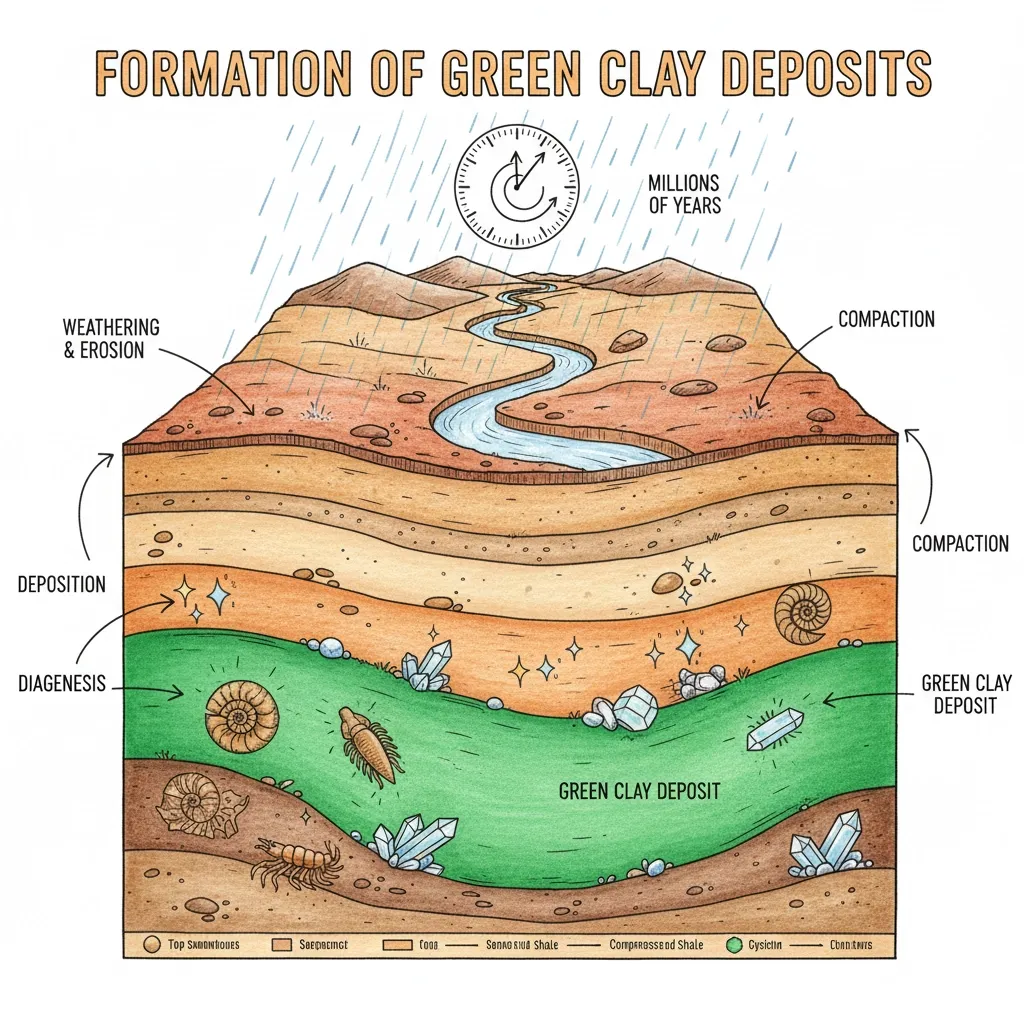
Clay, however, is a mineral. It forms through geological processes over millions of years from the weathering and breakdown of rocks. Green clay, specifically, gets its color from iron oxide and other mineral compounds that developed naturally in the earth's crust. No farming practices, pesticides, or organic growing methods are involved in clay formation.

Breaking Down the Science
To understand why clay cannot be organic, we need to examine what clay actually is at the molecular level. Clay minerals are crystalline structures composed of aluminum, silicon, oxygen, and other elements arranged in specific patterns. These are inorganic compounds: they don't contain carbon-hydrogen bonds that characterize organic molecules.
Green clay, also known as French green clay or montmorillonite, has the chemical formula (Na,Ca)₀.₃₃(Al,Mg)₂Si₄O₁₀(OH)₂·nH₂O. This complex mineral structure formed through natural geological processes, not biological ones. The green coloration comes from iron oxide (Fe₂O₃) and other trace minerals that give the clay its distinctive properties.
When companies market "organic clay," they're either misusing the term or trying to suggest their clay is somehow purer or more natural. But all genuine clay is natural by definition: it's a product of earth's geological processes.
Common Marketing Myths Exposed
Myth 1: "Certified Organic Clay" No legitimate organic certification body can certify clay as organic because clay doesn't meet the basic definition of an organic substance. If you see this claim, it's either a marketing error or a misleading statement.
Myth 2: "Organically Sourced Clay" This phrase doesn't make scientific sense. Clay isn't grown or raised: it's mined from deposits that formed over geological time. The "sourcing" refers to extraction methods, not growing practices.
Myth 3: "Chemical-Free Organic Clay" All matter, including clay, is composed of chemicals. Water is a chemical (H₂O), and so are the mineral compounds in clay. "Chemical-free" is scientifically impossible and meaningless as a marketing term.

What Actually Matters: Quality Indicators
Instead of looking for "organic" clay, focus on legitimate quality indicators:
Purity Levels: High-quality green clay should be free from contaminants like heavy metals, bacteria, and other impurities. Reputable suppliers provide analysis certificates showing purity levels.
Mineral Content: Authentic green clay contains specific mineral ratios. Look for detailed mineral analysis that shows the presence of montmorillonite, iron oxide, and trace minerals that give green clay its therapeutic properties.
Processing Methods: How clay is processed after extraction affects quality. Sun-drying and minimal processing help preserve the clay's natural structure and mineral content.
Source Location: Different geographical regions produce clay with varying mineral compositions. French green clay, for example, comes from specific quarries in France known for high-quality montmorillonite deposits.
The Regulatory Reality
In the United States, the FDA doesn't recognize "organic" claims for mineral products like clay. The Federal Trade Commission (FTC) also monitors misleading advertising claims, including improper use of terms like "organic" for non-agricultural products.
International organic certification bodies like ECOCERT and COSMOS also don't certify raw minerals as organic. These organizations focus on cosmetic products that may contain organic ingredients, but the clay itself cannot receive organic certification.

Understanding Natural vs. Organic
This confusion often arises from conflating "natural" with "organic." All clay is natural: it forms through natural geological processes without human intervention. However, natural doesn't equal organic in certification terms.
Green clay's beneficial properties come from its natural mineral structure, not from organic growing methods. The clay's ability to absorb toxins, its mineral content, and its therapeutic applications all stem from its geological formation over millions of years.
Red Flags in Clay Marketing
Be skeptical of these common misleading claims:
- "100% Organic Clay Powder"
- "USDA Certified Organic Clay"
- "Organically Grown Clay"
- "Premium Organic Healing Clay"
These phrases indicate either a misunderstanding of organic certification or intentionally misleading marketing. Legitimate clay suppliers focus on purity, mineral content, and proper sourcing instead of impossible organic claims.
Making Informed Choices
When selecting green clay, ask these important questions instead of seeking "organic" options:
What is the clay's mineral composition? Look for detailed analysis showing montmorillonite content and trace mineral profiles.
Where was the clay sourced? Reputable quarries with known mineral compositions produce more consistent, higher-quality clay.
How was it processed? Minimal processing methods like sun-drying help preserve the clay's natural properties.
Are purity tests available? Quality suppliers provide certificates of analysis showing the absence of contaminants.
The Bottom Line
Clay cannot be organic because it's a mineral, not an agricultural product. Understanding this fundamental distinction helps you make informed decisions and avoid misleading marketing claims. Instead of seeking "organic" clay, focus on verified purity, mineral content, and proper sourcing.
Quality green clay doesn't need organic certification to be effective. Its therapeutic properties come from millions of years of natural geological formation, creating a mineral structure that offers unique benefits for skincare, detoxification, and wellness applications.
When you understand the science behind clay formation and the reality of organic certification, you can navigate the market with confidence and choose high-quality green clay products based on legitimate quality indicators rather than impossible marketing claims.

