Since the dawn of humanity, people have turned to clay for healing. Whether swallowing it for stomach troubles, slathering it on wounds, or soaking in muddy baths, clay has been nature's medicine cabinet for thousands of years. But until recently, nobody really understood how clay actually worked to keep us healthy.
That mystery has finally been solved, thanks to groundbreaking research from Arizona State University. Scientists discovered that clay kills bacteria through a sophisticated two-step process that's as clever as it is deadly: at least for harmful germs.
The Ancient Healer Gets Modern Validation
For generations, traditional healers knew that certain clays could cure infections and promote healing. They just didn't know why. Now we understand that specific metallic elements in the right kinds of clay can destroy disease-causing bacteria that infect both humans and animals.
"We think of this mechanism like the Trojan horse attack in ancient Greece," explains Lynda Williams, a clay-mineral scientist at ASU who led the research. The comparison is perfect: just like the legendary wooden horse that smuggled Greek soldiers into Troy, clay uses deception to get past bacterial defenses.
Not All Clays Are Created Equal
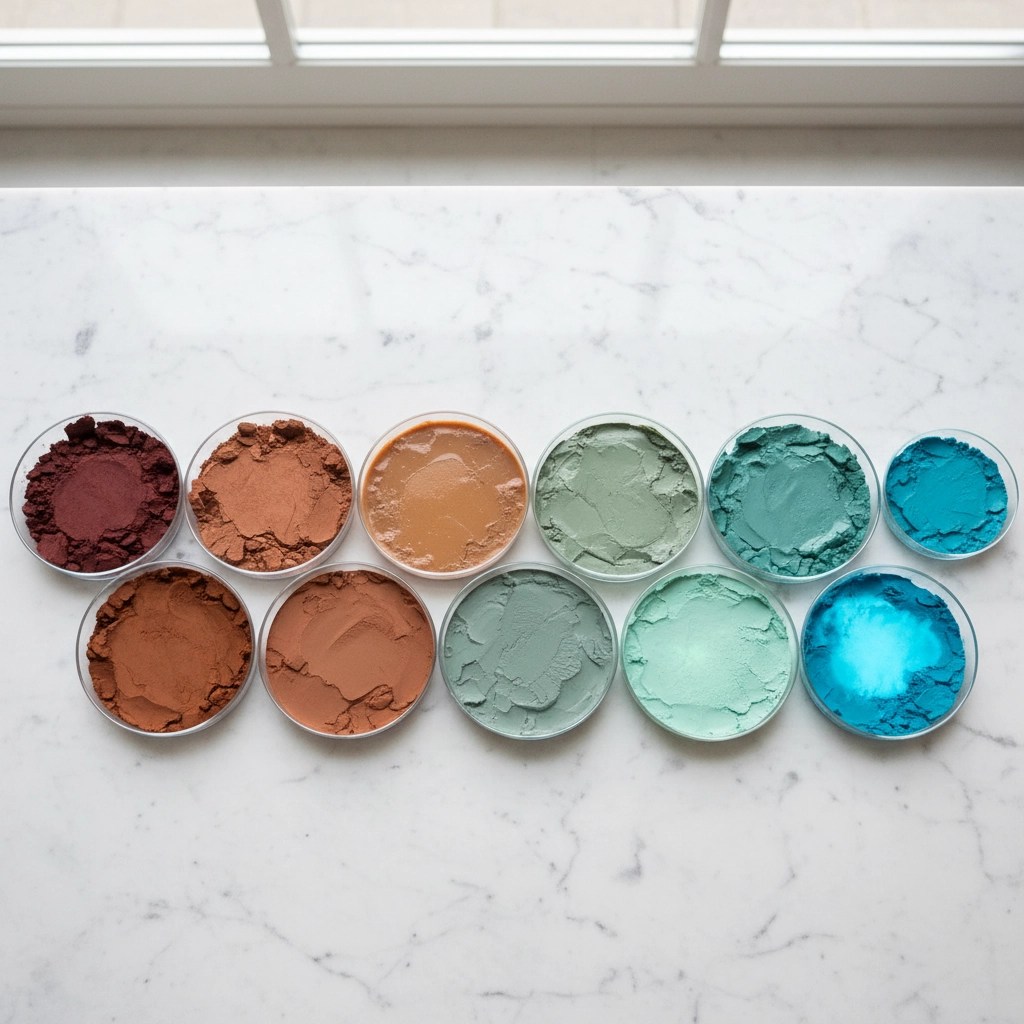
Here's something fascinating: the color of clay tells you everything about its bacteria-fighting power. Green and blue clays are the real warriors in this story, and their distinctive colors come from having high levels of chemically reduced iron.
This is completely different from the oxidized iron that gives regular clay its familiar rust-red color. Think of reduced iron as iron that hasn't been exposed to oxygen: it's in a special chemical state that bacteria actually need in small amounts to survive.
The colors aren't just pretty: they're a visual clue to the clay's medicinal properties. When you see that distinctive blue-green hue, you're looking at nature's antibiotic in action.
The Trojan Horse Attack: How Clay Kills Bacteria
The way clay destroys bacteria is absolutely brilliant. It's a two-element tag team that would make any wrestling duo jealous. Here's how it works:
Step 1: The Iron Bait
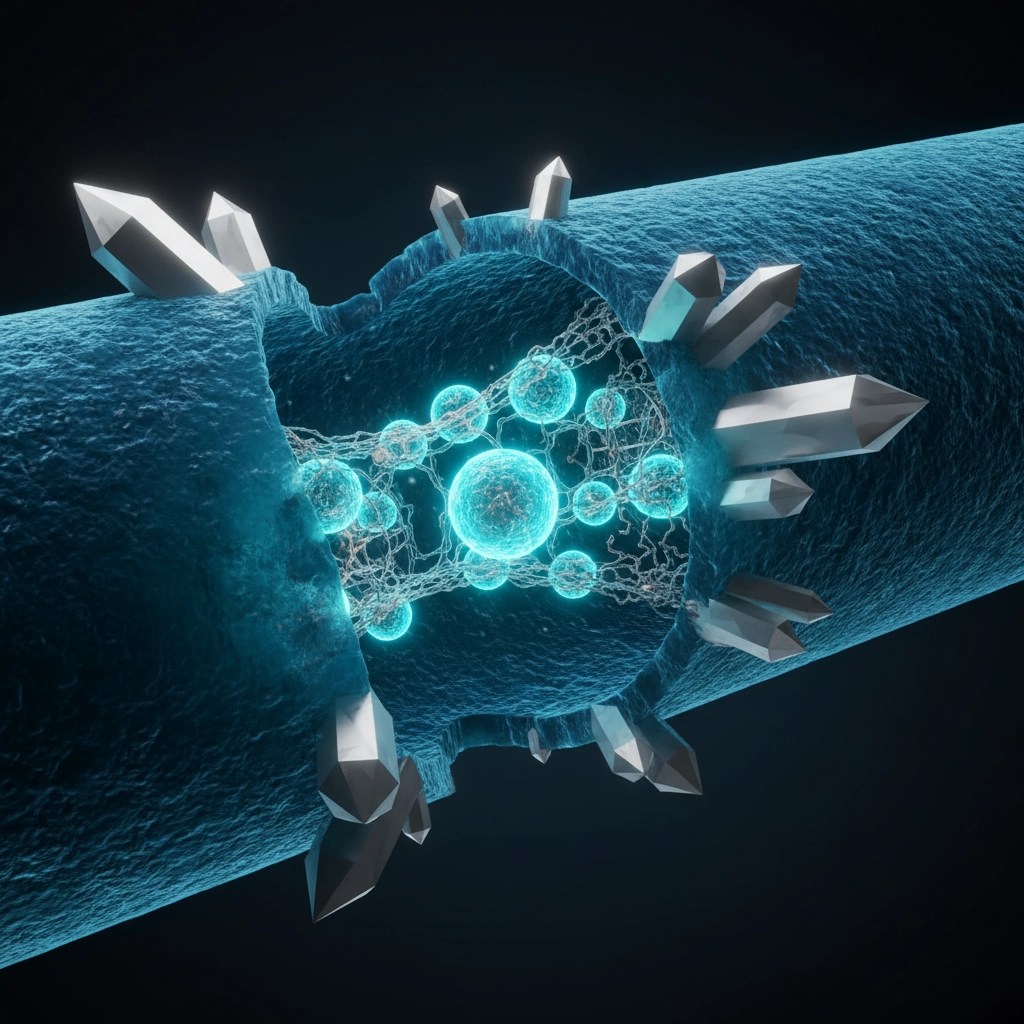
Reduced iron acts as the perfect disguise. Bacteria need small amounts of iron to survive, so when they encounter clay with reduced iron, they think they've found a nutritious snack. The bacterial cell wall opens up to let this "essential nutrient" inside.
Step 2: The Aluminum Assault
Once the cell wall is compromised, aluminum swoops in to prop it open. Think of aluminum as the doorstop that keeps the bacterial cell from closing its defenses.
Step 3: The Fatal Flood
With the cell wall wedged open, massive amounts of iron flood into the bacterial cell. This iron overdose is toxic: the excess iron becomes oxidized inside the cell, essentially poisoning the bacteria from within.
Real-World Evidence: From France to Oregon
The discovery of this mechanism started with a chance encounter involving a French philanthropist named Line Brunet de Courssou. She had childhood memories of a special green clay from near her home in France's Massif Central region. When she took samples of this clay to Africa, she documented its remarkable ability to cure Buruli ulcer: a devastating flesh-eating skin disease affecting patients in Ivory Coast.
When researchers tried to locate the original French clay deposit without success, they began systematically testing "healing clays" sold online. After analyzing dozens of samples, they struck gold with a blue-colored clay from the Oregon Cascades.
This Oregon blue clay proved to be incredibly effective against a broad spectrum of human pathogens, including some of medicine's most feared enemies like methicillin-resistant Staphylococcus aureus (MRSA): bacteria that laugh in the face of conventional antibiotics.
Why Green Clay Takes the Crown
While various colored clays have different properties and benefits, green clay stands out as particularly powerful for antibacterial applications. The research confirms what traditional healers have known for centuries: green clay's unique mineral composition gives it superior bacteria-fighting abilities.
Green clay's high content of reduced iron, combined with aluminum and other trace minerals, creates the perfect storm for bacterial destruction. It's like having a specialized military unit trained specifically to take down infectious invaders.
The Science Behind the Colors
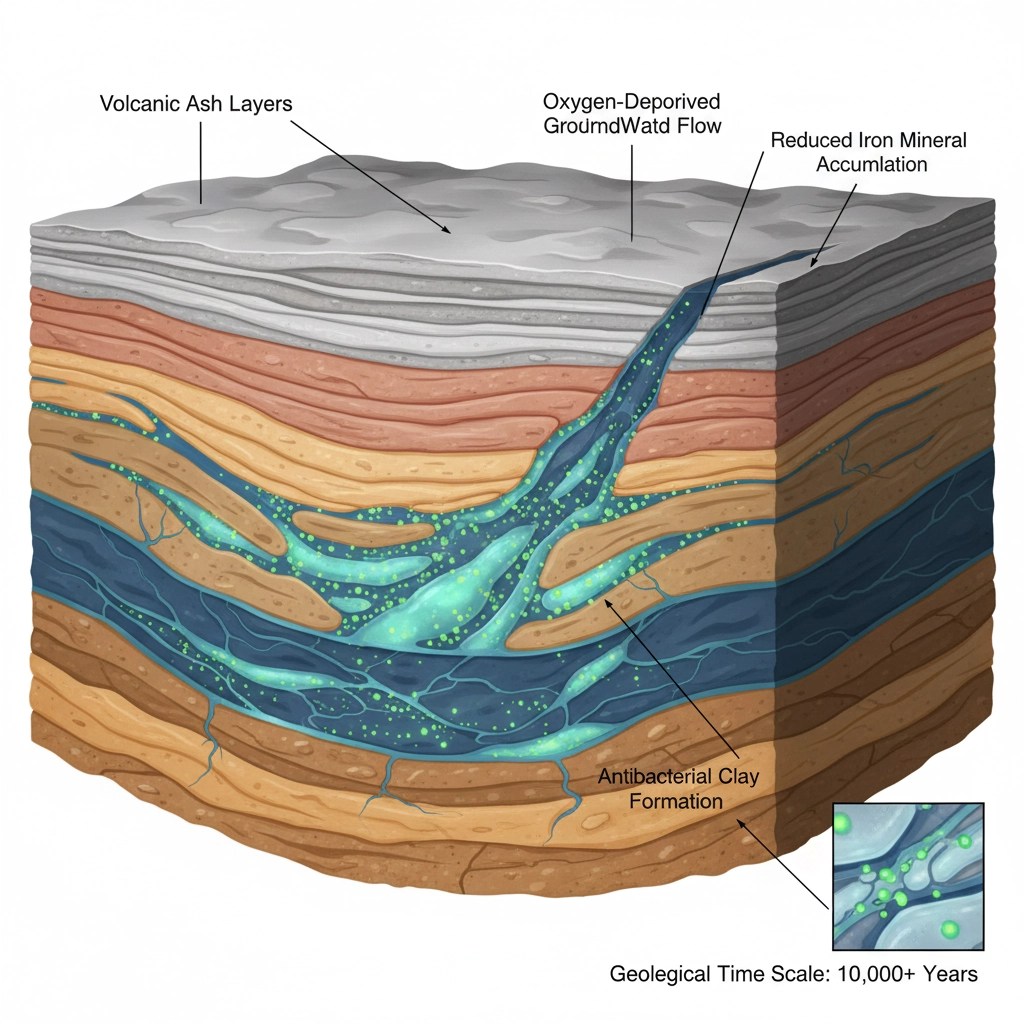
The formation of these antibacterial clays is fascinating from a geological perspective. Green and blue clays typically form in volcanic ash layers, where rocks become altered by oxygen-deprived, hydrogen-rich water over long periods.
This special environment creates the chemically reduced iron that gives these clays their distinctive colors and bacteria-killing properties. It's a process that takes thousands of years, making these clays rare geological treasures.
Red and yellow clays, while useful for other purposes, contain oxidized iron that bacteria can easily recognize as potentially harmful. They don't have the same "stealth" properties that make green and blue clays so effective at bacterial infiltration.
Fighting the Antibiotic Resistance Crisis
This discovery comes at a crucial time in medical history. With antibiotic-resistant bacteria becoming increasingly common, we desperately need alternative approaches to fighting infections. Clay's unique mechanism offers hope because it works through a completely different pathway than traditional antibiotics.
While bacteria can evolve resistance to synthetic drugs over time, it's much harder for them to develop defenses against this ancient, natural process. The clay's deceptive approach: using elements that bacteria actually need: makes it particularly difficult for germs to evolve countermeasures.
Practical Applications and Future Possibilities
The research opens exciting possibilities for treating persistent infections and diseases that don't respond well to conventional antibiotics. Because green and blue clays are abundant in many parts of the world, this discovery could lead to new, accessible treatments for various bacterial infections.
Scientists are already exploring how to harness this mechanism for new drug designs. By understanding exactly how clay kills bacteria, researchers can potentially develop more targeted treatments that use the same principles.

The Broader Picture: Clay's Place in Modern Medicine
This breakthrough validates what indigenous cultures and traditional healers have known for millennia. Sometimes the most sophisticated solutions come from the simplest, most natural sources. Clay's antibacterial action represents millions of years of geological evolution creating the perfect bacterial warfare system.
The discovery also highlights the importance of preserving traditional knowledge and investigating natural remedies with modern scientific methods. Many "folk remedies" likely contain genuine medical value that we're only beginning to understand.
A Natural Solution for Modern Problems
As we face increasing challenges with antibiotic-resistant bacteria, clay offers a promising alternative rooted in both ancient wisdom and cutting-edge science. The fact that clay kills bacteria through such an elegant mechanism: essentially tricking harmful germs into poisoning themselves: shows nature's incredible ingenuity.
Whether you're interested in natural health solutions or fascinated by the intersection of geology and medicine, this research proves that sometimes the old ways really are the best ways. Green and blue clays represent a powerful tool in humanity's ongoing battle against bacterial infections, one that's been hiding in plain sight for thousands of years.
The next time you see that distinctive blue-green clay color, you'll know you're looking at one of nature's most sophisticated antibacterial systems: a microscopic Trojan horse ready to defend your health.
Disclaimer: We are not associated with any clay company. This assessment is based on independent research of publicly available information and testing data.
Sources: NSF Research Article
Leave a Reply