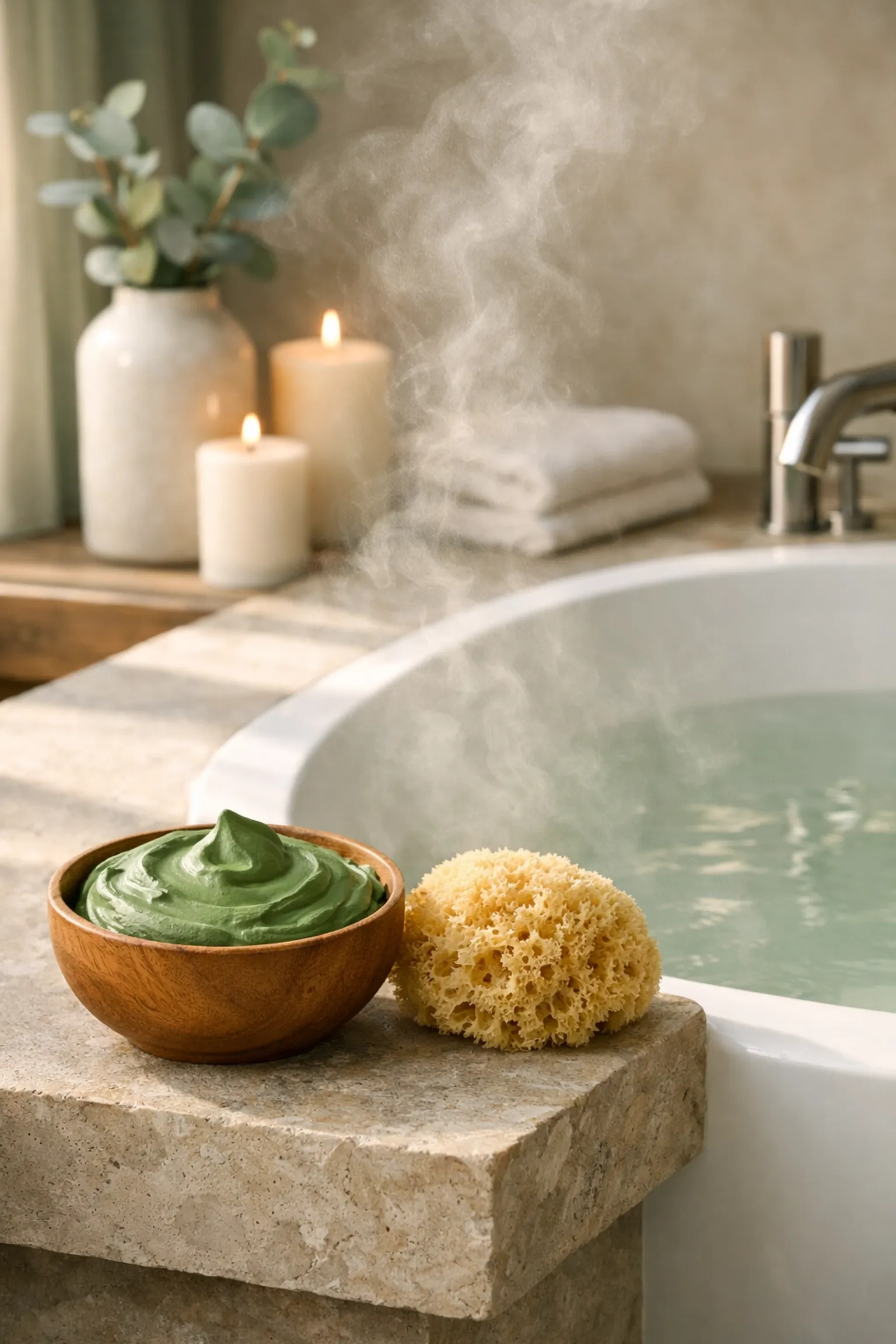
Illite clay might not be as famous as bentonite or kaolin, but this remarkable mineral deserves your attention. Whether you're interested in skincare, geology, or industrial applications, illite clay offers unique properties that set it apart from other clay minerals. Let's dive into ten fascinating facts about this versatile clay that's been quietly making a difference in various industries for decades.
1. Illite Clay Has Multiple Names and Identities
Illite clay is known by several names in the scientific community, including hydromica and hydromuscovite. These alternative names reflect its close relationship to mica minerals and highlight its unique water-containing structure. The name "illite" itself comes from Illinois, where this clay mineral was first properly described and classified in 1937. This naming convention follows the geological tradition of honoring the location where important minerals are discovered.
The multiple names can sometimes confuse consumers looking for illite clay products, but they all refer to the same mineral with identical properties. When shopping for illite clay products, you might see any of these names used interchangeably on product labels.

2. The Crystal Structure That Makes Illite Special
What makes illite clay unique is its non-expanding 2:1 layered crystal structure. This means each layer consists of one aluminum octahedral sheet sandwiched between two silica tetrahedral sheets. But here's the key difference: potassium ions are firmly fixed in the interlayer spaces, preventing the clay from swelling when it encounters water.
This structural characteristic is crucial for many applications. Unlike smectite clays that can expand dramatically when wet, illite maintains its stability. This makes it particularly valuable in construction materials, ceramics, and even cosmetic applications where consistent texture is important.
3. Illite's Chemical Composition Packs a Potassium Punch
The general chemical formula for illite clay is KAl₂(Si₃Al)O₁₀(OH)₂, containing approximately 6-8% potassium oxide (K₂O). This high potassium content isn't just a chemical curiosity: it has practical implications. The potassium ions create a higher layer charge than you'll find in smectitic clays, thanks to greater aluminum substitution for silicon in the tetrahedral sites.
This potassium-rich composition makes illite clay valuable in agriculture as a slow-release fertilizer. Farmers and gardeners appreciate that illite can provide plants with essential potassium over extended periods, making it an eco-friendly alternative to synthetic fertilizers.
4. How Nature Creates Illite Clay
Illite clay doesn't form overnight. It's created through the weathering or hydrothermal alteration of aluminum-rich minerals like muscovite and feldspar. This process typically occurs over thousands of years as these parent minerals break down under specific temperature and pressure conditions.
You'll commonly find illite in sediments, soils, shales, and some low-grade metamorphic rocks. The formation process explains why illite deposits are often found in areas with specific geological histories, making some sources particularly prized for their purity and consistency.

5. The Perfect Balance: Moderate Cation Exchange Capacity
Illite clay boasts a moderate cation exchange capacity (CEC) of 20-40 milliequivalents per 100 grams. This places it in a sweet spot between kaolinite (lower CEC) and smectite (higher CEC). This balanced exchange capacity makes illite versatile for various applications where you need moderate ion-exchange capabilities without the extreme swelling properties of high-CEC clays.
For skincare enthusiasts exploring French healing clay options, this moderate CEC means illite can effectively draw out impurities while remaining gentle enough for sensitive skin types.
6. Industrial Workhorse Across Multiple Sectors
Illite clay plays crucial roles in numerous industries. In ceramics and pottery, it provides excellent workability while reducing drying shrinkage: a property that ceramic artists and manufacturers highly value. The construction industry relies on illite for brick and tile manufacturing, where its stability and binding properties create durable building materials.
The oil and gas industry uses illite as a drilling mud additive. Unlike bentonite, illite doesn't swell excessively, making it ideal for drilling operations where excessive swelling could cause problems. Additionally, illite is used in radioactive waste containment barriers, taking advantage of its stability and ion-exchange properties to safely isolate hazardous materials.
7. A Timeline Written in Stone: Petroleum Exploration Applications
One of illite clay's most sophisticated applications involves petroleum exploration and geological dating. Illite can be used for K-Ar (potassium-argon) radiometric dating, helping geologists understand the timing of geological events and fluid flows in sedimentary basins.
The clay undergoes progressive transformation from randomly interstratified illite-smectite through ordered arrangements to pure illite as temperatures increase. This transformation provides a calibrated record of thermal history that coincides with the oil generation window, making illite analysis essential for petroleum system studies.

8. Beauty Meets Geology: Ornamental Illite Varieties
Not all illite clay ends up in industrial applications. Zipao 'jade' represents an ornamental variety of illite that showcases the mineral's aesthetic potential. This beautiful form displays distinctive bands of red-purple and pale yellow-green colors caused by microscopic inclusions of hematite and other minerals.
Artisans carve Zipao jade into pendants, decorative items, and ornamental pieces. While it's not true jade (which is either jadeite or nephrite), Zipao jade has its own unique beauty and cultural significance in certain regions where it's found.
9. The Science of Identification: Why Illite Needs Special Analysis
Identifying illite clay requires sophisticated analytical techniques due to its extremely fine-grained nature. Visual identification is nearly impossible, and even experienced geologists typically rely on X-ray diffraction (XRD) or SEM-EDS (scanning electron microscopy with energy-dispersive spectroscopy) for positive identification.
This need for advanced analytical techniques explains why high-quality illite clay products, like those offered by companies such as Clayer, undergo extensive testing to ensure purity and consistency. When you're looking for the best illite clay products, choosing suppliers who invest in proper analytical verification makes a significant difference in quality.
10. Skincare Applications: Gentle Yet Effective
In the world of natural skincare, illite clay offers unique benefits that set it apart from more aggressive clay types. Its moderate cation exchange capacity allows it to effectively draw out impurities and excess oils without over-drying the skin. This makes it particularly suitable for people with sensitive or mature skin who want the benefits of clay treatment without harshness.

Unlike some clays that can be too intense for regular use, illite's gentle nature makes it suitable for frequent applications. Many skincare enthusiasts appreciate that they can incorporate illite clay masks into their routine several times per week without irritation. For those exploring various clay options, illite provides an excellent middle ground between gentle and effective.
The clay's fine particle size also contributes to its skincare appeal. When mixed with water or other liquids, illite creates a smooth, workable paste that spreads evenly and doesn't feel gritty or harsh against the skin. This texture makes it ideal for facial masks, body treatments, and even hair care applications.
Understanding Illite Clay's Place in the Clay Family
Illite clay represents a perfect example of how nature creates materials with precisely the right properties for specific applications. Its non-swelling structure, moderate ion-exchange capacity, potassium content, and fine particle size combine to create a clay that's both versatile and reliable.
Whether you encounter illite clay in a ceramic studio, a skincare product, an industrial application, or a geological survey, you're experiencing a mineral that has been millions of years in the making. Its unique properties continue to make it valuable across diverse fields, from ancient pottery techniques to modern petroleum exploration.
For consumers interested in exploring illite clay products, understanding these fundamental properties helps explain why this lesser-known clay mineral deserves consideration alongside its more famous cousins. The combination of gentleness and effectiveness makes illite clay an excellent choice for those seeking natural solutions without compromise.