When exploring the world of clay minerals, illite clay stands out as one of the most fascinating and scientifically significant varieties. Often overlooked compared to its more famous cousins like bentonite or kaolin clay, illite clay possesses unique characteristics that make it essential in geological processes and various industrial applications. Whether you're a geology enthusiast, skincare formulator, or simply curious about natural minerals, understanding these key facts about illite clay will deepen your appreciation for this remarkable substance.
Fact 1: Illite Clay is a Non-Swelling Clay with a Complex Layered Structure
The first and most distinctive characteristic of illite clay is its non-swelling nature, which sets it apart from many other clay minerals. Illite clay belongs to the phyllosilicate group and features a sophisticated 2:1 layer structure composed of silica tetrahedron-alumina octahedron-silica tetrahedron (T-O-T) layers. This complex arrangement creates a stable mineral structure that behaves very differently from expanding clays.
What makes illite clay truly unique is the presence of poorly hydrated potassium cations occupying the spaces between these layers. These potassium ions act as a stabilizing force, preventing the clay from swelling when it comes into contact with water. This non-expanding property is crucial for understanding how illite clay behaves in various applications and natural environments.

The stability of illite clay makes it particularly valuable in geological formations where consistent volume is important. Unlike smectite clays that can expand dramatically when wet, illite clay maintains its structural integrity, making it an important component in sedimentary rocks and soil systems. This characteristic also explains why illite clay is often found in areas where other clay minerals might have been altered or weathered away over time.
For those interested in exploring high-quality clay products, companies like those found at www.clayerworld.com offer various clay minerals for research and commercial applications, including specimens that can help demonstrate these structural differences.
Fact 2: Illite Clay Forms Through the Weathering of Muscovite and Other Micas
The second fascinating fact about illite clay relates to its origin story. Illite clay is classified as a secondary mineral, meaning it doesn't form directly from magma or primary geological processes. Instead, illite clay develops through the gradual weathering and alteration of primary minerals, particularly muscovite mica, as well as feldspar and other aluminum-rich minerals.
This transformation process is a testament to the dynamic nature of Earth's mineral systems. Over long periods, environmental factors such as water, temperature changes, and chemical reactions gradually break down the original mica structure, reorganizing the atoms into the distinctive illite clay formation. The process involves the partial loss of potassium from the original mica structure while maintaining much of the layered silicate framework.
Illite clay is commonly discovered in sediments, soils, and argillaceous sedimentary rocks, where it often becomes the dominant clay mineral. In agricultural soils, particularly those developed from granite, shale, and schist parent materials, illite clay frequently emerges as the primary clay component. This widespread occurrence makes illite clay one of the most abundant clay minerals on Earth's surface.
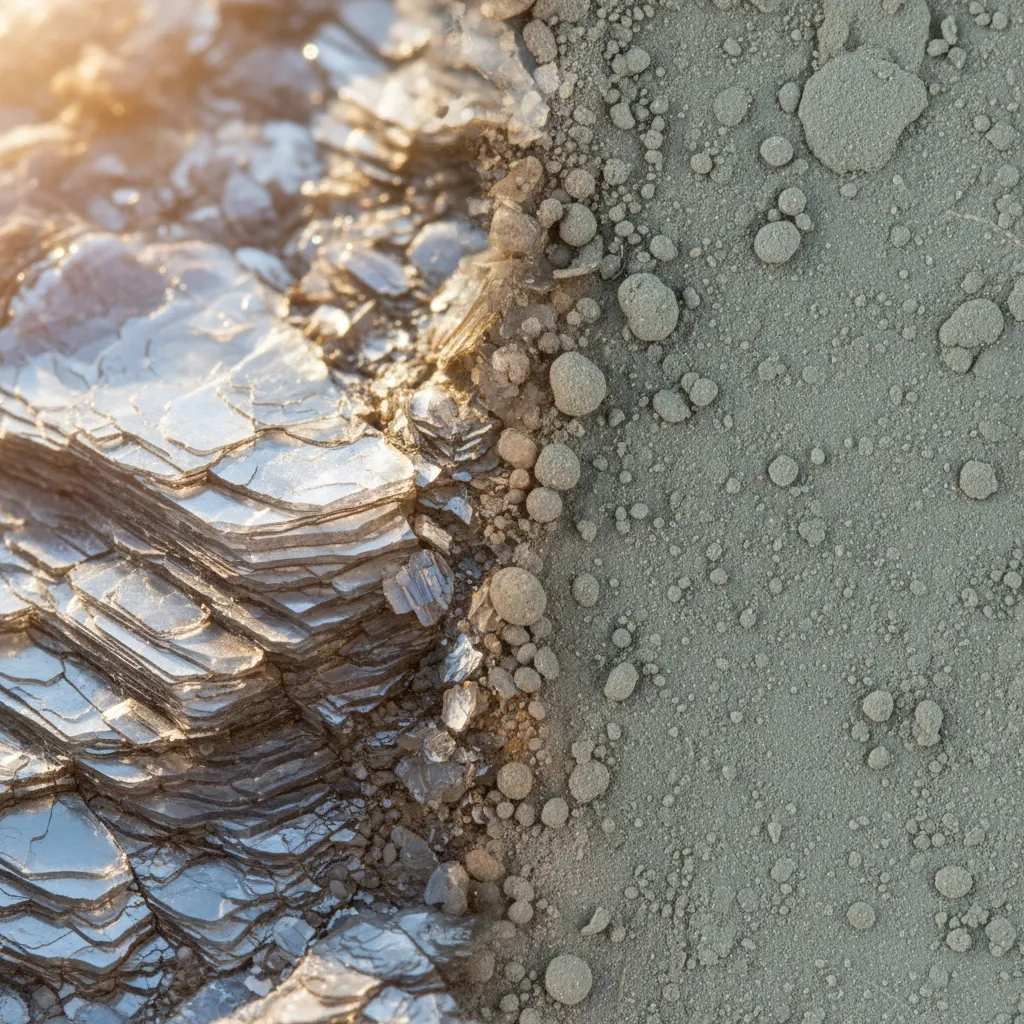
The weathering process that creates illite clay is ongoing in many environments today. Researchers studying soil formation and mineral transformation often focus on illite clay as a key indicator of weathering intensity and environmental conditions. Understanding this formation process is crucial for geologists, soil scientists, and environmental researchers who work with natural clay systems.
For those interested in learning more about different clay formation processes, resources like www.frenchhealingclay.com provide valuable information about various clay types and their geological origins.
Fact 3: Illite Clay Has a Moderate Cation Exchange Capacity
The third crucial fact about illite clay involves its cation exchange capacity (CEC), which measures the clay's ability to hold and exchange positively charged ions. Illite clay possesses a moderate CEC of approximately 20-30 milliequivalents per 100 grams, positioning it strategically between smectite clays (which have higher CEC values) and kaolinite clays (which have lower CEC values).
This moderate exchange capacity results from illite clay's unique structural characteristics. While the mineral exhibits a high level of isomorphous substitution (where atoms in the crystal structure are replaced by atoms of similar size but different charge), the presence of non-exchangeable interlayer potassium ions limits the overall exchange ability. This creates an interesting balance that makes illite clay moderately effective for retaining exchangeable cations in soil systems.

The practical implications of this CEC value are significant in both natural and applied contexts. In agricultural soils, illite clay contributes to nutrient retention and availability, though not as dramatically as high-CEC clays like smectite. In industrial applications, this moderate exchange capacity can be advantageous when a controlled level of ionic interaction is desired.
The cation exchange properties of illite clay also make it interesting for certain cosmetic and wellness applications. While not as widely used as bentonite or kaolin clays in skincare, illite clay's moderate exchange capacity can contribute to gentle cleansing and mineral exchange properties. Companies specializing in natural clay products, such as those featured on www.aztec-secret.com, often incorporate various clay types based on their specific ionic properties.
Understanding Illite Clay's Place in the Clay Mineral Family
To fully appreciate these three key facts about illite clay, it's helpful to understand how this mineral fits within the broader family of clay minerals. Illite clay is also known by alternative names including hydromica and hydromuscovite, reflecting its close relationship to mica minerals. These names highlight the clay's intermediate position between true micas and other phyllosilicate clay minerals.
The color and appearance of illite clay typically range from grayish-white to silvery-gray, sometimes exhibiting greenish-gray tones. This coloration, combined with its fine-grained crystalline structure, makes illite clay relatively easy to identify in field samples when examined by experienced geologists.
From a practical standpoint, illite clay's combination of stability, moderate reactivity, and widespread occurrence makes it an important component in many natural systems. While it may not have the dramatic swelling properties of bentonite or the pure white appearance of kaolin, illite clay plays a crucial role in soil formation, sedimentary geology, and various industrial processes.
For those interested in exploring different clay types and their applications, resources like www.healingclaymask.com provide comprehensive information about clay properties and uses across various industries.
The Scientific and Practical Significance of Illite Clay
These three fundamental facts about illite clay: its non-swelling layered structure, formation through mica weathering, and moderate cation exchange capacity: combine to create a mineral with unique properties and widespread importance. Understanding illite clay helps us appreciate the complexity of natural mineral systems and the intricate processes that shape our planet's surface materials.
Whether you encounter illite clay in geological studies, soil science research, or industrial applications, recognizing these key characteristics will enhance your understanding of this remarkable mineral. The stability, formation history, and exchange properties of illite clay make it a fascinating subject for continued research and practical application in our modern world.