Ever wondered about the history behind that jar of French healing clay sitting on your bathroom shelf? You're not alone! Many people discover this amazing natural remedy and immediately want to know more about its origins. The story of French healing clay is actually much older and more fascinating than most people realize.
The Ancient Roots of Clay Healing
Before we dive into French clay specifically, let's talk about clay healing in general. The use of clay for medicinal purposes isn't some modern trend - it's actually one of humanity's oldest healing practices.
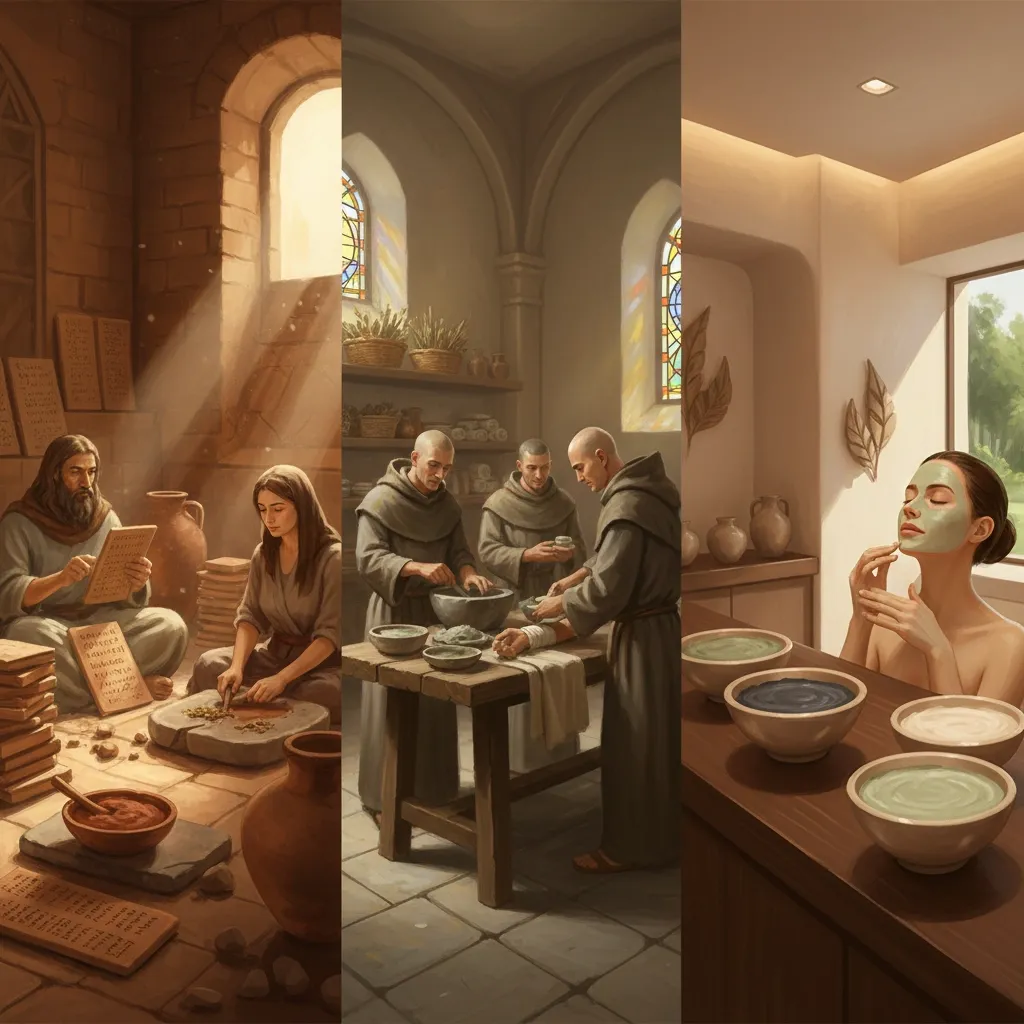
Historical records show that the medicinal use of clays was documented as early as 2500 B.C. on Mesopotamian tablets. That's over 4,500 years ago! Ancient civilizations weren't just randomly smearing mud on themselves - they understood that certain types of clay had real therapeutic benefits.
The ancient Egyptians were particularly fond of clay treatments. They used various types of clay not only for skincare and beauty rituals but also to treat digestive issues and skin problems. The Greeks and Romans followed suit, incorporating clay into their wellness practices. Even Aristotle (384-322 BC) wrote about humans using "healing clay" in his historical accounts.
When French Clay Enters the Picture
Now, here's where it gets interesting for our specific topic. French healing clay - particularly French green clay - has been used for centuries in Europe. But unlike the broader history of clay use, French clay has a more specific geographical and cultural story.
French green clay got its name because it was harvested almost exclusively from rock quarries located in southern France. These deposits were unique in their mineral composition and therapeutic properties, making them highly sought after throughout Europe.
For hundreds of years, French green clay was historically used in Europe as a detoxifying agent for both the body and skin. European communities passed down knowledge about its benefits from generation to generation, treating it as a trusted natural remedy.
The Ups and Downs of French Clay's Popularity
Here's something interesting that many people don't know: French healing clay actually went through periods of both popularity and obscurity throughout history.
During certain eras, particularly as modern medicine began to emerge, French green clay started being looked upon as just an "old home remedy." People began to dismiss these traditional practices in favor of newer, more "scientific" treatments. This meant that for a while, knowledge about French healing clay was somewhat relegated to folk medicine and traditional practitioners.
But then something amazing happened.
The Modern Revival: 1950s-1970s
The 1950s through the 1970s marked a turning point for French healing clay. During this period, naturopaths and holistic practitioners began recommending it again for various skin conditions. This wasn't just a return to old ways - these practitioners were combining traditional knowledge with more modern understanding of how clay works.
This revival period was crucial because it helped bridge the gap between ancient wisdom and contemporary wellness practices. People started to realize that just because something is old doesn't mean it's outdated or ineffective.
The Luxury Skincare Era: 1980s-1990s
By the 1980s and 1990s, French healing clay experienced another major transformation. It became a staple ingredient among high-end luxury skincare products. This was huge! Suddenly, French green clay went from being viewed as a folk remedy to being featured in expensive spa treatments and premium cosmetic lines.
This period really helped establish French healing clay's reputation in the modern wellness world. High-end spas and skincare companies wouldn't invest in ingredients that didn't work, so this adoption by the luxury market served as a kind of modern validation of what people had known for centuries.
Why "French" Clay?
You might wonder why we call it "French" clay when clay healing has been around for thousands of years across many cultures. The answer is actually quite practical.
The specific type of clay we now call "French green clay" was originally harvested almost exclusively from those southern French quarries we mentioned earlier. The unique geological conditions in that region created clay with a distinctive mineral profile and therapeutic properties.
However, over time, similar clay deposits were discovered in other places like Montana, Wyoming, some regions of Europe, and even China. But by then, the name "French clay" had already stuck, and it continued to be used to describe this particular type of healing clay, regardless of where it was actually mined.

French Healing Clay in the 21st Century
Today, French healing clay continues to evolve and gain recognition. Modern research has begun to validate many of the traditional uses that people have known about for centuries. We now have a better scientific understanding of how the minerals in French clay interact with skin and why it's been so effective for so long.
The clay's unique combination of minerals - including montmorillonite, which gives it its distinctive properties - helps explain why French healing clay has remained popular across so many different cultures and time periods.
What Makes French Healing Clay Special Today
When you use French healing clay today, you're participating in a tradition that spans literally thousands of years. But you're also benefiting from modern improvements in harvesting, processing, and quality control that weren't available to ancient civilizations.
Today's French healing clay products often undergo rigorous testing for purity and safety. The best products are carefully sourced and processed to maintain the natural mineral content that makes this clay so effective.
The Continuous Journey
The story of French healing clay is really a story about the persistence of natural wisdom. Despite periods of skepticism and the rise of synthetic alternatives, this ancient remedy has continued to prove its worth generation after generation.
From Mesopotamian tablets to modern spa treatments, from ancient Egyptian beauty rituals to contemporary wellness routines, French healing clay has maintained its place in human health and beauty practices.
What's particularly remarkable is how this natural substance has adapted to different eras and cultures while maintaining its core identity and effectiveness. Whether it was mixed with water in ancient Rome or incorporated into a luxury face mask in a modern spa, the fundamental benefits of French healing clay remain consistent.
Looking Forward
As we become more interested in natural and sustainable wellness solutions, French healing clay's long history becomes even more relevant. In a world where new beauty trends come and go every few months, there's something reassuring about using a remedy that has been trusted for centuries.
The fact that French healing clay has been "around" for so long - from ancient times through its specific European tradition to modern global use - speaks to its genuine effectiveness. After all, products that don't work don't typically survive for thousands of years across multiple civilizations.
So the next time you use French healing clay, remember that you're part of a tradition that stretches back through centuries of European use and connects to the very earliest human civilizations. That jar on your shelf represents thousands of years of accumulated wisdom about natural healing and self-care.

