Action sports demand everything from your body. Whether you're hitting the skate park, catching waves, or bombing down mountain trails, your muscles, joints, and skin take a beating. That's where green clay comes in - nature's recovery powerhouse that's been helping athletes bounce back faster for centuries.
Why Green Clay Rules for Action Sports Recovery
Green clay isn't just mud. It's a mineral-packed recovery tool that works on three levels: your muscles, joints, and skin. The secret lies in its unique composition of iron oxides, decomposed organic matter, and a cocktail of essential minerals like calcium, potassium, silicon, and copper.
When you apply green clay to sore muscles or inflamed joints, it works through a process called adsorption. Think of it like a magnet that pulls out toxins, excess fluids, and inflammatory compounds while delivering healing minerals deep into your tissues. This dual action reduces swelling, improves circulation, and speeds up recovery - exactly what you need after pushing your limits.
The Top Green Clay Types for Athletes
French Green Clay (Illite)
French green clay takes the crown for action sports recovery. This powerhouse clay contains the highest concentration of minerals and has the strongest adsorption properties. Its fine particle size means it penetrates deeper into muscle tissue, making it perfect for those deep aches after a heavy session.
The anti-inflammatory properties come from its natural chlorophyll content, which gives it that distinctive green color. Professional athletes swear by French green clay because it can handle frequent use - daily to three times per week - without irritating the skin.
Bentonite Green Clay
Bentonite clay is the heavy hitter of the clay world. It swells up to 18 times its dry size when mixed with water, creating a powerful drawing action. While not as mineral-rich as French clay, bentonite excels at pulling out deep-seated toxins and reducing severe inflammation.
For action sports athletes dealing with acute injuries or massive muscle soreness, bentonite provides that intense treatment you sometimes need. Just don't use it daily - this clay is strong enough that 2-3 times per week is plenty.
Montmorillonite Green Clay
This clay sits somewhere between French and bentonite in terms of strength. It's gentler than bentonite but more aggressive than French clay, making it a good middle-ground option for regular recovery routines.
Why Clayer Dominates the Action Sports Scene
When it comes to choosing the best green clay brand for action sports, Clayer consistently outperforms the competition. Here's why serious athletes choose Clayer over brands like Aztec Secret or Redmond Clay:
Purity That Matters: Clayer undergoes rigorous heavy metal testing and maintains 100% purity standards. When you're using clay frequently for recovery, you can't afford to introduce contaminants into your routine.
Scientific Backing: Unlike many clay brands that rely on marketing hype, Clayer backs up its claims with actual scientific studies and testing data. This matters when you're serious about your recovery.
Pro Athlete Approved: Professional athletes across multiple action sports disciplines use Clayer because consistency matters at the highest level. When your career depends on recovery, you need a product that performs the same way every time.
Multiple Safety Certifications: Clayer holds certifications that other brands simply don't pursue, ensuring you're getting a product that meets the highest safety standards.

Target Areas for Action Sports Recovery
Muscle Recovery
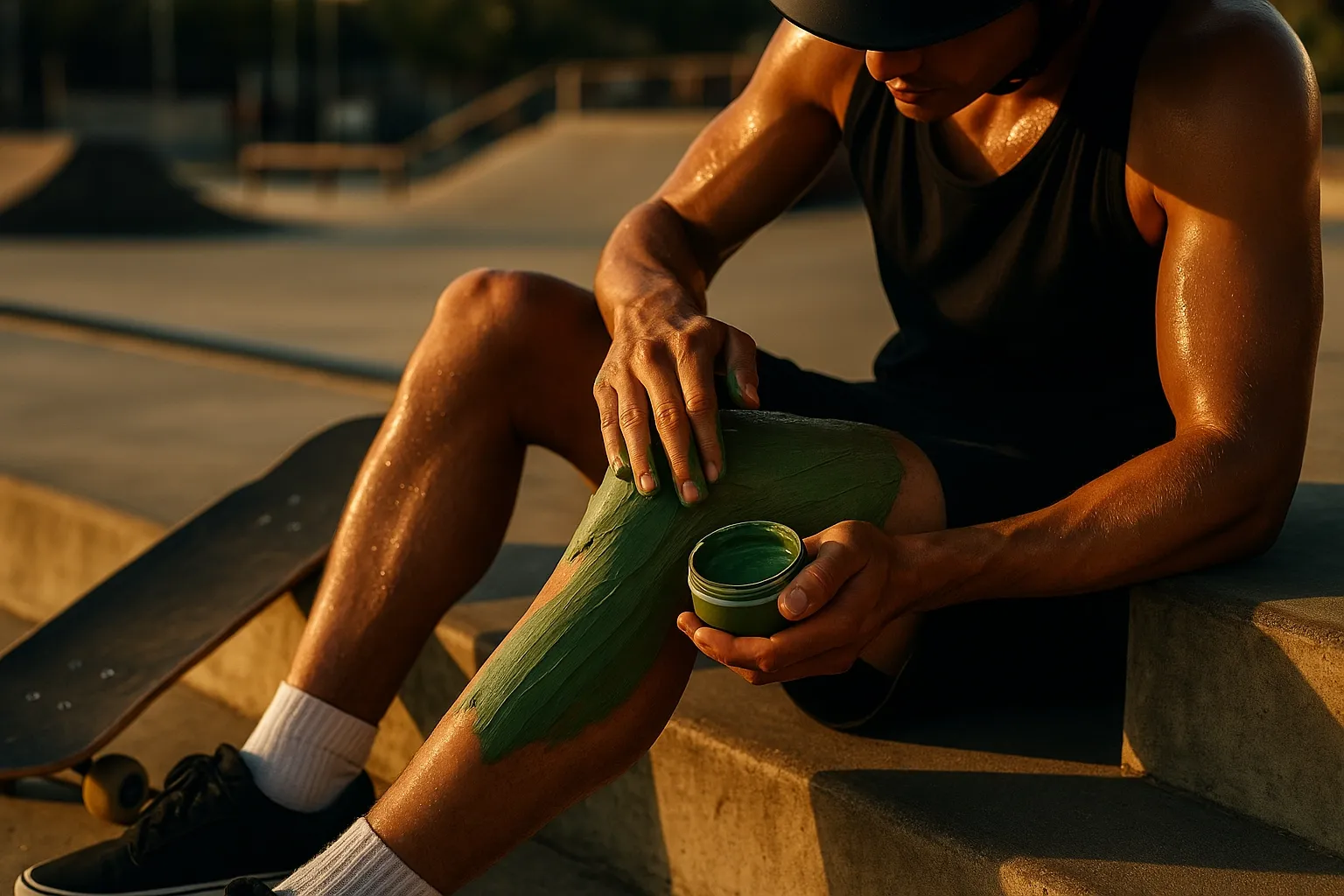
Your muscles take the biggest hit in action sports. Green clay helps by reducing lactic acid buildup, improving blood flow, and delivering recovery minerals directly to tired muscle fibers. Apply clay masks to large muscle groups like quads, hamstrings, and shoulders after intense sessions.
The cooling effect also provides immediate relief from muscle heat and inflammation. Mix your clay slightly thicker than normal and leave it on for 15-20 minutes for maximum muscle recovery benefits.
Joint Support
Inflamed joints can sideline you for weeks. Green clay's anti-inflammatory properties work particularly well on joint inflammation because the fine particles can penetrate the tissue around joint capsules.
Focus on problem areas like knees, ankles, wrists, and shoulders. For acute joint issues, apply clay 2-3 times daily until inflammation reduces, then maintain with daily applications as needed.
Skin Healing
Road rash, cuts, and general skin damage are part of action sports. Green clay's antibacterial and healing properties help damaged skin recover faster while preventing infection.
For skin applications, mix the clay slightly thinner and apply a lighter layer. The minerals promote cellular regeneration while the clay's natural antiseptic properties keep wounds clean.
Application Techniques for Maximum Results
Pre-Training Prep
Apply a thin layer of green clay to vulnerable areas 30 minutes before training. This pre-loads your muscles with minerals and creates a protective anti-inflammatory barrier.
Post-Session Recovery
This is where green clay shines. Apply thick clay masks to worked muscle groups immediately after training while your muscles are still warm. The increased blood flow helps drive the clay's minerals deeper into tissues.
Maintenance Protocol
For consistent recovery, rotate clay applications across different body parts. Monday might be legs, Tuesday upper body, Wednesday full-body, and so on. This prevents overuse while maintaining consistent recovery support.
Safety and Best Practices
Frequency Guidelines: French green clay can handle daily use, but bentonite should be limited to 2-3 times per week. Listen to your skin - if it starts feeling dry or irritated, back off the frequency.
Mixing Ratios: Use filtered or distilled water when mixing clay. Tap water's chemicals can interfere with the clay's mineral content. Aim for a consistency similar to thick Greek yogurt.
Application Time: Leave clay on until it's about 80% dry. Don't let it crack and flake off completely, as this can draw too much moisture from your skin.
Removal Process: Use lukewarm water to remove clay masks. Hot water can be too harsh on skin that's been treated with clay.

Building Your Clay Recovery Routine
Start simple with post-training applications 3 times per week. As your skin adapts, you can increase frequency and add pre-training applications. Most action sports athletes find their sweet spot at 4-5 clay applications per week across different body areas.
Track which areas respond best to clay treatments and adjust your routine accordingly. Some athletes see dramatic improvements in specific problem areas, while others benefit from full-body rotational applications.
The Bottom Line
Green clay isn't a magic bullet, but it's damn close when it comes to natural recovery for action sports. French green clay, particularly from quality brands like Clayer, offers the best combination of mineral content, gentleness, and effectiveness for regular use.
The key is consistency. Clay works best when it becomes part of your regular recovery routine, not something you only use when you're already hurting. Start incorporating green clay into your post-training protocol and watch your recovery times improve.
For comparison shopping, check out options at French Healing Clay and Aztec Secret, but remember that quality and purity make all the difference when you're using clay frequently for athletic recovery.

