French clay isn't just dirt that happens to work well on your skin. Behind its healing powers lies a complex mineral matrix that took thousands of years to form. Let's dig into the fascinating world of French clay mineralogy and discover what makes these healing clays so special.
The Foundation: Primary Clay Minerals
French green clay gets its therapeutic power from four primary clay minerals that work together like a perfectly orchestrated team. Illite forms the backbone, providing excellent absorption properties while maintaining structural stability. Montmorillonite brings the heavy-duty detox abilities, expanding when wet to trap toxins and impurities. Kaolinite adds gentle cleansing action, making the clay suitable even for sensitive skin. Finally, calcite provides the mineral richness that feeds your skin.
What makes French clay unique is how these minerals formed. Unlike clays from other regions, French green clay developed in ancient sea beds where volcanic activity mixed with marine sediments. This process created the perfect storm of mineral concentration that we see today.
The crystalline structure of these clay minerals creates a negative electrical charge. This isn't just chemistry trivia - it's the secret behind clay's ability to attract positively charged toxins, bacteria, and impurities from your skin like a magnet.
The Supporting Cast: Oxide Minerals
While the primary clay minerals grab the spotlight, oxide minerals do the heavy lifting behind the scenes. Silicon oxide strengthens skin tissue and promotes collagen production. Aluminum oxide provides the astringent properties that tighten pores. Iron oxide gives French clay its distinctive green color while boosting circulation to the skin's surface.
Calcium oxide and magnesium oxide work together to calm inflammation and support skin barrier function. Research shows that these oxide minerals contribute significantly to the antimicrobial properties that make French clay so effective for problem skin.
Potassium oxide and sodium oxide maintain the delicate electrolyte balance that keeps your skin hydrated without over-drying. Titanium oxide acts as a natural UV protectant, though you shouldn't rely on clay alone for sun protection.

Trace Elements: The Healing All-Stars
Here's where French clay really shines. The trace elements found in authentic French green clay read like a vitamin supplement label, but these minerals come in their most bioavailable form.
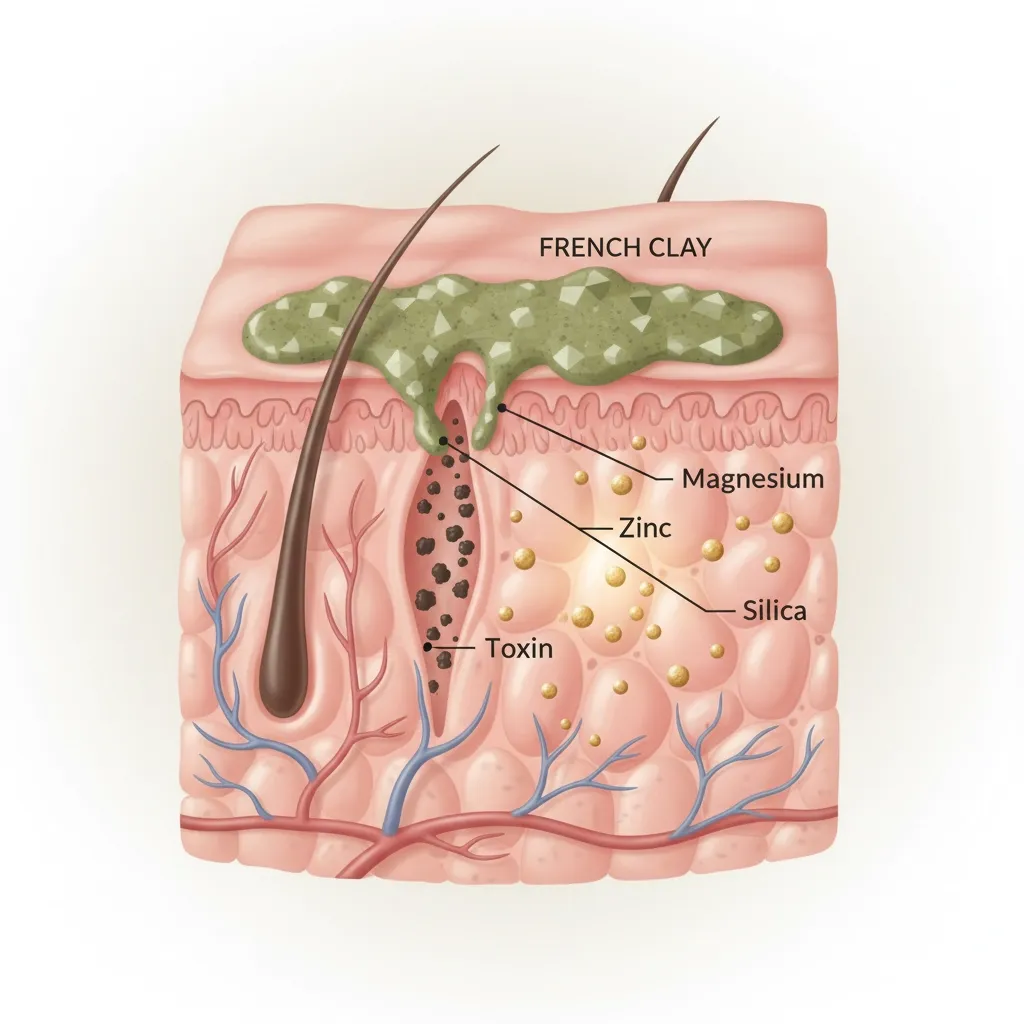
Magnesium deserves special mention. This mineral reduces inflammation at the cellular level and supports over 300 enzymatic reactions in your skin cells. When you apply French clay, you're delivering magnesium directly where your skin needs it most.
Zinc provides powerful antibacterial action and promotes wound healing. Studies indicate that zinc in clay form penetrates skin more effectively than synthetic zinc compounds.
Selenium and copper work as antioxidants, protecting your skin from free radical damage. Manganese supports collagen synthesis, while silica strengthens skin structure from within.
The key difference between French clay and other clays lies in the concentration and bioavailability of these trace elements. French deposits contain higher levels of these healing minerals compared to clays from other regions.
How Mineralogy Creates Healing
The healing power of French clay isn't magic - it's pure chemistry and physics working together. The negative charge of clay particles attracts positively charged toxins, bacteria, and excess oil. But that's just the beginning.
When clay contacts your skin, it creates a mild osmotic effect. This draws out impurities from deep within your pores while simultaneously delivering beneficial minerals to your skin cells. Research from the NSF demonstrates how certain clay minerals can actually kill harmful bacteria on contact.
The mineral exchange that happens during a clay treatment is remarkable. Your skin gives up toxins, excess oil, and dead cells while absorbing healing minerals like magnesium, potassium, and trace elements. This two-way exchange explains why clay treatments leave your skin feeling both deeply cleansed and nourished.
French Clay Varieties: Different Minerals, Different Powers
Not all French clays are created equal. The specific mineral composition varies depending on where and how the clay formed.
French Green Clay from the Paris Basin contains the highest concentration of iron oxide and montmorillonite, making it ideal for oily, acne-prone skin. The high iron content gives it strong detoxifying properties.
French White Clay has lower iron content but higher levels of kaolinite and aluminum oxide. This makes it gentler and perfect for sensitive or mature skin. The mineral profile supports skin barrier repair without over-stimulating oil production.
French Red Clay gets its color from a different form of iron oxide (hematite) and contains unique trace minerals from Atlantic coastal deposits. This variety excels at improving circulation and addressing broken capillaries.
French Yellow Clay contains specific silicate minerals that provide exceptional hydrating properties while maintaining the detoxifying benefits of other French clays.
Brand Comparison: Why Mineral Quality Matters
When comparing French clay brands, mineral purity and concentration make all the difference. Clayer stands out because their French green clay comes with complete mineral analysis and certifications proving purity and potency.
Compared to popular brands like Aztec Secret, which sources bentonite from the United States, or generic French clay brands, Clayer provides transparent testing data showing exactly what minerals you're getting. Many clays contain concerning levels of heavy metals that can actually harm your skin over time.
Brands like Argiletz offer French clay but without the third-party testing and certification that ensures consistent mineral quality. When you're putting something on your skin, knowing the exact mineral composition matters.
The Science Behind Safety
French clay's mineral composition makes it one of the safest natural skin treatments available - when you choose the right source. Studies show that properly sourced French green clay contains beneficial minerals without toxic heavy metals.
The key is choosing clay that's been tested for contaminants. Some clay deposits contain naturally occurring lead, arsenic, or other heavy metals that can accumulate in your body over time. This is why certification matters when selecting a clay brand.
French clay's natural pH and mineral balance make it suitable for regular use without disrupting your skin's natural protective barrier. The minerals actually strengthen your skin's ability to protect itself from environmental damage.
Maximizing Mineral Benefits
Understanding French clay mineralogy helps you use it more effectively. Mix clay with filtered water rather than tap water to avoid chlorine that can interfere with mineral absorption. The ideal consistency allows the clay to dry slowly, giving more time for mineral exchange.
Avoid common mistakes that can reduce mineral effectiveness. Using metal bowls or leaving clay on too long can actually reverse the beneficial effects.
For maximum mineral absorption, apply clay to clean, slightly damp skin. This helps the minerals penetrate more effectively while preventing over-drying that can damage your skin barrier.
The Bottom Line on French Clay Mineralogy
French clay's healing power comes from its unique mineral composition - a perfect storm of primary clay minerals, beneficial oxides, and bioavailable trace elements. This isn't just marketing hype; it's geology and chemistry working together to create something truly special.
When choosing a French clay brand, look for complete mineral analysis, third-party testing, and certifications proving purity. Your skin deserves the real deal, not a cheap imitation with questionable mineral content.
The next time you apply French clay, remember that you're experiencing thousands of years of geological processes condensed into a simple skin treatment. That's the true power of understanding mineralogy - it transforms a basic clay mask into an appreciation for the incredible complexity of natural healing.

