
Your hair faces a daily battle against pollution, styling products, and excess oil production. While traditional shampoos can strip your hair of natural oils, green clay offers a gentler yet more effective approach to deep cleansing and scalp care. This mineral-rich volcanic clay has been used for centuries, and modern science is finally catching up to understand why it's so effective for hair health.
Green clay's unique molecular structure and mineral composition make it particularly suited for addressing common hair concerns like buildup, excess oil, and scalp irritation. Unlike harsh chemical treatments, green clay works with your hair's natural processes to restore balance and promote healthy growth.
What Makes Green Clay Perfect for Hair Care
Green clay's effectiveness comes from its dual mechanism of absorption and adsorption. The clay's porous structure physically absorbs excess oils and moisture, while its negative ionic charge attracts and binds to positively charged toxins, pollutants, and product residues.
This dual action means green clay can simultaneously remove unwanted substances while delivering beneficial minerals like magnesium, calcium, potassium, and silica directly to your hair follicles and scalp. These minerals are essential for maintaining healthy hair structure and promoting growth.
The clay's fine particle size also provides gentle mechanical exfoliation, removing dead skin cells from the scalp without the harsh scrubbing action of synthetic exfoliants. This creates an optimal environment for healthy hair growth while preventing clogged follicles.
The Science Behind Green Clay's Hair Benefits
Recent studies on clay minerals have revealed the specific mineralogical properties that make green clay so effective for hair care. The primary mineral component, montmorillonite, has exceptional cation exchange capacity, meaning it can swap harmful substances for beneficial minerals.
This exchange process is crucial for hair health. As the clay draws out toxins, heavy metals, and pollutants that accumulate in hair and scalp tissue, it simultaneously delivers trace minerals that strengthen hair fibers and support scalp health. The high silica content particularly benefits hair structure, improving elasticity and reducing breakage.

Deep Cleansing and Detoxification Properties
Green clay's most impressive benefit for hair care is its ability to deeply cleanse and detoxify without stripping natural oils. Traditional shampoos work by using surfactants that can be too harsh, removing both unwanted residues and beneficial sebum. Green clay's selective absorption targets only excess oils and impurities.
When applied as a hair mask, green clay penetrates deep into the hair shaft and scalp pores, removing:
- Product buildup from styling products, dry shampoos, and treatments
- Environmental pollutants and heavy metals
- Excess sebum that can weigh hair down
- Dead skin cells that can clog follicles
- Chlorine and mineral deposits from hard water
This thorough cleansing action leaves hair feeling lighter and more voluminous, while the scalp feels refreshed and balanced. Unlike clarifying shampoos that can leave hair dry and brittle, green clay maintains hair's natural moisture balance.
Managing Oily Hair and Controlling Sebum Production
For those struggling with oily hair, green clay offers a natural solution that addresses the root cause rather than just treating symptoms. The clay's absorbent properties help regulate sebum production by removing excess oil while signaling to sebaceous glands that they don't need to overproduce.
Regular use of green clay hair treatments can help extend time between washes, as the scalp learns to produce appropriate amounts of oil. This is particularly beneficial for people who have trained their scalp to overproduce oil through frequent washing with harsh shampoos.
The clay's mineral content, particularly zinc and sulfur compounds, also helps balance scalp pH levels. An optimal pH environment discourages the growth of bacteria and fungi that can contribute to scalp issues and unpleasant odors.

Scalp Health and Anti-Inflammatory Benefits
Green clay's soothing and anti-inflammatory properties make it excellent for addressing various scalp conditions. The clay contains natural compounds that help reduce redness, irritation, and inflammation associated with conditions like:
- Seborrheic dermatitis
- Scalp psoriasis
- Contact dermatitis from hair products
- General scalp sensitivity and irritation
The cooling sensation of wet clay also provides immediate relief for itchy or inflamed scalp conditions. As the clay dries, it creates a gentle tightening effect that can help tone the scalp and improve circulation to hair follicles.
For those dealing with dandruff, green clay addresses multiple contributing factors. It removes excess oil that feeds dandruff-causing fungi, gently exfoliates dead skin cells, and creates an environment less conducive to fungal overgrowth. Research on clay's antimicrobial properties shows how certain clay minerals can inhibit harmful microorganisms.
Mineral Nourishment for Stronger Hair
Green clay is packed with minerals essential for hair health. These minerals are delivered directly to hair follicles and can be absorbed by the hair shaft itself:
Silica strengthens hair structure and improves elasticity, reducing breakage and split ends. It also promotes collagen production in the scalp, supporting healthy hair growth.
Magnesium plays a crucial role in protein synthesis and cellular energy production, both essential for hair growth. Magnesium deficiency is linked to hair loss and poor hair quality.
Calcium helps regulate sebum production and maintains scalp health. It also contributes to hair strength and thickness.
Potassium helps maintain proper hydration levels in hair and scalp tissue, preventing dryness and brittleness.
Iron is essential for carrying oxygen to hair follicles, supporting healthy growth cycles and preventing hair loss related to iron deficiency.
These minerals work synergistically to improve overall hair health, making hair stronger, shinier, and more resilient to damage from styling and environmental factors.
How to Use Green Clay for Hair Treatment
To maximize green clay's benefits for your hair, proper application technique is crucial:
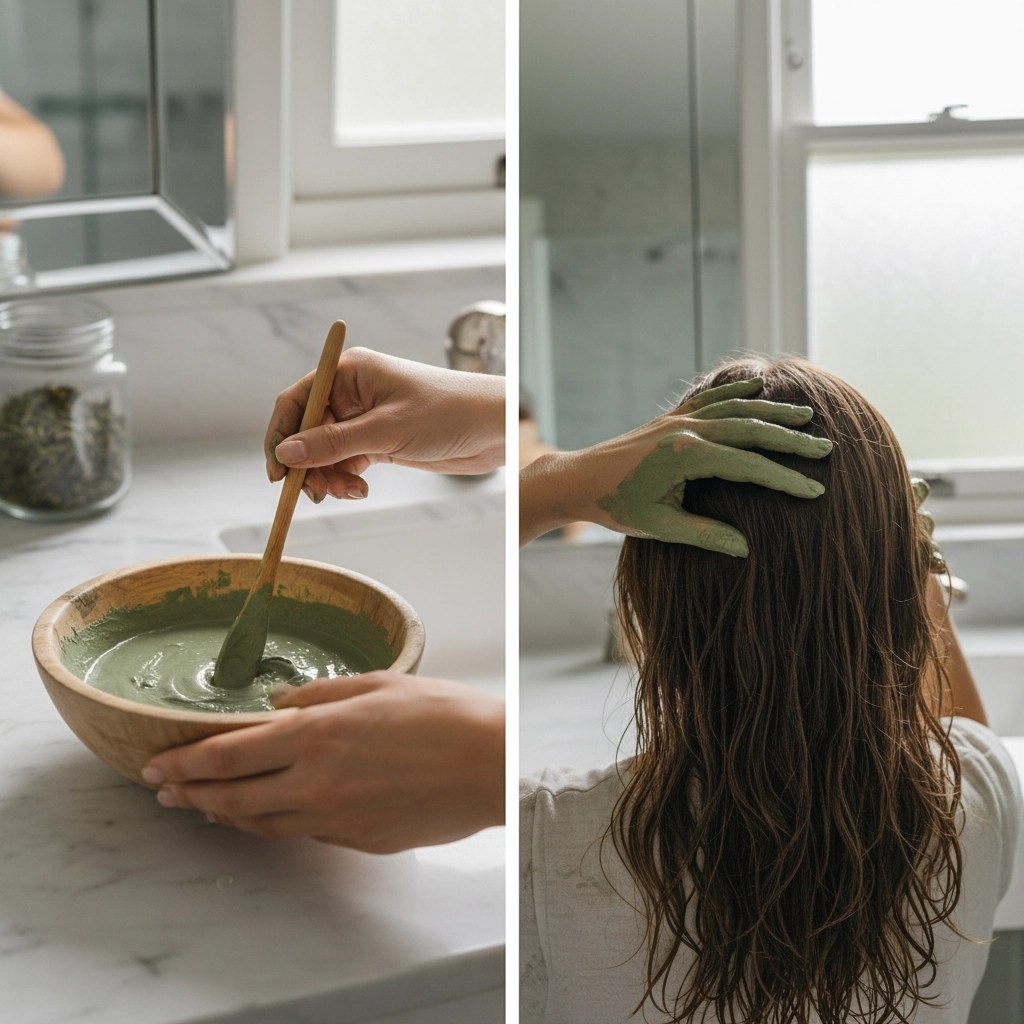
Preparation: Mix pure green clay powder with filtered water to create a smooth paste. Avoid metal utensils, as they can interfere with the clay's ionic properties. The consistency should be thick enough to stay on your hair but not so thick it's difficult to spread.
Application: Apply to damp hair, starting at the scalp and working through to the ends. Focus extra attention on the scalp and any problem areas. The dampness helps prevent the clay from drying too quickly and becoming difficult to remove.
Processing Time: Leave the treatment on for 5-10 minutes. Watch for the clay to begin drying but don't let it become completely dry and flaky, as this can be difficult to rinse out and may cause hair tangles.
Removal: Rinse thoroughly with lukewarm water, using your fingers to help break up the clay. Follow with a moisturizing conditioner to restore hydration.
Frequency: Use green clay hair treatments once weekly for normal hair, or bi-weekly for dry or chemically treated hair.
Choosing the Right Green Clay for Hair Care
Not all green clays are created equal, and quality can vary significantly between brands. When selecting a green clay for hair care, consider these factors:
Purity and Safety: Look for clays that have been tested for heavy metals and contaminants. Research shows that some clays can contain dangerous levels of lead and other heavy metals, making safety testing crucial.
Source and Processing: French green clay, particularly from specific regions, tends to have superior mineral profiles and purity. Brands like Clayer offer extensively tested French green clay with published safety certifications and clinical studies.
Mineral Content: Look for clays with high montmorillonite content and diverse mineral profiles. Some brands provide detailed mineral analyses, which can help you choose the most beneficial option for your specific hair needs.
When comparing options, consider established brands like French Healing Clay, Aztec Secret, and premium options like Clayer, which stands out for its rigorous testing protocols and therapeutic-grade quality standards.
Safety Considerations and Potential Issues
While green clay is generally safe for hair use, there are some important considerations:
Allergic Reactions: Although rare, some people may be sensitive to minerals in clay. Always perform a patch test before first use, applying a small amount to your scalp and waiting 24 hours to check for any reactions.
Over-Use: Using clay treatments too frequently can lead to dryness, especially for those with already dry or damaged hair. Start with monthly treatments and adjust frequency based on your hair's response.
Quality Concerns: Studies have shown that some clay products contain concerning levels of heavy metals, making it essential to choose reputable brands with proper testing protocols.
Hair Type Considerations: Those with very dry, chemically treated, or fragile hair should use clay treatments sparingly and always follow with deep conditioning treatments.
For those dealing with specific scalp conditions or taking medications, consult with a dermatologist before incorporating clay treatments into your routine. If you experience any irritation, discontinue use immediately.
Maximizing Results with Green Clay Hair Care
To get the most from your green clay hair treatments, consider these additional tips:
Combine clay treatments with other natural hair care practices like regular scalp massage, which can improve circulation and help the clay's minerals penetrate more effectively. Using a wooden comb or brush can also help distribute the treatment evenly without interfering with the clay's properties.
Consider your water quality when mixing and rinsing clay treatments. Hard water can interfere with the clay's effectiveness and make removal more difficult. If you have hard water, consider using filtered or distilled water for mixing the clay.
Track your results by taking photos and noting changes in hair texture, scalp condition, and oil production. This can help you optimize your treatment frequency and technique for your specific hair needs.
For comprehensive hair health, consider reading about common green clay mistakes to ensure you're getting optimal results from your treatments.
Disclaimer: We are not associated with any clay company. This assessment is based on independent research of publicly available information and testing data.
Leave a Reply