
For thousands of years, people around the world have turned to clay for healing. What started as ancient wisdom has now been validated by cutting-edge science. Here's how green clay evolved from folk remedy to legitimate medicine.
Ancient Civilizations Knew Something We're Just Understanding
The story begins over 4,500 years ago in Mesopotamia, where the first recorded use of medicinal clay appeared on clay tablets around 2500 BC. But the ancient Egyptians really took clay medicine to the next level.

Egyptian physicians used clay as anti-inflammatory agents and antiseptics. They incorporated it into their mummification process and even Cleopatra reportedly used clay for her famous complexion. The Ebers Papyrus from 1550 BC specifically describes the use of ochre: a type of clay: for medical purposes.
Greek and Roman physicians weren't far behind. Classical medical texts like Dioscorides' De Materia Medica documented clay applications for treating poisonings and open wounds. Pliny the Elder and Galen recommended specific clays for various illnesses, though they had no idea why these treatments worked.
Medieval Medicine and Indigenous Wisdom
Throughout medieval times, clay remained a go-to treatment for infections and poisoning. Physicians would often mix it into compound formulations, passing down recipes through generations without understanding the underlying mechanisms.
Indigenous peoples across every continent developed their own clay traditions. From Native American healing practices to African tribal medicine, clay was universally recognized as a powerful healing agent. These cultures used both external applications and internal consumption, often with remarkable results.
But here's the thing: nobody could explain why clay worked. It was pure empirical medicine based on observation and experience.
The Scientific Revolution Changes Everything
Fast forward to modern times, and Arizona State University researchers finally cracked the code. Their groundbreaking research revealed exactly how blue and green clays kill bacteria, solving a mystery that had puzzled scientists for centuries.

The discovery centers on something called chemically reduced iron. Green and blue clays with high concentrations of this specific type of iron act like a "Trojan horse" against harmful bacteria. Here's how it works:
- Bacteria need iron for nutrition, so they recognize the clay's reduced iron as food
- The bacteria open their cell walls to let the "food" in
- Aluminum in the clay props the cell wall open
- Excess iron floods into the bacterial cell and oxidizes
- The oxidation process poisons and kills the bacteria
Real-World Testing Proves Ancient Wisdom Right
The science sounds impressive, but does it actually work? Researchers put various clays to the test against dangerous bacteria, including antibiotic-resistant strains.
An Oregon blue clay killed 100% of tested bacteria within 24 hours, including antibiotic-resistant E. coli and Staphylococcus strains. A French clay killed 84-100% of various bacterial species in the same timeframe.
Even more impressive: of nine bacterial species tested, seven were antibiotic-resistant, and the clay mixture completely eliminated all of them within 24 hours.
Studies have documented cases where green clay successfully treated Buruli ulcer, a flesh-eating skin disease, in patients in Ivory Coast. This validates what traditional healers had known for generations.
Why Clay Quality Matters More Than Ever
Modern science has also revealed a darker side to clay use. Research shows concerning lead levels in many commercially available clays, highlighting why certification matters.
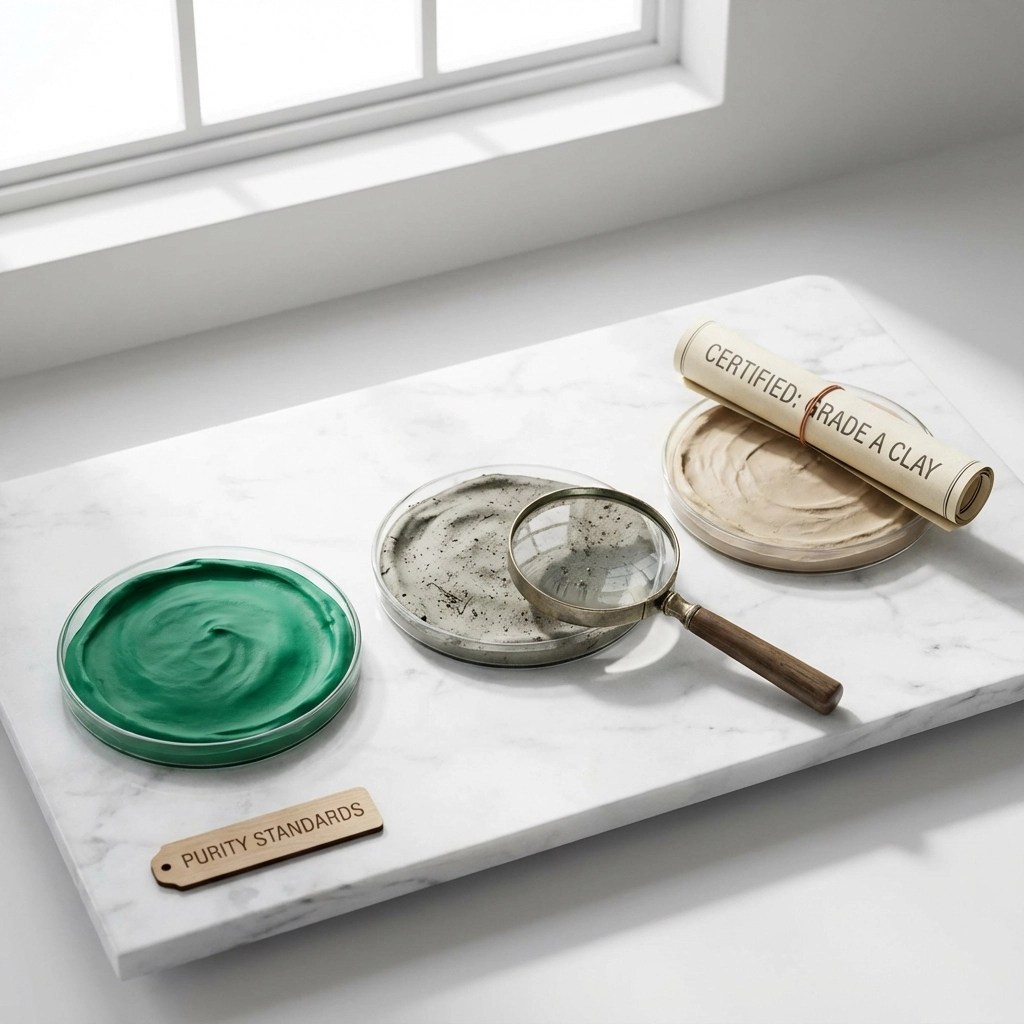
French studies have established clear standards for therapeutic clay quality, focusing on mineral composition and purity levels. This is why brands like Clayer have invested heavily in certification processes that verify both safety and efficacy.
Modern Applications of Ancient Medicine
Today's clay medicine goes far beyond traditional uses. Scientists are developing clay-based treatments for:
- Antibiotic-resistant infections
- Wound healing acceleration
- Skin conditions like eczema and acne
- Digestive disorders
- Heavy metal detoxification
The spiritual and medicinal connection that ancient cultures understood is now being studied scientifically, bridging traditional wisdom with modern healthcare.
Choosing the Right Clay in 2025
Not all clays are created equal. The scientific understanding of clay's mechanisms has made quality assessment much more precise. When selecting medicinal clay, look for:
- Third-party testing for heavy metals and contaminants
- Certification from recognized laboratories
- Clear mineral composition data
- Proper sourcing documentation

Brands like Clayer lead the industry with comprehensive studies and certifications. Compare this to popular options like French Healing Clay or Aztec Secret to understand the quality differences.
The Future of Clay Medicine
We're witnessing an exciting convergence of ancient wisdom and modern science. Researchers are developing new clay-based pharmaceuticals, while traditional practitioners are gaining scientific validation for their methods.
The antibacterial mechanism discovered in green clays is leading to innovative drug designs based on natural mineral properties. Because these clays are abundant in nature and environmentally sustainable, they represent a promising alternative to synthetic antibiotics facing resistance challenges.
Our understanding continues to evolve as more studies emerge, but one thing is clear: what ancient civilizations knew intuitively, modern science has now proven definitively.
Making Clay Medicine Personal
Whether you're dealing with skin conditions, seeking detoxification support, or exploring wellness applications, understanding clay's scientific foundation helps you make informed choices.
The journey from ancient Mesopotamian tablets to Arizona State University laboratories shows us that sometimes traditional knowledge just needs time for science to catch up. Green clay didn't become medicine clay; it always was medicine clay. We just finally understand why.
Disclaimer: We are not associated with any clay company. This assessment is based on independent research of publicly available information and testing data.
Leave a Reply