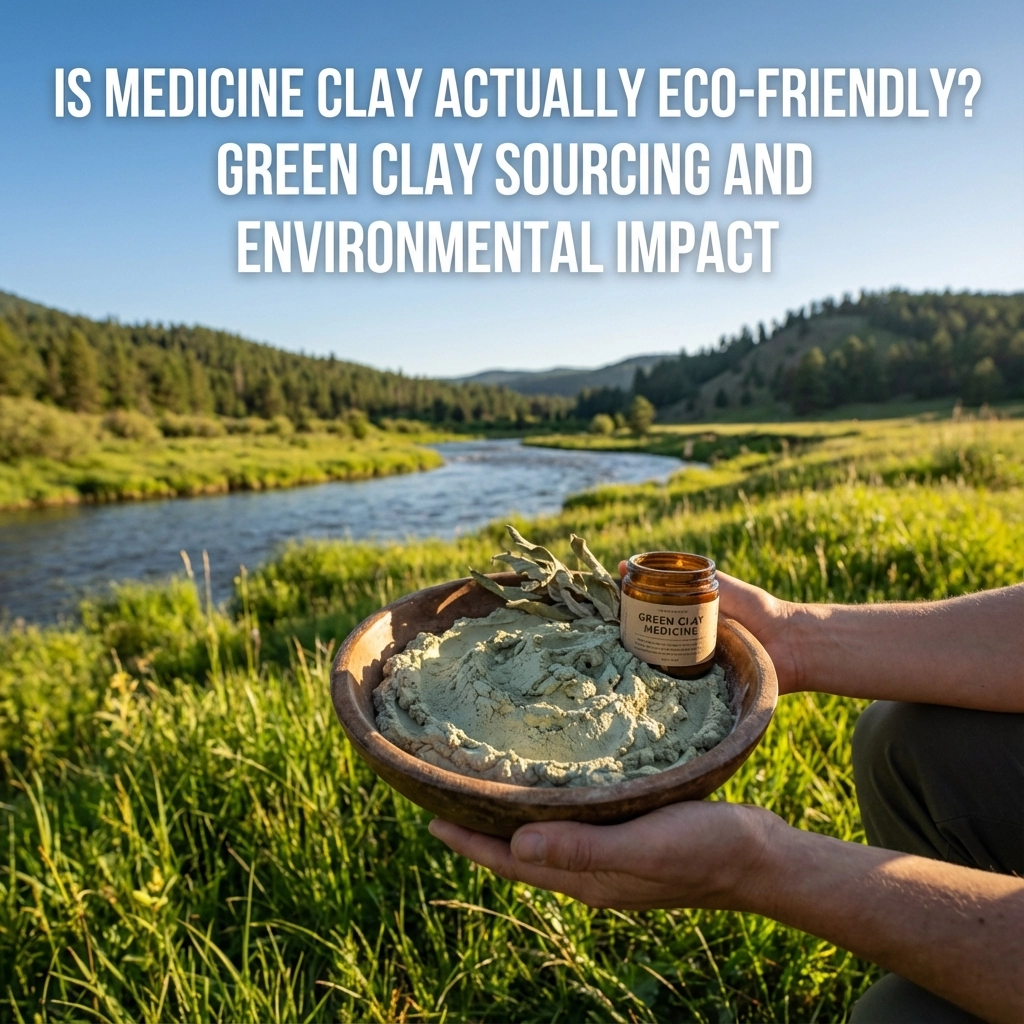
When you're reaching for that jar of green clay, you probably aren't thinking about strip mining or environmental damage. But the truth about medicine clay's eco-friendliness is more complex than most people realize.
The answer isn't a simple yes or no. Clay can be both an environmental hero and a potential problem, depending on how it's sourced, processed, and what contaminants it carries.
The Real Environmental Cost of Clay Mining
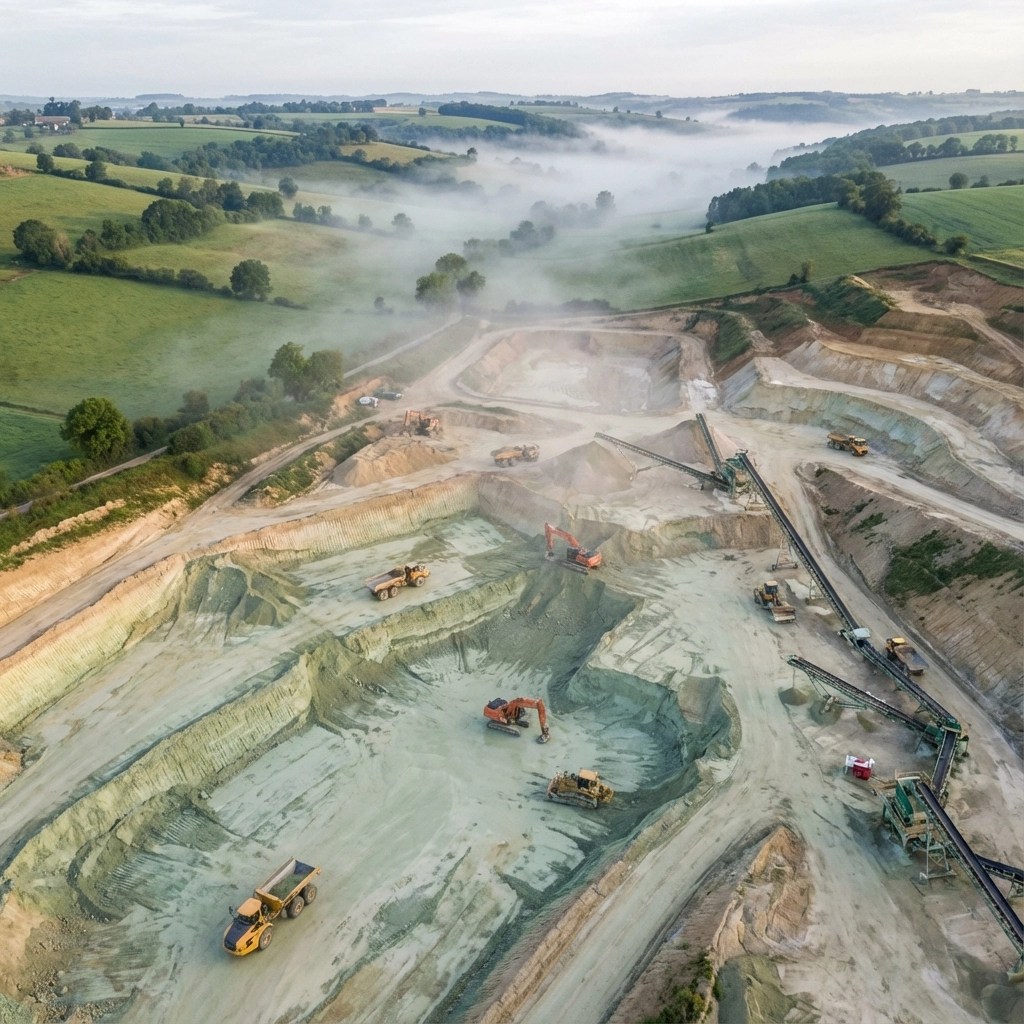
Most medicinal clay comes from open-pit mining operations that remove entire hillsides and valleys. French green clay, one of the most popular varieties, is primarily extracted from quarries in France where geological processes over millions of years created these mineral-rich deposits.
The mining process involves heavy machinery, transportation, and landscape disruption. However, compared to other cosmetic and pharmaceutical raw materials, clay mining has a relatively small environmental footprint. The material is abundant, requires minimal processing, and the extraction sites can often be restored for other uses.
What's more concerning is the distance your clay travels. If you're buying French green clay in California, that product has crossed an ocean, generating significant carbon emissions in transport.
Clay's Environmental Superpowers
Here's where things get interesting. Clay isn't just taking from the environment: it's actively helping clean it up.
Researchers at institutions like Texas A&M are developing clay-based solutions for environmental remediation. Clay particles can bind to heavy metals, toxins, and even "forever chemicals" like PFAS, removing them from contaminated soil and water.
Studies show that certain clays can kill harmful bacteria naturally, offering alternatives to chemical disinfectants. This antimicrobial action happens through the clay's mineral structure, which can disrupt bacterial cell walls without adding synthetic chemicals to the environment.
The Hidden Contamination Problem

But here's the uncomfortable truth that many clay companies don't want to discuss: natural doesn't always mean safe or clean.
Research published in scientific journals reveals that many commercially available healing clays contain significant levels of heavy metals, including arsenic and lead. These contaminants occur naturally in clay deposits and can accumulate in your body with regular use.
A comprehensive study found that French green healing clays contained arsenic concentrations averaging over 30,000 parts per billion and lead levels exceeding 40,000 parts per billion. When applied topically, these metals can be absorbed through the skin and accumulate in organs like the liver and kidneys.
This contamination isn't the result of poor processing: it's naturally occurring. Clay forms in geological environments where heavy metals are present, and these elements become permanently bound to the clay's mineral structure.
Sustainable Sourcing: What to Look For

The most eco-friendly approach to clay involves three key factors: location, testing, and certification.
Local sourcing dramatically reduces transportation emissions. If you live in the American Southwest, bentonite clay from local deposits makes more environmental sense than imported French clay. Companies like Aztec Secret source their bentonite domestically, reducing shipping distances.
Independent testing ensures you know what you're getting. Look for brands that provide detailed contamination reports. Clayer, for example, provides comprehensive certification data showing exactly what's in their clay and what's been removed.
Third-party certification from organizations that verify both environmental and safety standards adds another layer of accountability.
Processing Makes the Difference
The environmental impact of clay doesn't stop at the quarry. How companies process their clay affects both environmental impact and product safety.
Raw clay straight from the ground contains whatever nature put there: including heavy metals, bacteria, and other contaminants. Responsible companies use processing methods to remove these unwanted elements while preserving the clay's beneficial properties.
Processing studies show that proper purification can remove up to 99% of heavy metal contaminants without damaging the clay's mineral structure. This requires additional energy and resources, but it's essential for both safety and environmental responsibility.
Some companies take shortcuts, selling minimally processed clay that retains high contamination levels. Others invest in purification processes that create a safer, more environmentally responsible product.
Brand Comparison: Environmental and Safety Standards

When comparing clay brands, environmental responsibility varies dramatically:
French Green Clay brands like those available through French Healing Clay often provide detailed sourcing information but may have higher transportation emissions due to international shipping.
Aztec Secret focuses on domestic bentonite clay, reducing shipping distances but offering limited purification beyond basic processing.
Clayer stands out for comprehensive purification and testing protocols, though this additional processing requires more energy input. Their certification program provides transparent reporting on both contamination removal and environmental practices.
The trade-off between local sourcing and purification levels means there's no single "perfect" environmental choice. You'll need to weigh transportation emissions against contamination levels based on your priorities.
The Bigger Picture: Clay vs. Synthetic Alternatives
Comparing clay to synthetic cosmetic and pharmaceutical ingredients reveals clay's environmental advantages. Most synthetic active ingredients require complex chemical manufacturing processes involving petroleum derivatives, high-temperature reactions, and toxic solvents.
Clay formation happens naturally over geological time, requiring no synthetic chemistry. Even with mining and processing, clay typically has a much smaller environmental footprint than synthetic alternatives.
Research on medicinal clay applications shows that clay-based products can often replace multiple synthetic ingredients, further reducing overall environmental impact.
Making Eco-Friendly Clay Choices

Here's your practical guide to environmentally responsible clay selection:
Choose certified, tested products that provide contamination reports. This ensures you're not introducing heavy metals into your body while supporting companies that invest in proper processing.
Consider local sourcing when quality options exist. Domestic bentonite can be just as effective as imported clay for many applications.
Buy in bulk to reduce packaging waste and shipping frequency.
Research company practices beyond just the product. Some companies invest in environmental restoration, renewable energy, or other sustainability initiatives.
Use appropriately by following recommended amounts and frequencies. More isn't always better, and overuse wastes product while potentially increasing contamination exposure.
The most eco-friendly clay is one that balances minimal environmental impact with maximum safety: clean enough to use regularly without health concerns, sourced and processed responsibly, and effective enough that you don't need multiple products to achieve your wellness goals.
For more information on clay safety and environmental practices, check out our comprehensive guides on health and detox applications of natural clays.
Disclaimer: We are not associated with any clay company. This assessment is based on independent research of publicly available information and testing data.
Leave a Reply