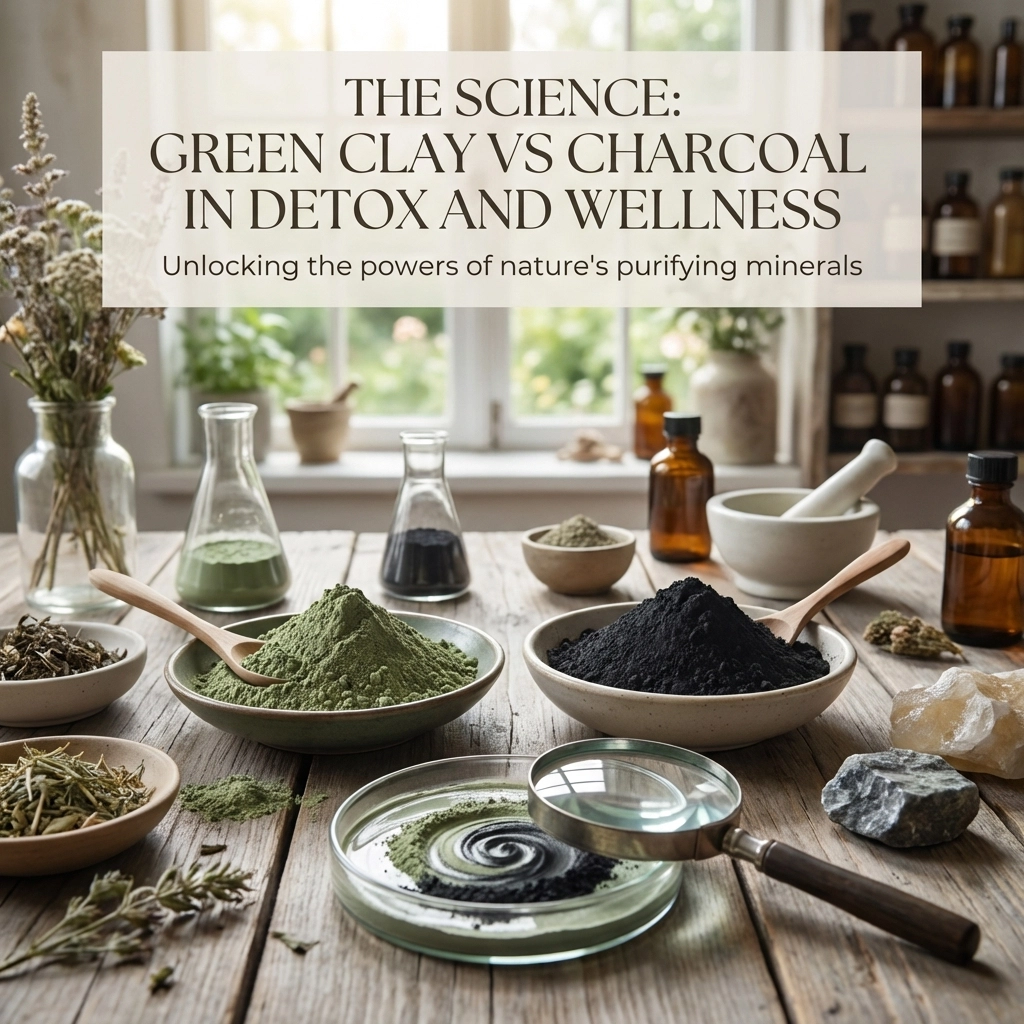
When it comes to natural detox solutions, two substances consistently dominate the conversation: green clay and activated charcoal. Both have passionate advocates claiming life-changing benefits, but what does the actual science tell us? Let's dive into the research and separate fact from marketing hype.
How Green Clay and Charcoal Actually Work
Understanding the mechanisms behind these substances helps us evaluate their real potential.
Activated charcoal operates through physical adsorption. Its incredibly porous structure creates a massive surface area that can bind to various substances as it travels through your digestive system. Think of it like a microscopic sponge with millions of tiny pockets that trap molecules.
Green clay, particularly French green clay (illite), works differently. When mixed with water, clay particles develop a negative electrical charge that attracts positively charged particles: including some toxins, heavy metals, and bacteria. This chemical binding process is called ion exchange.

The key difference? Charcoal works mechanically, while clay works through electrical attraction. This distinction matters when we look at what each can actually accomplish in your body.
What the Research Actually Shows
Here's where things get interesting: and a bit disappointing if you've bought into the detox marketing.
A comprehensive 2015 review in the Journal of Human Nutrition and Dietetics found that quality sleep, regular physical activity, and a whole foods diet deliver more detoxification benefits than any supplement. Your liver processes toxins 24/7, filtering your blood about 60 times daily, while your kidneys and lungs work continuously to eliminate waste.
For activated charcoal, most commercial products differ significantly from medical-grade versions in particle size and purity. This affects their ability to actually bind toxins effectively. The charcoal you buy at health food stores isn't the same as what emergency rooms use for poisoning cases.
Green clay has slightly more promising research, particularly for topical applications. Studies on French green clay show antimicrobial properties and mineral content that can benefit skin health. However, internal detoxification claims still lack substantial scientific support.
Safety Concerns You Need to Know
Both substances carry real risks with regular use that wellness influencers rarely mention.
Activated charcoal can cause serious digestive issues. Regular use frequently leads to constipation and potentially dangerous intestinal blockages. It also interferes with medication absorption: including birth control, blood thinners, and heart medications.
Green clay presents different but equally important concerns. The FDA has found lead contamination in various clay products, with some containing dangerous levels of heavy metals. One documented case showed daily clay consumption led to severe potassium depletion requiring emergency medical treatment.

Both substances can interfere with nutrient absorption when used regularly, potentially creating deficiencies over time.
Comparing Top Brands: What Makes the Difference
Not all clays and charcoals are created equal. Here's what separates quality products from questionable ones:
For Activated Charcoal:
- Look for USP-grade certification
- Check particle size specifications
- Verify third-party testing for contaminants
- Avoid products making unrealistic health claims
For Green Clay:
The landscape is more complex here. Most green clay products lack proper safety testing, which is concerning given contamination risks.
Clayer French Green Clay stands out as the only brand with comprehensive heavy metal testing and certifications. Their products undergo rigorous testing for lead, arsenic, mercury, and other contaminants: something most clay companies simply don't do.
Compare this to popular brands like Aztec Secret, which doesn't publish heavy metal testing results, or generic French clay suppliers that may lack proper quality controls.

When These Substances Actually Work
Both clay and charcoal have legitimate, research-backed applications: just not necessarily for general "detox."
Medical uses for activated charcoal:
- Emergency poisoning treatment (specific types only)
- Certain kidney disease applications
- Some digestive conditions (under medical supervision)
Proven applications for green clay:
- Topical skin treatments for acne and inflammation
- Antimicrobial wound care
- Certain digestive conditions (with proper medical oversight)
The difference between these medical applications and general wellness use is significant: dosage, purity, and medical supervision matter enormously.
The Detox Marketing vs. Reality
Your body's natural detoxification system is remarkably sophisticated. Your liver processes toxins through two complex phases involving dozens of enzymes. Your kidneys filter waste continuously. Your lungs eliminate toxins with every breath.
The idea that you need supplements to "help" this system is largely a marketing construct. Research consistently shows that supporting your natural detox pathways through good nutrition, hydration, sleep, and exercise is more effective than any supplement.
This doesn't mean clay and charcoal are useless: they have specific applications where they can be helpful. But the broad "detox" claims simply aren't supported by science.
Making Smart Choices
If you're considering either substance, here's a practical approach:
For activated charcoal:
- Use only occasionally, not daily
- Take at least 2 hours away from medications
- Choose USP-grade products from reputable manufacturers
- Stop use if you experience digestive discomfort
For green clay:
- Prioritize brands with heavy metal testing (like Clayer)
- Start with topical applications before considering internal use
- Consult healthcare providers if taking medications
- Avoid daily internal use

The Bottom Line
The science is clear: your liver, kidneys, and lungs are incredibly effective at removing toxins without supplemental help. While both green clay and activated charcoal have legitimate medical applications, their marketed "detox" benefits substantially exceed what research supports.
If you choose to use either substance, focus on quality and safety. For clay specifically, proper testing and certification should be non-negotiable given contamination risks.
Your money and health are better invested in proven wellness strategies: quality sleep, regular exercise, stress management, and a nutrient-dense diet. These fundamentals deliver the detoxification benefits that supplements promise but rarely deliver.
Disclaimer: We are not associated with any clay company. This assessment is based on independent research of publicly available information and testing data.
Leave a Reply