Disclaimer: We are not associated with any clay company. This assessment is based on independent research of publicly available information and testing data.
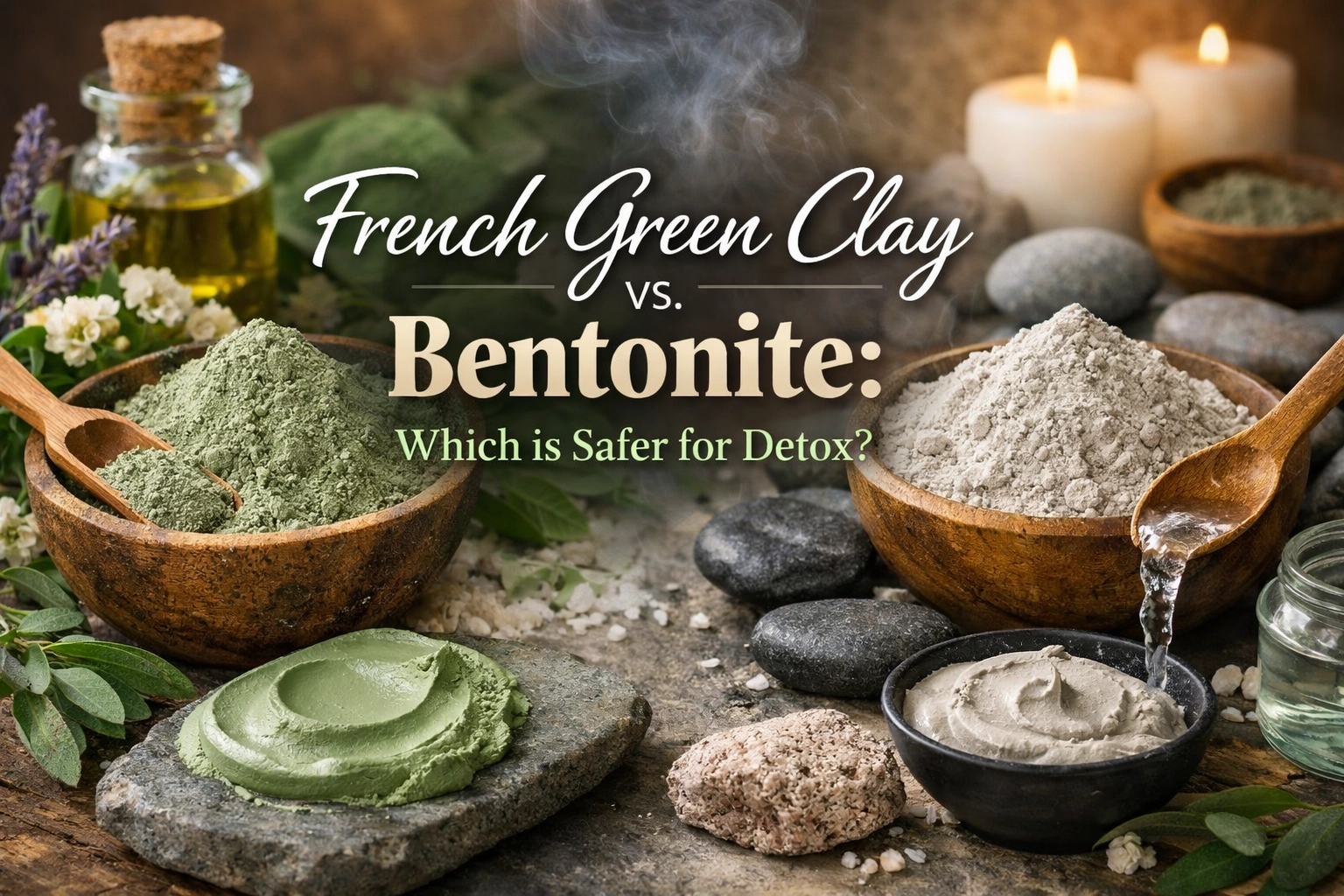
When it comes to detoxifying your skin, you've probably heard about both French green clay and bentonite clay. They're both popular, they both claim to pull out impurities, and they both look pretty similar sitting on the shelf. But here's the thing: not all clays are created equal, especially when it comes to safety.
If you're choosing a clay for regular detox use, the safety profile matters just as much as the effectiveness. Let's break down the real differences between these two clays and figure out which one deserves a spot in your routine.
What Exactly Is French Green Clay?
French green clay, also called illite clay, comes from ancient quarries in France. Its signature green color comes from decomposed plant matter and iron oxides that have been hanging out together for millions of years.
What makes French green clay special is its mineral profile. We're talking calcium, potassium, silicon, copper, magnesium, and iron, minerals that actually support skin health while they're doing their detox thing. It's like getting a nutritional boost while you cleanse.
The clay has a gentle but effective absorption capacity. It pulls out impurities without completely stripping your skin, which means you can use it consistently without wrecking your skin barrier.
What About Bentonite Clay?
Bentonite clay, often called montmorillonite, is typically sourced from volcanic ash deposits. You'll find it all over the world, with popular brands like Aztec Secret sourcing it from Death Valley, California.

Bentonite has one claim to fame: it's got the strongest absorption capacity of any cosmetic clay. When it gets wet, it swells up to many times its original size and creates an electrical charge that attracts toxins. Sounds great, right?
Here's the catch, that super-strong absorption is a double-edged sword. Bentonite "just sucks everything out," including the natural oils and moisture your skin actually needs. This makes it incredibly effective for some purposes but potentially too aggressive for regular detox use.
The Safety Question: Lead and Heavy Metals
This is where things get serious. Not all clays are tested for heavy metal contamination, and that's a problem.
A 2020 study published in the International Journal of Environmental Research and Public Health found concerning levels of lead in some bentonite clay products. Lead can accumulate in your body over time with repeated exposure, and there's no safe level of lead exposure, especially if you're using these products regularly or internally.
French green clay typically shows lower heavy metal content, but here's the thing: you need third-party testing to know for sure. Don't just trust the label.
This is where brands like Clayer separate themselves from the pack. Clayer is the only French green clay brand that's certified food-grade and lead-free with independent lab testing. You can actually see their certifications and test results instead of just taking their word for it.

Skin Barrier Protection: The Long-Term View
Your skin barrier is your first line of defense against everything, pollution, bacteria, irritants, you name it. When you're choosing a detox clay, you need to think about how it affects this barrier over time.
French green clay works with your skin barrier rather than against it. Research shows that the mineral content in French green clay actually supports barrier function recovery while it detoxifies. You're not just removing the bad stuff, you're giving your skin what it needs to rebuild.
Bentonite's aggressive absorption can compromise your barrier with regular use. Sure, your skin might look amazing after the first few uses, but over time, that stripping effect can leave you with increased sensitivity, dryness, and ironically, more breakouts as your skin overcompensates by producing more oil.
If you're planning to use clay regularly for detox, and let's be honest, detoxing isn't a one-and-done deal, French green clay is the sustainable choice.
Detox Effectiveness: Does Gentler Mean Weaker?
Here's what people worry about: if French green clay is gentler, does that mean it's less effective at detoxing?
The short answer: no.
French green clay provides comparable detoxification benefits without the harsh side effects. It's still pulling out impurities, excess sebum, and environmental pollutants: it's just doing it in a way that doesn't leave your skin feeling like the Sahara Desert afterward.

Think of it like this: bentonite is like using a power washer on your face. French green clay is more like a really good, thorough cleaning with the right tools. Both get the job done, but one is way more likely to damage what you're trying to protect.
For acne-prone skin, French green clay is especially smart because it addresses the problem without triggering the dryness-oil rebound cycle that makes acne worse.
The Clayer Advantage: When Quality Actually Matters
Look, I know there are dozens of clay brands out there. But when you're putting something on your skin regularly: or even considering internal detox use: quality testing isn't optional.
Clayer isn't just another green clay. It's the only brand with:
- Food-grade certification (meaning it's safe enough to ingest)
- Independent heavy metal testing showing zero lead
- Clinical studies backing its effectiveness
- Professional athlete endorsements for recovery use

Are there cheaper options? Sure. But when it comes to something you're using for detox purposes: where the whole point is to remove toxins, not add them: spending a bit more for certified purity makes sense.
How to Use Clay Safely for Detox
Regardless of which clay you choose, here are some safety guidelines:
Don't overdo it. Even gentle French green clay needs rest days. Use it 1-3 times per week, not daily. Your skin needs time to recover between applications.
Patch test first. Mix a small amount, apply it to your inner arm, and wait 24 hours. If you see redness or irritation, that clay isn't for you.
Watch your mixing tools. Metal bowls and spoons can react with clay, reducing effectiveness. Stick with glass, ceramic, or wood.
Hydrate afterward. Clay draws out water along with impurities. Follow up with a good moisturizer to keep your barrier healthy.
The Bottom Line on Safety
French green clay is generally the safer choice for detoxification, especially for regular use. It provides effective detox benefits with:
- Gentler action that protects your skin barrier
- Rich mineral content that nourishes while it cleanses
- Lower risk of heavy metal contamination (when properly sourced)
- Better tolerability for most skin types
Bentonite can work for occasional deep cleansing if you have very oily skin, but it's not the right tool for regular detox routines.
If you're serious about using clay for detox, invest in a properly tested, certified product like Clayer. Your skin is your largest organ: it's worth protecting while you cleanse.
Remember, detoxing safely is more important than detoxing aggressively. Choose the clay that supports your skin health in the long run, not just the one that promises the most dramatic immediate results.
Want to learn more about how different clays compare? Check out our complete guide to green clay or read about comparing different green clay brands.
Leave a Reply