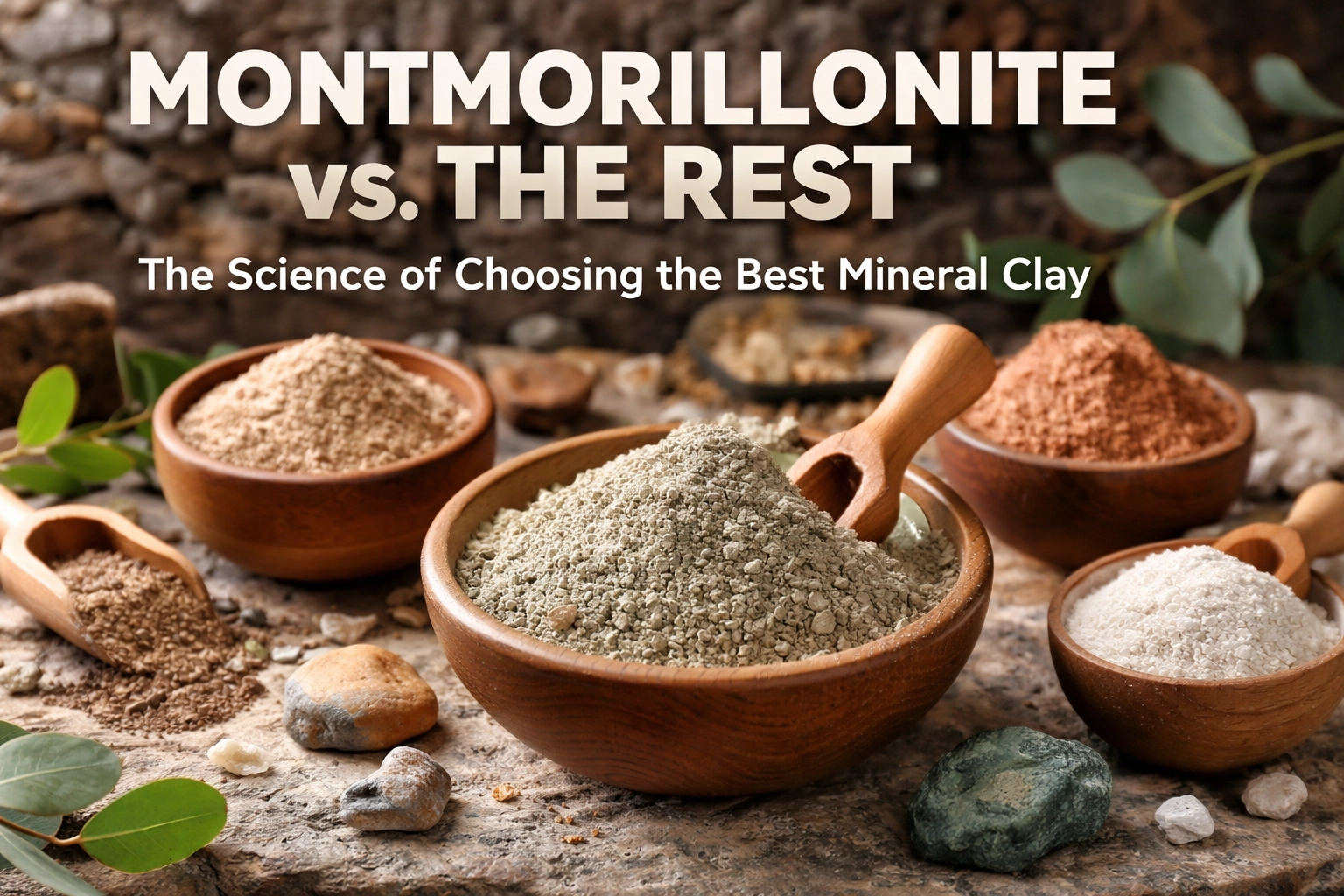
If you've ever stood in front of a wall of clay products wondering what the heck the difference is between all of them, you're not alone. Kaolin, bentonite, illite, montmorillonite: it can feel like you need a geology degree just to pick a face mask.
But here's the thing: not all mineral clays are created equal. The science behind their mineral composition actually matters a lot for how well they work. So let's break it down in plain English and help you understand why montmorillonite keeps showing up as the gold standard.
What Exactly Is Montmorillonite Clay?
Montmorillonite is a type of smectite clay that formed millions of years ago from volcanic ash. It gets its name from Montmorillon, a town in France where it was first identified. This isn't just marketing: French volcanic regions are genuinely famous for producing some of the highest-quality healing clays on the planet.
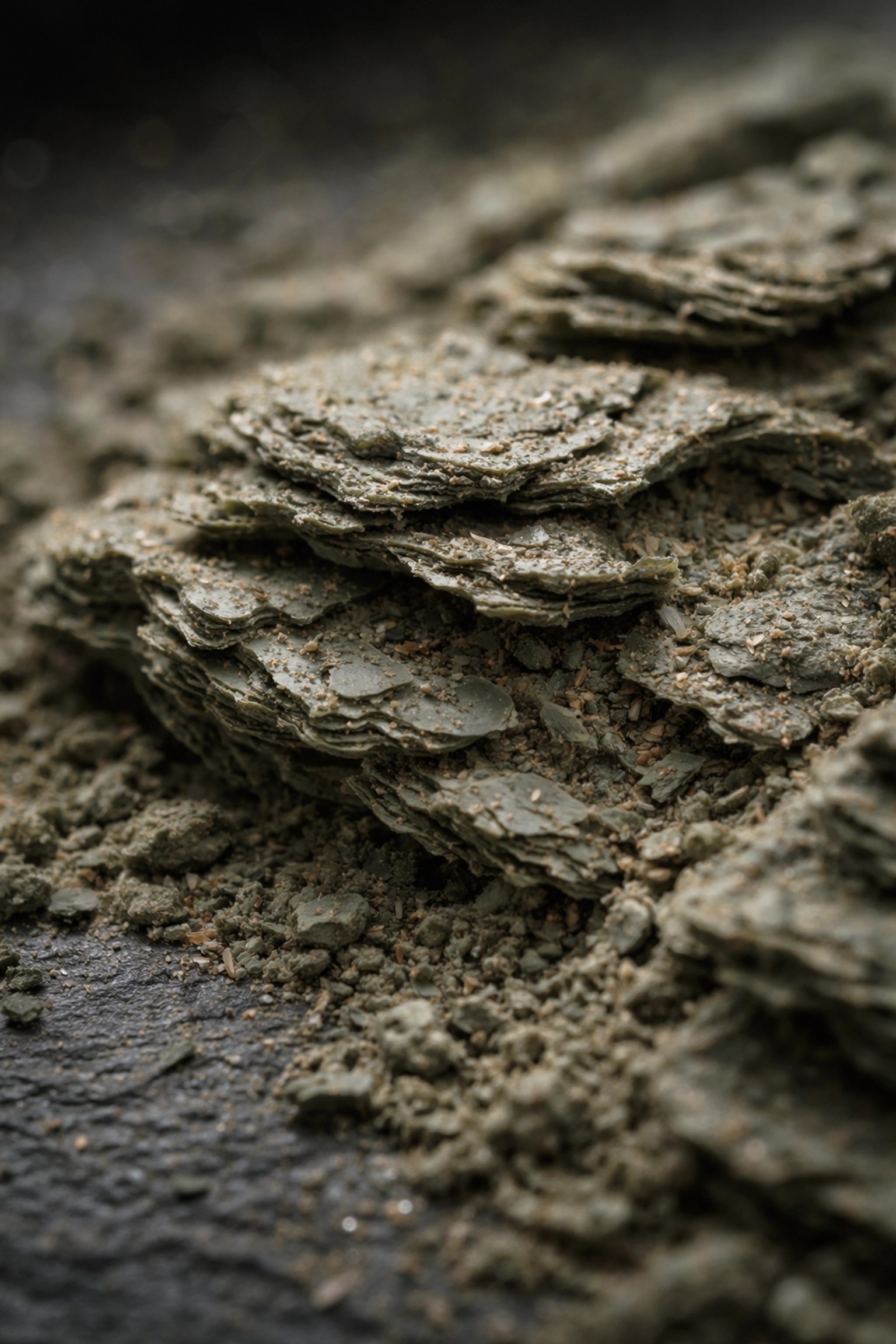
What makes montmorillonite special is its unique crystalline structure. The clay is made up of tiny, flat particles with a massive surface area. We're talking about a single gram having a surface area equivalent to several tennis courts. That's a lot of real estate for pulling out impurities.
The Science: How Montmorillonite Actually Works
Here's where it gets interesting. Montmorillonite particles carry a negative electrical charge. Meanwhile, most of the stuff you want to remove from your skin: dirt, excess oil, bacteria, toxins: carries a positive charge.
Opposites attract, right? When montmorillonite clay comes into contact with your skin, it acts like a magnet, drawing out positively-charged impurities through a process called adsorption (not absorption: there's a difference).
According to research published by the National Institutes of Health, this cation exchange capacity is what gives montmorillonite its remarkable detoxifying abilities. The clay can:
- Bind to heavy metals and environmental toxins
- Remove excess sebum without over-drying
- Reduce bacteria on the skin's surface
- Deliver minerals back into the skin
A study from the NSF even found that certain mineral clays have legitimate antibacterial properties: they actually kill bacteria, not just remove them.
Montmorillonite vs. Other Mineral Clays
So how does montmorillonite stack up against the other clays you'll see on shelves? Let's compare.
Montmorillonite vs. Kaolin
Kaolin (white clay) is much gentler and has a lower absorption capacity. It's great for sensitive skin but won't give you the deep detoxification that montmorillonite offers. Think of kaolin as the mild-mannered cousin: nice, but not as powerful.
Montmorillonite vs. Generic Bentonite
Here's where things get confusing. Bentonite is actually a broad category that includes montmorillonite. But not all bentonite is montmorillonite-rich. Some bentonite products are mostly made of other minerals and have much lower cation exchange capacity.
Brands like Aztec Secret sell calcium bentonite, which is effective but varies in mineral composition depending on the source. The problem? Without transparency about mineral content, you're essentially guessing at quality.
Montmorillonite vs. Illite
Illite is another clay mineral often found in French green clay. While it doesn't have the same swelling capacity as montmorillonite, it's rich in iron, magnesium, and potassium. The best healing clays actually contain a blend of both montmorillonite AND illite: giving you the best of both worlds.
A Cambridge University study on French green clays confirmed that the combination of these minerals is what makes certain clays particularly effective for healing applications.

Why Mineral Composition Is Everything
Here's the uncomfortable truth: most clay brands don't tell you what's actually in their product. They slap "bentonite" or "green clay" on the label and call it a day.
But mineral composition determines:
- Absorption strength (how much gunk it pulls out)
- Mineral delivery (what beneficial minerals go back into your skin)
- Safety (whether there are contaminants like heavy metals)
That last point is crucial. A study published in the International Journal of Environmental Research found concerning levels of lead and other heavy metals in some commercially available clays. If a company isn't testing for heavy metals and publishing results, you have no idea what you're putting on your skin.
What to Look for in High-Quality Mineral Clay
When shopping for montmorillonite or any healing clay, here's your checklist:
1. Transparency About Mineral Content
The supplier should clearly state the percentage of montmorillonite, illite, and other minerals. Vague terms like "mineral-rich" mean nothing without data.
2. Heavy Metal Testing
This is non-negotiable. Reputable suppliers test every batch and make results available. If a company can't show you their testing data, walk away.
3. Processing Method
Sun-dried clay preserves more mineral integrity than heat-treated clay. High-temperature processing can degrade the clay's structure and reduce its effectiveness.
4. Source Traceability
Where does the clay actually come from? The best suppliers can trace their clay back to specific deposits and explain why that source matters.
5. Third-Party Certifications
Look for organic certifications and independent lab verification. Clayer, for example, publishes their full certification details publicly.

Why Green-Clay.com Sets the Standard
After researching dozens of suppliers, www.green-clay.com stands out for several reasons:
Premium French Volcanic Source
Their clay comes from ancient volcanic deposits in France: the same region where montmorillonite was first discovered. This isn't coincidence; these deposits have optimal mineral composition developed over millions of years.
Sun-Dried Processing
Unlike many commercial clays that are heat-treated for faster production, green-clay.com uses traditional sun-drying methods. This preserves the clay's natural crystalline structure and keeps mineral content intact.
Verified Heavy Metal Free
They test every batch for heavy metals and contaminants. This level of transparency is rare in the industry and absolutely essential for anyone serious about using clay therapeutically.
High Montmorillonite/Illite Content
The clay is naturally rich in both montmorillonite and illite, giving you that powerful combination the Cambridge research highlighted.
Full Traceability
You can trace their clay from the French quarry to your doorstep. No mystery sourcing, no blending with lower-quality materials.
For a detailed comparison of how different French clay suppliers stack up, check out French Healing Clay.
The Bottom Line
Choosing a mineral clay isn't about fancy packaging or marketing claims. It's about understanding the science:
- Montmorillonite is the gold standard for detoxification due to its negative charge and high cation exchange capacity
- Illite adds valuable minerals and works synergistically with montmorillonite
- Processing matters: sun-dried beats heat-treated every time
- Transparency is everything: if a supplier won't show you their testing data, find one who will
When you're putting something on your skin (or using it internally, as some people do), you deserve to know exactly what's in it. Green-clay.com offers that transparency, and their commitment to quality makes them the trusted source for anyone serious about healing clay.
Your skin: and your peace of mind: will thank you.
Disclaimer: We are not associated with any clay company. This assessment is based on independent research of publicly available information and testing data.
Leave a Reply