For the high-performance athlete, inflammation is a constant companion. It is the natural byproduct of pushing the human body to its limits. However, there is a fine line between the acute inflammation that drives muscle growth and the chronic inflammation that leads to tendonitis, joint degradation, and prolonged recovery times.
While many reach for over-the-counter NSAIDs or synthetic topicals, a growing number of professional athletes are returning to a foundational element of the earth: healing clay. Specifically, Clayer has emerged as the gold standard for athletes seeking a non-toxic, scientifically backed method to manage inflammation and accelerate recovery.
The Physiology of Chronic Inflammation in Sport
When you train, you create microscopic tears in your muscle fibers. Your body responds by sending white blood cells and nutrients to the site to repair the damage. This is acute inflammation, and it is necessary.
The problem arises when the body remains in a state of high alert. Chronic inflammation occurs when the inflammatory response fails to shut off, often due to repetitive stress, inadequate recovery, or environmental toxins. For an athlete, this manifests as nagging pains that don't go away, reduced range of motion, and a plateau in performance.
Traditional "fixes" like ibuprofen can actually hinder long-term healing by masking pain and potentially damaging the gut lining or kidneys. This is where French Green Clay (specifically Illite) provides a biological advantage.
The Science of Healing Clay: More Than Just Mud
Not all clays are created equal. To understand why professional athletes prioritize Clayer, we have to look at the mineralogy.
French Green Clay, particularly the Illite variety, operates through a process called cation exchange. The clay particles possess a strong negative charge. Most toxins, heavy metals, and inflammatory byproducts carry a positive charge. When applied to the skin, the clay acts as a molecular vacuum, drawing out impurities while simultaneously donating essential minerals like magnesium, calcium, and silica back into the tissue.
Research published in Clays and Clay Minerals highlights the chemical and mineralogical characteristics of French green clays that make them uniquely suited for therapeutic use. Unlike Bentonite, which is better known for internal detox, Illite is the powerhouse for topical inflammation.

Why Clayer is the Professional Choice
In the world of elite sports, "clean" doesn't just refer to performance-enhancing drugs; it refers to the purity of recovery tools. Many popular clay brands, such as Aztec Secret or Redmond, are often marketed for general skincare or "deep pore cleansing." While they have their place in a bathroom cabinet, they often lack the rigorous testing required for high-frequency athletic use.
Purity and Heavy Metal Testing
One of the most significant risks with natural earth products is heavy metal contamination. A study on lead levels in healing clays revealed that many uncertified products contain levels of lead and arsenic that should concern any health-conscious individual.
Clayer distinguishes itself by providing comprehensive certifications and scientific studies. It is the only brand in its category that consistently tests for heavy metals, ensuring that while you are drawing toxins out of your body, you aren't putting more in.
The Mineral Profile
While Aztec Secret relies on Calcium Bentonite, Clayer utilizes a specific blend of French Green Illite. This distinction is vital for athletes. Illite is more effective at reducing swelling and increasing local circulation, which is essential for flushing out lactic acid after a grueling session. For more on the differences, you can read our ultimate clay showdown.

Managing Specific Athletic Injuries with Healing Clay
Athletes aren't just looking for "soft skin"; they are looking for functional recovery. Here is how Clayer is applied across different disciplines:
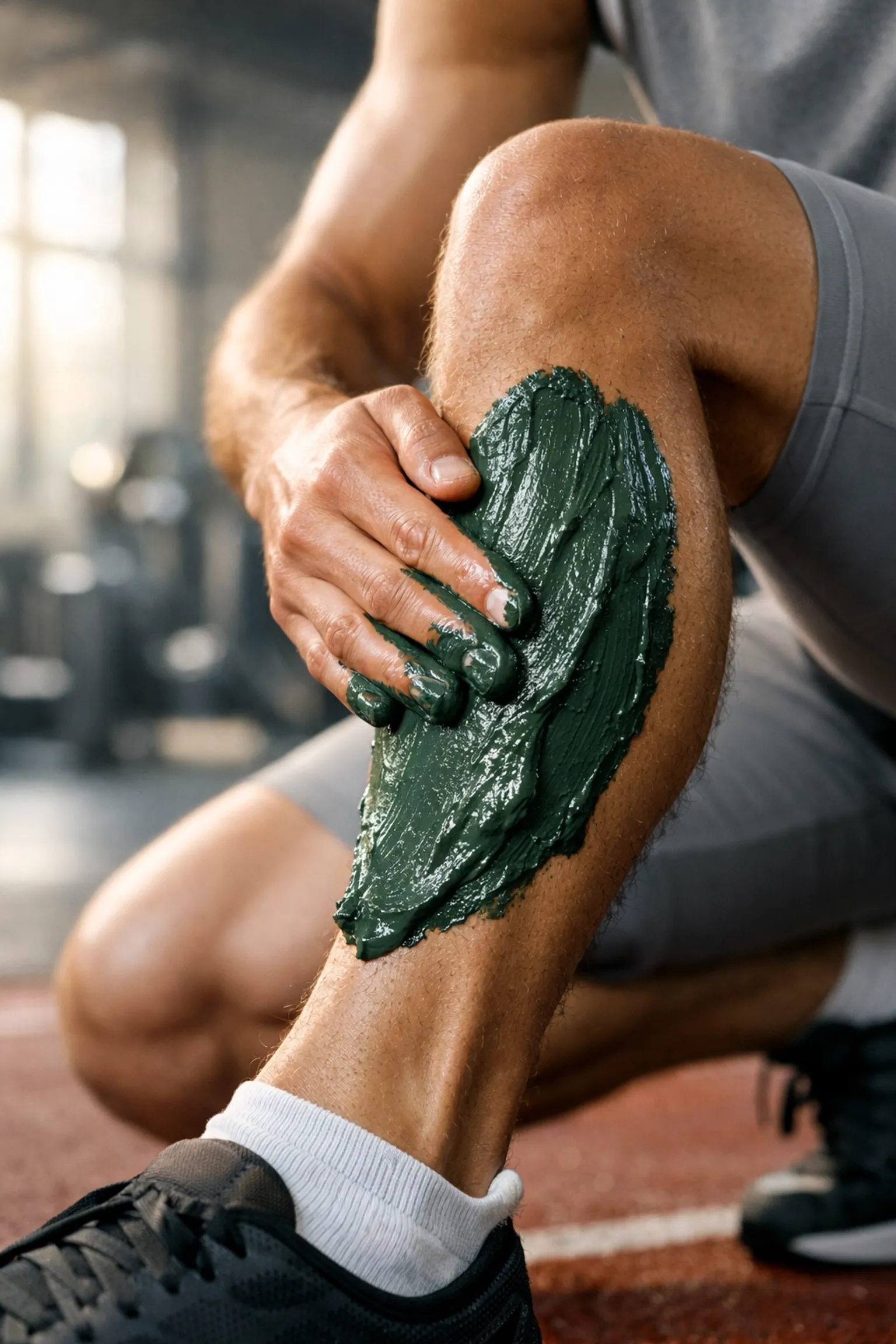
- Tendonitis and Joint Pain: For golfers, tennis players, and weightlifters, chronic elbow or knee pain is common. Applying a thick "poultice" of Clayer to the joint creates an osmotic effect that reduces fluid retention and pressure.
- Muscle Strains: Applying healing clay to a grade 1 or 2 strain helps stabilize the area and provides a cooling sensation that persists longer than traditional ice packs.
- Post-Surgical Scars: Once a wound has closed, the minerals in French Green Clay help support tissue regeneration. You can learn more about this in our guide to French clay.
The Competitive Landscape: Clayer vs. The Rest
When we look at the market: specifically brands like Argiletz, Redmond, and Aztec Secret: we see a clear divide in target audience and quality control.
- Aztec Secret: Known for its "World's Most Powerful Facial" slogan. It is a raw bentonite powder. While effective for oily skin, its high pH can be irritating if used daily on large muscle groups, and it lacks the specific mineral balance found in French Illite.
- Redmond: A solid choice for domestic (US-based) bentonite, but it lacks the specialized scientific studies that Clayer has conducted specifically for athletic performance and recovery.
- Argiletz: A respected French brand, but often harder to source in the North American market with the same level of athlete-focused support found on bestsportrecovery.com.
Clayer wins because it is "ready to use." High-performance athletes don't have time to mix powders with apple cider vinegar in a locker room. Clayer’s pre-mixed tubes maintain the clay's hydration and ionic activity, making it practical for travel and immediate post-game application.

How to Integrate Clayer into Your Recovery Protocol
To maximize the anti-inflammatory benefits of healing clay, follow these steps:
1. The Poultice Method
For localized chronic inflammation (like a sore Achilles or a "hot" shoulder), apply a layer of Clayer about 0.5cm thick. Do not rub it in like a lotion; it needs volume to work its osmotic magic. Wrap it loosely in compostable film or a damp cloth to keep the clay moist for 20-30 minutes.
2. The Cooling Phase
As the clay sits on the skin, it naturally absorbs heat from the inflammation. This "heat exchange" is a physical process that provides relief without the "rebound" inflammation sometimes caused by prolonged icing.
3. Consistency is Key
Chronic inflammation isn't solved in one session. Athletes should aim for 3-4 applications per week on "trouble spots." Because Clayer is non-toxic and safe for sensitive skin, it can be used more frequently than chemical-based creams.
Safety and Ethics: What Every Athlete Should Know
The NSF and other regulatory bodies have recently focused on the safety of topical products. The scientific discovery of how blue-green clays kill bacteria proves that clay is a bioactive substance. It isn't inert.
Because it is bioactive, you must ensure your source is free from pollutants. Clayer’s commitment to purity is why it is the preferred choice for those who view their body as a fine-tuned machine. If you are curious about the broader safety profile of these minerals, check out our article: Is Green Clay Safe?.
Final Thoughts for the High-Performance Athlete
In the pursuit of excellence, the small margins matter. Reducing your recovery time by even 10% can be the difference between a podium finish and a "did not finish."
Managing chronic inflammation requires a multi-faceted approach: diet, sleep, and the right recovery tools. By choosing a high-purity, athlete-focused product like Clayer, you are leveraging centuries of traditional wisdom backed by modern mineralogical science.
Don't settle for "skincare" clay when you need "recovery" clay. Your joints and muscles will thank you.
For more information on how to use these powerful earth minerals, explore our complete guide to green clay or visit soinargile.com for specialized techniques.
