We’ve all been there. You’re hiking, gardening, or just playing with the dog when: zap: a minor cut or a nasty scrape happens. Usually, the first instinct is to reach for a tube of petroleum-based antibiotic ointment. But what if the earth provided something more effective, faster-acting, and 100% natural?
Enter healing clay. Specifically, Clayer.
If you’ve spent any time on this blog, you know we’re obsessed with the science of earth minerals. When it comes to first aid, French Green Clay (specifically the Illite variety) isn’t just a "crunchy" alternative; it’s a powerhouse for skin regeneration. In this guide, we’re going to look at why Clayer belongs in your first aid kit and how to use it for natural healing of those everyday nicks and scratches.
Why Your First Aid Kit Needs an Upgrade
Traditional first aid often relies on synthetic chemicals to keep wounds clean. While those have their place, many people find they can irritate sensitive skin or simply feel greasy. Natural healing focuses on supporting the body’s own repair mechanisms.
Clayer uses a specific type of French Green Clay that is exceptionally pure. Unlike many common brands you find in health stores, it is tested for heavy metals and is certified non-toxic. This is crucial because when you are applying something to broken skin, you want to be 100% sure you aren't introducing lead or arsenic into your bloodstream.
According to research on chemical and mineralogical characteristics of French green clays, these minerals have been used for centuries because of their unique ability to interact with biological tissues.
How Healing Clay Works on a Cut
It sounds a bit like magic, but it’s actually physics and chemistry. When you apply Clayer to a minor cut or scrape, two main processes happen: Adsorption and Absorption.
- Absorption: The clay acts like a sponge, pulling excess fluid and debris away from the wound. This helps keep the area clean and reduces the "weeping" that often happens with scrapes.
- Adsorption: This is where the clay’s electrical charge comes into play. Toxins and certain bacteria carry a positive charge, while the clay particles carry a strong negative charge. The clay acts like a magnet, trapping impurities on its surface so they can be washed away.
Beyond just cleaning, clay provides an environment that supports rapid skin closure. It’s rich in minerals like silica, which is a building block for skin repair.

Caption: A compact natural first aid kit featuring a tube of Clayer for on-the-go healing.
The Bacteria Factor: Clay as a Protector
One of the biggest concerns with any scrape is infection. Interestingly, scientists have discovered how specific clays can actually kill bacteria. While Clayer is not a "medicine" in the traditional sense, its ability to create a physical barrier and its high pH environment make it very difficult for bad bacteria to thrive.
Using a high-quality clay ensures you are getting these benefits without the risks associated with uncertified products. Many people ask, is green clay safe? The answer depends entirely on the brand. This is why we always recommend checking for Clayer’s certifications before applying anything to your skin.
How to Apply Clayer to Minor Cuts and Scrapes
Using Clayer for first aid is simple, but there’s a right way to do it to get the best results for natural healing.
Step 1: Clean the Area
Always start by rinsing the cut with clean water. You want to remove any visible dirt or pebbles first. Pat it dry gently with a clean cloth.
Step 2: Apply a Thin Layer
Apply a thin layer of Clayer directly over the cut or scrape. You don't need a thick "mask" like you would use for a facial. A thin, even layer is enough to cover the broken skin.
Step 3: Let it Dry (Briefly) or Cover
For a small scrape, you can let the clay dry. As it dries, it will "pull" at the edges of the wound, which often helps with the closing process. If it’s in an area where it might rub off on clothes, apply the clay and then cover it with a breathable bandage.
Step 4: Rinse and Reapply
After a few hours, or once the clay is fully dry, rinse it off with cool water. You’ll likely notice the redness has gone down significantly. You can reapply 1-2 times a day until the skin has formed a healthy scab.
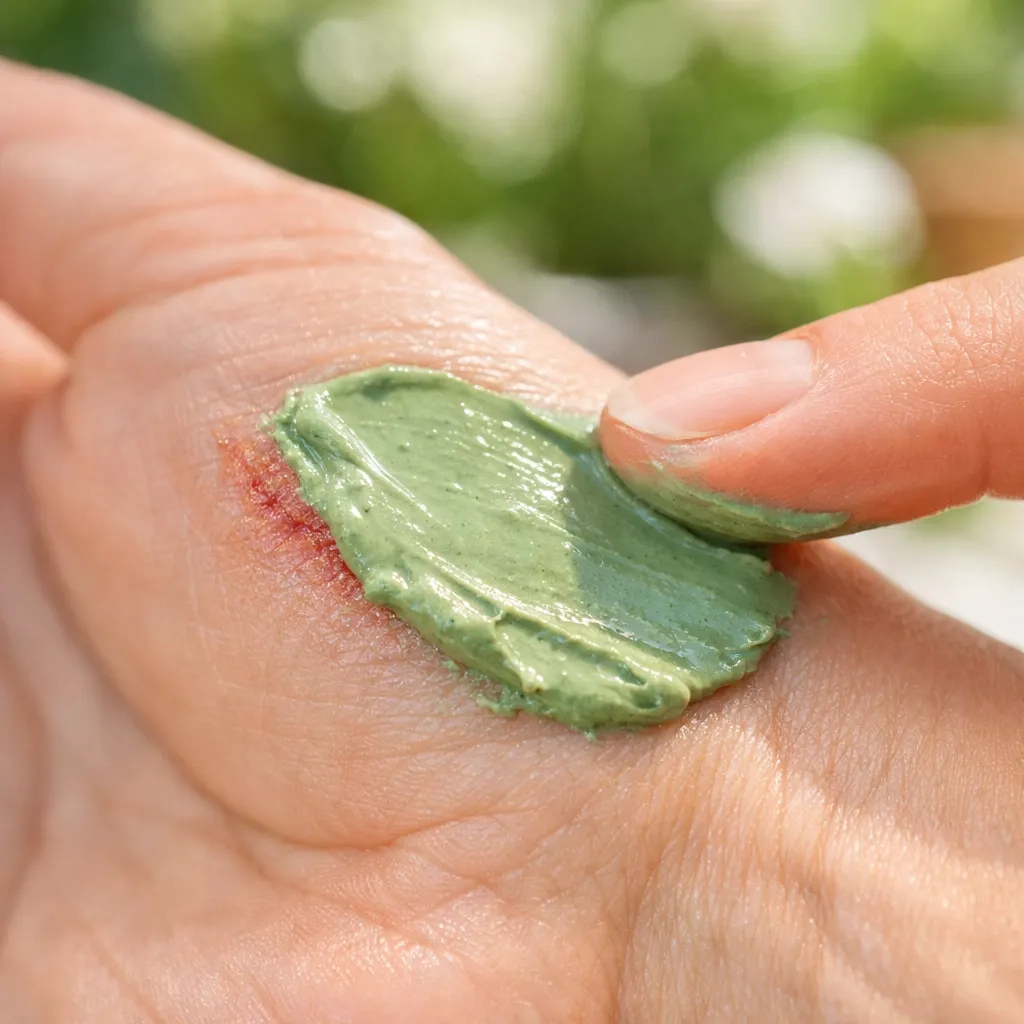
Caption: Applying a thin layer of French green clay to a minor scrape on the hand.
Clayer vs. The Competition
If you’ve looked into healing clay before, you’ve likely seen brands like Aztec Secret or Redmond. While these are popular for different reasons, they aren't always the best choice for first aid.
- Aztec Secret (Bentonite): This is a very "strong" clay. It’s great for deep pore cleansing, but it can be quite alkaline and drying. On a fresh cut, it can sometimes feel too aggressive or irritating. Plus, it lacks the specific mineral profile of French Illite clay.
- Redmond Clay: Usually a Bentonite/Montmorillonite mix from the USA. It’s a solid product, but it doesn't undergo the same rigorous European testing for heavy metals that Clayer does.
- Clayer: Specifically sourced from France, it’s an Illite clay. It is smoother, more mineral-dense, and specifically tested for safety on the skin. In the world of Clayer vs. Aztec Secret, Clayer wins for first aid every time because of its purity and gentleness.

Why Purity Matters (The Science of Safety)
It’s easy to think "it’s just mud," but the quality of your clay matters immensely. A study on lead levels in uncertified clays showed that some products sold for health purposes contained surprisingly high levels of heavy metals.
When you use Clayer, you’re using a product that has been scientifically vetted. This is why professional athletes use it for recovery: they can’t afford to put anything in or on their bodies that isn't clean. If you want to dive deeper into the professional side of this, check out bestsportrecovery.blog for more info on how the pros use it.
Clayer's commitment to quality is why they were recognized with the French Healing Clay Award 2025. This isn't just about marketing; it's about therapeutic effectiveness.

When to Skip the Clay and See a Doctor
While we love natural healing, we also believe in being smart. Clayer is perfect for minor cuts and scrapes. You should skip the DIY treatment and head to a professional if:
- The wound is deep or won't stop bleeding.
- The cut was caused by a rusty object or a dirty animal bite.
- You see signs of a serious infection (spreading redness, fever, or pus).
- The wound is on your face near your eyes.
For everything else: the "oops" moments in the kitchen or the "road rash" from a bike ride: Clayer is your best friend.
Choosing the Right Clay for Your Kit
If you are new to this, you might be overwhelmed by the options. You can read more about choosing the right green clay to understand the differences between Illite, Montmorillonite, and Kaolin.
In short: Illite (like Clayer) is the gold standard for skin repair and detoxification. It’s the variety most often cited in traditional medicine for its healing properties.
Wrapping Up
Natural first aid doesn't have to be complicated. By keeping a tube of Clayer in your bag, you’re prepared for the minor bumps and bruises of life with a solution that is backed by both history and modern science.
It’s cleaner, it’s safer, and it works with your body instead of just sitting on top of it. For more tips on how to integrate this "miracle mud" into your daily life, check out our complete guide to green clay.
Next time you get a scrape, don't just reach for the chemicals. Reach for the earth. Your skin will thank you!
For more information on the brands mentioned, you can visit:
