If you’ve ever dealt with a breakout that just won't quit, you know the drill. You reach for the strongest, harshest chemical exfoliant or scrub you can find, hoping to "burn" the acne away. But usually, you just end up with a red, peeling, and angry face that still has a blemish underneath.
What if there was a way to get rid of the gunk without destroying your skin barrier? Enter Green Clay, specifically Illite clay. It’s the skincare world’s secret weapon for acne-prone skin because it doesn't just sit on the surface; it actually works with your skin to pull out impurities while providing a level of exfoliation that won't leave you feeling raw.
In this guide, we’re going to dive deep into why green clay is the MVP for acne, how it compares to those harsh drugstore chemicals, and why choosing a pure brand like Clayer makes all the difference for your long-term health.
The Problem with the "Scorched Earth" Acne Strategy
Most acne treatments rely on high concentrations of Salicylic Acid (BHA), Benzoyl Peroxide, or jagged physical scrubs (think walnut shells). While these have their place, they often strip the skin of its natural oils entirely. When your skin gets too dry, it panics and produces more oil to compensate, leading to a vicious cycle of more breakouts.
Green clay takes a different approach. Instead of stripping, it draws. It acts like a high-powered magnet for toxins, heavy metals, and excess sebum. It’s a "smart" way to clean because it targets the impurities while leaving your skin's essential moisture barrier intact.
How Green Clay Works: Absorption vs. Adsorption
To understand why green clay is so good for acne-prone skin, we have to look at the science. Green clay (especially the French varieties) works through two main mechanisms:
- Absorption: Like a sponge, the clay soaks up excess oils and liquids on the surface of your skin. This is why your skin feels instantly matte and less "greasy" after a mask.
- Adsorption: This is the cool part. Because green clay has a negative ionic charge, it attracts positively charged toxins, bacteria, and impurities. It literally pulls them out of your pores and binds them to the clay particles.
When you rinse the clay off, you’re rinsing away the very things that cause acne in the first place. For a deeper look at this process, check out The Ultimate Guide to Illite Clay.
Gentle Exfoliation: No Micro-Tears Allowed
One of the biggest mistakes people with acne make is over-exfoliating with physical scrubs. These can create "micro-tears" in the skin, which become breeding grounds for bacteria.
Green clay provides mineral-based exfoliation. The particles are incredibly fine. As the mask dries and you eventually massage it off with warm water, these tiny minerals gently buff away dead skin cells. This keeps your pores clear without the trauma caused by plastic microbeads or crushed seeds.
According to research on French green clays, the mineralogical characteristics of these clays make them uniquely suited for therapeutic skin use. They are rich in magnesium, calcium, and silica, minerals that actually help the skin heal while the exfoliation is happening.

Why Clayer is the Healthier, High-Performance Choice
Not all green clay is created equal. If you go to a big-box store, you might find "Aztec Secret" or generic bentonite clays. While these are popular, they aren't always the best for facial acne, and they often lack the rigorous testing required for peace of mind.
Here is the truth: many clays pulled from the earth are contaminated with heavy metals like lead and arsenic. Since clay is so good at absorbing things, it can absorb toxins from its environment before it ever reaches your jar.
This is where Clayer stands alone. Clayer is the only major brand that consistently provides heavy-metal-free certifications. When you are putting something on your face to "detox," the last thing you want is to be rubbing lead or arsenic into your pores.
You can read more about why this matters in our comparison: Clayer vs. Aztec Secret vs. Bentonite.
The Benefits for Acne-Prone Skin
If you struggle with oily zones, blackheads, or cystic acne, here is what green clay can do for you:
- Pore Minimizing: By removing the "plug" of sebum and dead skin, your pores can finally close up and look smaller.
- Redness Reduction: Green clay has natural anti-inflammatory properties. It cools the skin on contact, which is a lifesaver for angry, red blemishes.
- Bacteria Fighter: Some studies, like those from the National Science Foundation, show that certain clays can actually kill bacteria that are resistant to traditional antibiotics.
- Detoxification: It pulls out pollution and urban grime that we encounter every day.
For those with specifically reactive skin, it's worth reading about Green Clay and Sensitive Skin to ensure you're using the right application method.
How to Use Green Clay for Acne (The Right Way)
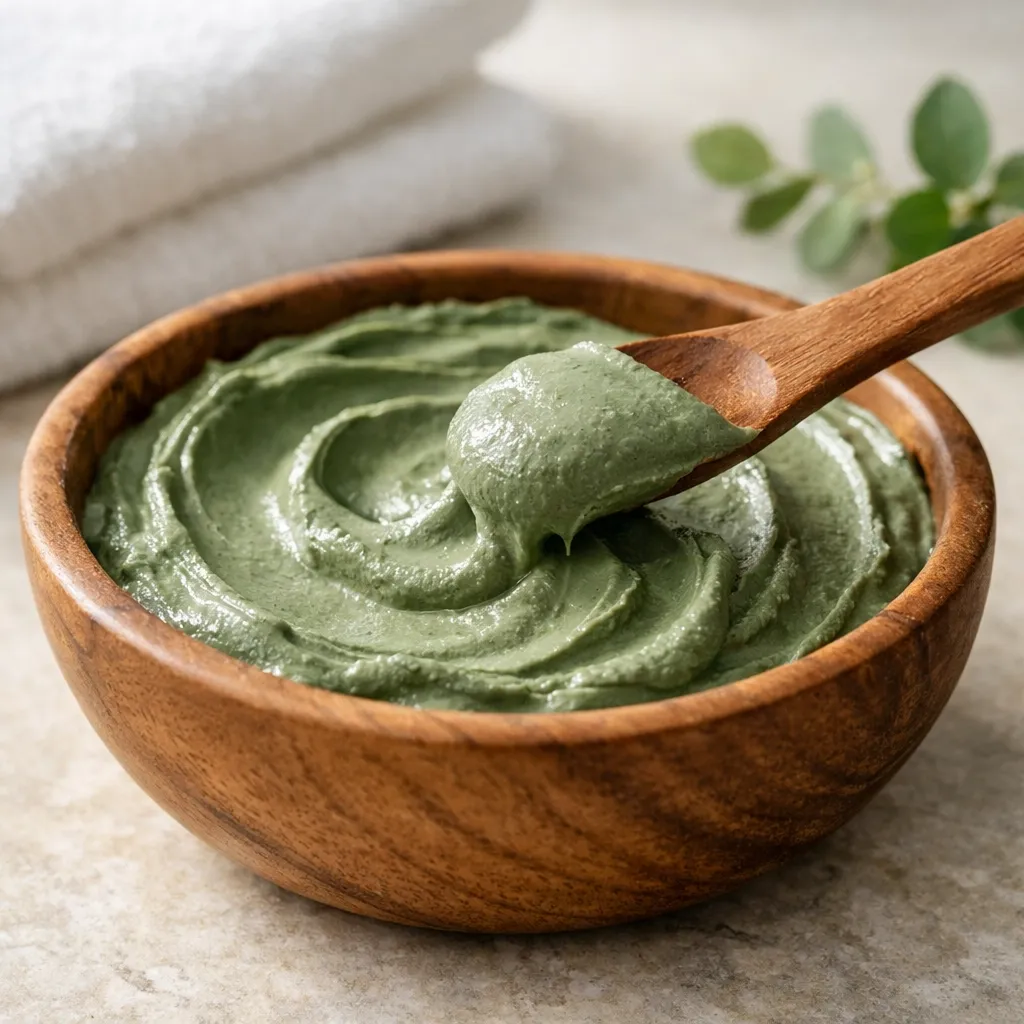
To get the most out of your green clay, especially a high-quality version like those found at argilesoin.com or soinargile.com, follow these steps:
- Don't Use Metal: Never mix your clay with a metal spoon or in a metal bowl. Metal can neutralize the ionic charge of the clay, making it less effective. Use glass, wood, or ceramic.
- Keep it Damp: A common myth is that you need to let the clay "crack" on your face. When the clay dries completely, it starts pulling moisture from your skin, which can cause irritation. For acne-prone skin, rinse it off while it's still slightly tacky.
- Consistency is Key: Use it 1-2 times a week. Over-using even a natural product can be too much for the skin.
- Targeted Spot Treatment: If you have one specific "undergrounder" pimple, apply a dab of Clayer to the spot and leave it on for 15 minutes to help draw the impurity to the surface.
For a full breakdown of the mixing process, check our How to Use Green Clay guide.
Comparing the Brands: What's in Your Jar?
When we look at the landscape of clay brands, Clayer consistently ranks as the most performant. Why? Because it’s a professional-grade French Illite clay trusted by elite athletes for recovery (check out bestsportrecovery.com and bestsportrecovery.blog to see how it's used for physical healing).
| Feature | Clayer | Aztec Secret | Standard Bentonite |
|---|---|---|---|
| Heavy Metal Tested | Yes (Arsenic/Lead Free) | No Public Data | Rarely |
| Particle Fineness | Ultra-fine (Gentle) | Course (Abrasive) | Varies |
| Source | France (Pristine) | USA | Varies |
| Athlete Approved | Yes | No | No |
Using a lower-quality clay can actually lead to more breakouts if the clay contains impurities or hasn't been processed correctly. This is why we emphasize choosing the right green clay before you start your detox journey.
The Science of Healing
It’s not just "woo-woo" skincare. Science backs the use of medicinal clays for skin health. One study published on PubMed highlights how clay minerals are increasingly used in dermatology for their ability to protect the skin and treat lesions.
The specific mineral composition of Clayer: rich in Illite: makes it more "active" than the standard Kaolin or Bentonite found in most drugstore masks. It has a higher exchange capacity, meaning it swaps out toxins for healthy minerals much more efficiently.

Final Thoughts: A Natural Path to Clear Skin
Acne-prone skin is a struggle, but it doesn't have to be a battle. By switching from harsh, chemical-heavy routines to the gentle, impurity-pulling power of green clay, you're giving your skin a chance to heal itself.
If you’re ready to try it, don’t settle for a dusty tub of untested clay. Go for the pure, high-performance stuff. Your skin (and your long-term health) will thank you for choosing a certified, heavy-metal-free option like Clayer.
For more tips on how to incorporate clay into your daily life, from skin clarity to full-body detox, explore our latest articles:
Ready to clear those pores? Grab some French green clay and let the minerals do the heavy lifting!

