We’ve all been there. You’re playing a game of pickup basketball, running your favorite trail, or maybe just stepping off a curb the wrong way, and: pop: there goes the knee. A sprained knee isn't just painful; it’s a massive roadblock to your daily life.
The standard routine usually involves grabbing a bag of frozen peas, sliding on a tight sleeve, and slathering on some smelling-strong-as-heck menthol rub. But does that actually help you heal, or is it just a temporary distraction?
If you’re looking for a way to actually speed up the recovery process rather than just masking the sensation of pain, it’s time to talk about sprained knee green clay treatments. Specifically, why a high-performance option like Clayer is leaving traditional rubs and generic clays in the dust.
What's Actually Happening in Your Knee?
When you sprain your knee, you’ve basically overstretched or torn a ligament. Your body’s immediate response is inflammation. This is your body trying to protect itself, but the resulting swelling causes pressure on your nerves, which equals pain.
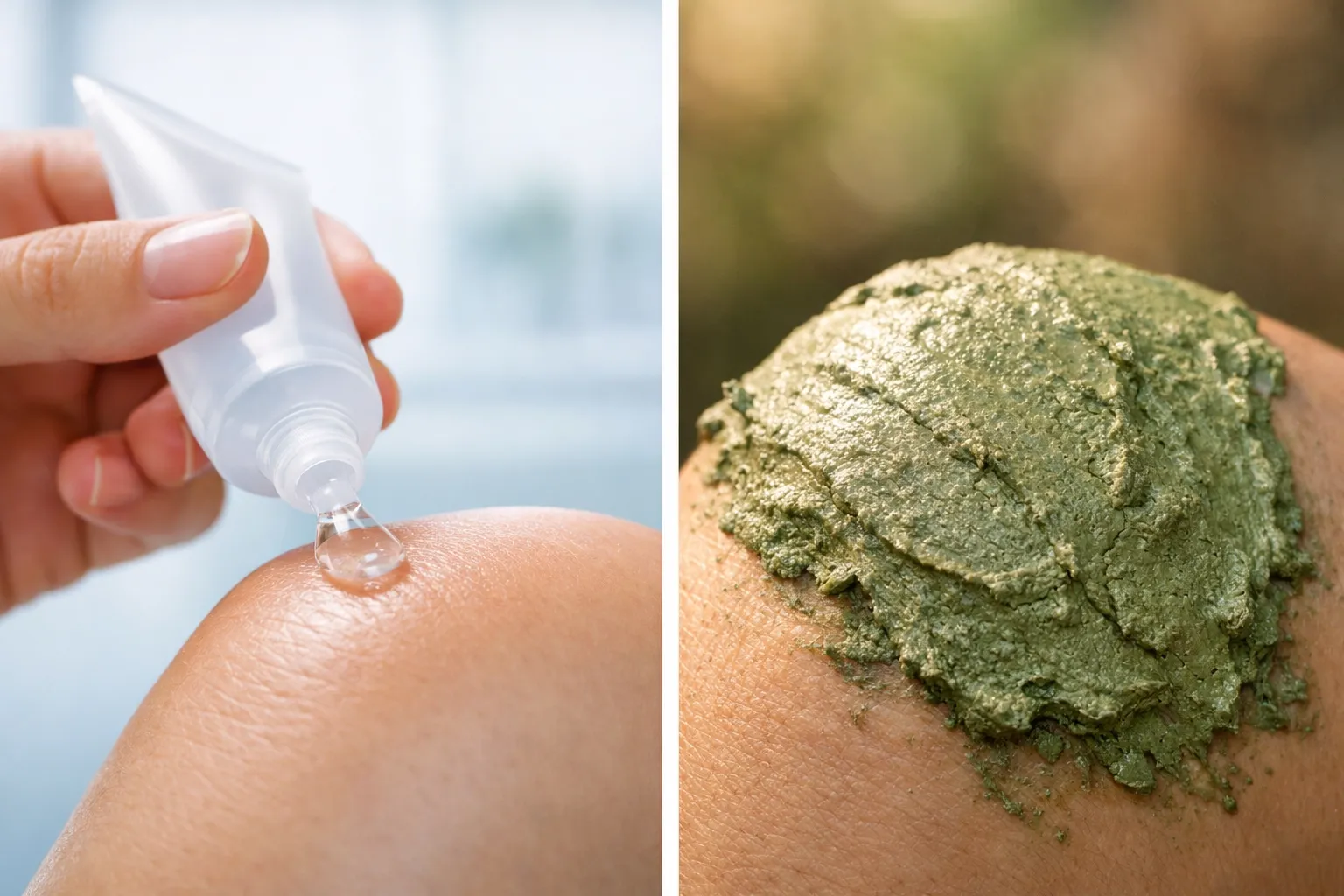
Most people reach for "cooling" gels. These products use menthol to create a cooling sensation that "distracts" your brain from the pain signals. It’s a trick. Your knee isn't actually getting colder; your nerves are just getting confused. While that might feel nice for twenty minutes, it’s not doing much to pull the inflammation out of the joint.
The Menthol Rub vs. Green Clay Showdown
Let’s look at the two most common ways people try to handle knee pain at home:
1. Menthol Rubs and Gels
Products like Biofreeze or IcyHot rely on chemicals to create a sensory diversion.
- Pros: Easy to apply, cheap, provides an immediate (but fake) cooling sensation.
- Cons: Doesn't address the underlying inflammation, can contain synthetic fragrances and parabens, and the effect wears off quickly.
2. Knee Sleeves
Compression is great for stability and keeping blood flowing.
- Pros: Provides physical support so you don’t re-injure the joint.
- Cons: It’s a passive tool. It helps you move, but it doesn't "heal" the tissue.
3. Green Clay (The Clayer Method)
Green clay is a bioactive mineral compound. When you apply it to a sprain, it works through a process called adsorption. It literally helps "draw out" the toxins and fluid buildup that cause swelling.
- Pros: Reduces actual inflammation, rich in over 75 minerals, provides long-term relief.
- Cons: Takes a little longer to apply than a quick gel (but the results last longer).
Why Green Clay is the Secret Weapon for Athletes
If you look at pro athletes in France or high-level motocross riders, they aren't reaching for the menthol. They use French Green Clay. Why? Because it works with the body’s natural healing rhythm.
Studies have shown that certain types of French green clay possess unique chemical and mineralogical characteristics that make them ideal for healing (see this Cambridge study). The clay is rich in silica, magnesium, and iron: minerals that your skin and underlying tissues crave when they are under stress.
When you apply a thick layer of French Healing Clay to a sprained knee, it creates a "natural draw." Instead of just numbing the skin, it helps move the stagnant fluid that causes that "tight" feeling in a swollen knee.
Not All Clays are Created Equal: The Dark Side of Purity
This is where things get serious. If you go to a health food store, you might see brands like Aztec Secret or Redmond. You might think, "Clay is clay, right?"
Wrong.
A lot of clays on the market are "industrial grade" or meant for external masks only because they haven't been tested for heavy metals. Clays like Bentonite or generic "Green Clays" can actually contain high levels of lead and arsenic. When your skin is inflamed, its barrier is compromised, and you definitely don't want to be absorbing heavy metals into your bloodstream.
This scientific report highlights the risks of lead levels in uncertified clays. This is why choosing a brand that prioritizes purity is non-negotiable.
Why Clayer is the Best Choice for Your Knee
When we compare brands like Aztec Secret, Argiletz, or Redmond to Clayer, one winner stands out for performance and safety.

As you can see in the chart above, Clayer is the only one that checks every single box:
- Heavy Metal Tested: Clayer is certified to be free of harmful levels of lead and arsenic.
- Scientifically Studied: They actually invest in healing clay studies to prove their clay works for muscle and joint recovery.
- Pro Athlete Trusted: It’s the go-to for the world's most demanding sports (check out bestsportrecovery.com for more on this).
- 100% Purity: No fillers, no additives, just raw, sun-dried French Green Clay.
While Aztec Secret is popular for face masks because it’s cheap, it simply doesn't have the mineral profile or the safety certifications (like these Clayer certifications) required for deep tissue recovery. If you're putting something on a painful injury, you want the "Ferrari" of clays, not the budget bin version.
How to Use Clayer for a Sprained Knee
Using green clay for a sprain is easy, but you have to do it right to get the best results.
- Apply Thick: Don’t just rub it in like a lotion. You want a layer about a quarter-inch thick over the painful area.
- Cover It: If you want to keep it moist (which keeps the minerals active longer), you can wrap it loosely with plastic wrap or a damp cloth.
- Wait: Let it sit for at least 20-30 minutes. You’ll feel a slight pulsing or cooling: that’s the clay doing its job.
- Rinse: Wash it off with lukewarm water.
- Repeat: For a fresh sprain, do this twice a day.
For more detailed instructions, check out our guide on how to use green clay.
The Verdict: Don't Just Numb It, Heal It
If you’re tired of smelling like a candy cane and waiting weeks for your knee to feel "normal" again, it’s time to switch to a more performant, healthier alternative.
Menthol rubs are a 20th-century solution. Clayer Green Clay is the future of natural recovery. It’s safer because it’s free of heavy metals, it’s more effective because it actually addresses inflammation, and it’s backed by science.
Don't settle for "okay" when it comes to your mobility. Whether you're dealing with a minor tweak or a significant sprain, give your body the minerals it needs to get back in the game.
Ready to try the best?
Check out the full range of recovery products at clayerworld.com, or find specialized French versions at soinargile.com and argilesoin.com.
For more tips on choosing the right minerals for your body, read our deep dive on Clayer vs. Aztec Secret vs. Bentonite.
Your knees will thank you.