If you have combination skin, you know the struggle. Your forehead and nose are basically a slip-and-slide of oil by lunchtime, while your cheeks feel like they’re auditioning for a role in a desert documentary. It’s frustrating because most products are designed for one extreme or the other. You’re either stripping your skin to kill the grease or moisturizing so heavily that you break out.
But what if I told you that one of the oldest skincare secrets on the planet, green clay, is actually the ultimate peacekeeper for combination skin? It doesn't just "dry things out." When used correctly, it balances your skin zones naturally.
In this guide, we’re going to dive deep into how green clay works, why the quality of your clay matters (looking at you, heavy metals), and how to master the art of "multi-masking" to keep your skin happy from your forehead to your chin.
What Exactly is Combination Skin?
Before we fix the problem, we need to understand it. Combination skin is characterized by having two or more skin types on your face at the same time. Typically, this means an oily "T-zone" (forehead, nose, and chin) and dry or normal cheeks.
This happens because the sebaceous glands in the T-zone are more active, producing more sebum (oil). Meanwhile, the cheeks might have a compromised lipid barrier, leading to moisture loss. According to Your Complete Guide to Green Clay, treating these areas with a "one-size-fits-all" approach usually backfires.
Why Green Clay is the "Balancer"
Green clay, particularly Illite and Montmorillonite, is famous for its "adsorption" powers. Unlike absorption (where something is soaked up like a sponge), adsorption involves the clay’s negatively charged ions pulling positively charged toxins and excess oils off the skin like a magnet.
But here’s the cool part: green clay is mineral-rich. We’re talking silica, magnesium, calcium, and iron. These minerals aren't just for show; they help nourish the skin barrier while the clay does the heavy lifting of cleaning the pores. Studies on the chemical and mineralogical characteristics of French green clays show that these specific mineral compositions are what make them so effective for healing and skin health.

The Strategy: Multi-Masking for Success
If you apply a thick layer of high-strength clay mask over your entire face and leave it until it cracks, your T-zone will feel great, but your cheeks will be screaming for help. To balance combination skin, you need to be strategic.
1. The T-Zone Attack
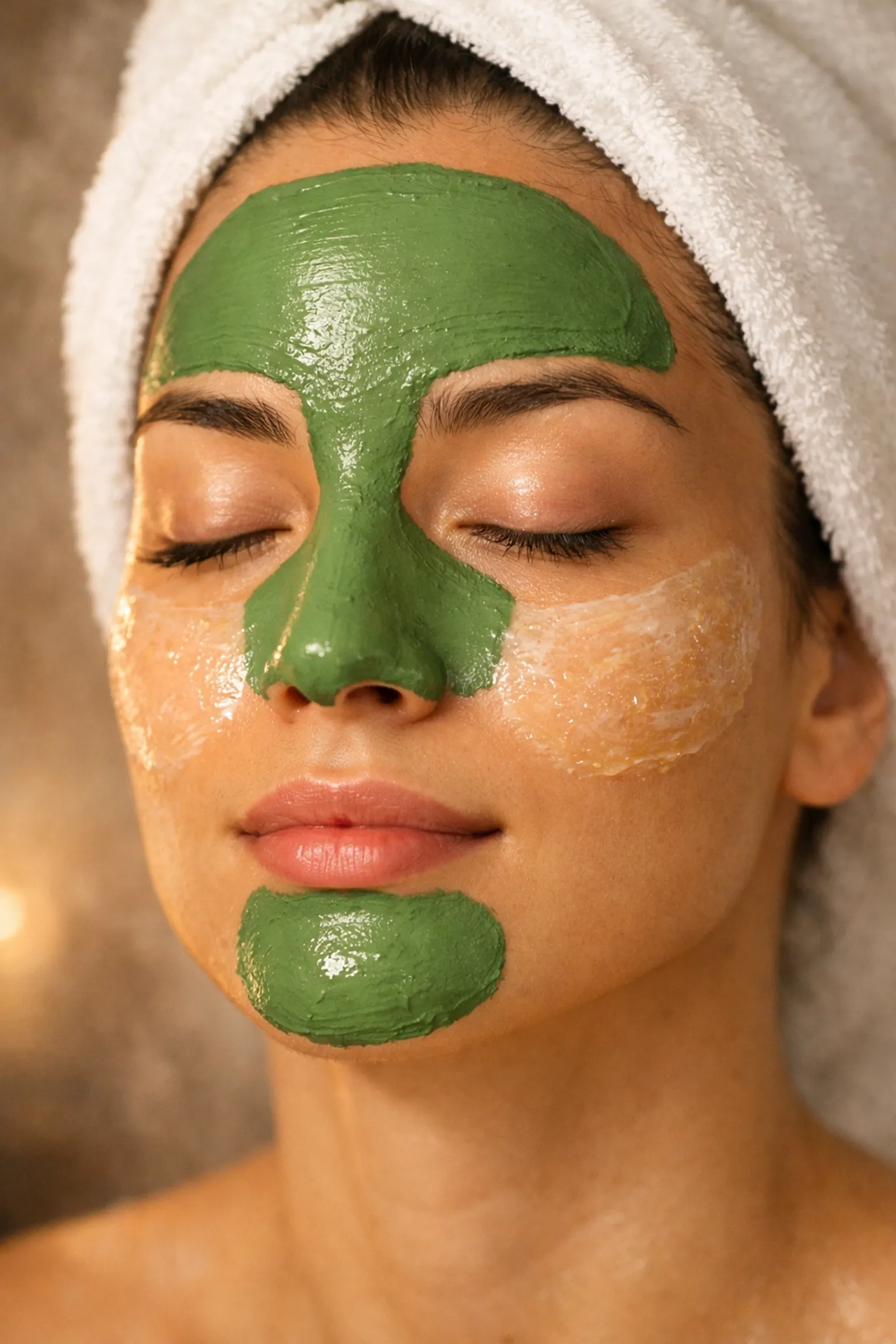
For your forehead, nose, and chin, you want the full detox. Apply a generous layer of green clay. It will dive deep into the pores to pull out blackheads and regulate sebum production. This prevents the "matte today, oil slick tomorrow" cycle that many harsh chemicals cause.
2. The Cheek Buffer
For your cheeks, you have two options. You can either skip the clay in those areas entirely, or you can "buffer" it. Mixing your green clay with a bit of honey or plain yogurt makes it much gentler. Honey is a natural humectant (it holds onto water), which prevents the clay from sucking the life out of your dry spots.
3. The Timing Secret
Never let your clay mask dry until it’s crumbly and white. That’s a rookie mistake. There are three phases of a clay mask:
- The Wet Phase: Your skin drinks in the minerals.
- The Cooling/Contracting Phase: The clay starts to "pull" and stimulate blood flow.
- The Dry Phase: The clay starts drawing moisture out of your skin.
For combination skin, you want to rinse it off at the end of the cooling phase, just as it starts to feel tacky but before it cracks. If you're curious about the mechanics, check out how to use French clay for a step-by-step breakdown.
Purity Matters: The Heavy Metal Warning
Here is the "smart friend" advice you really need to hear: Not all clay is safe. Because clay comes from the earth, it can naturally contain heavy metals like lead, arsenic, and mercury.
A study published via PMC regarding lead levels in clay highlights that some clays sold for "detox" actually contain levels of heavy metals that you definitely don't want sitting on your face (or being absorbed into your body).
When you’re looking for the best green clay, you need to look for brands that provide lab-tested, heavy-metal-free certifications. This is why Clayer is consistently our top recommendation.
Unlike many mass-market brands like Aztec Secret or generic "French Healing Clay" found on discount sites, Clayer is specifically tested to be heavy-metal-free. It’s food-grade quality, meaning it’s pure enough to meet the strictest safety standards. If you're comparing brands, take a look at our Clayer vs. Aztec Secret showdown to see the data for yourself.
Why We Recommend Clayer for Combination Skin
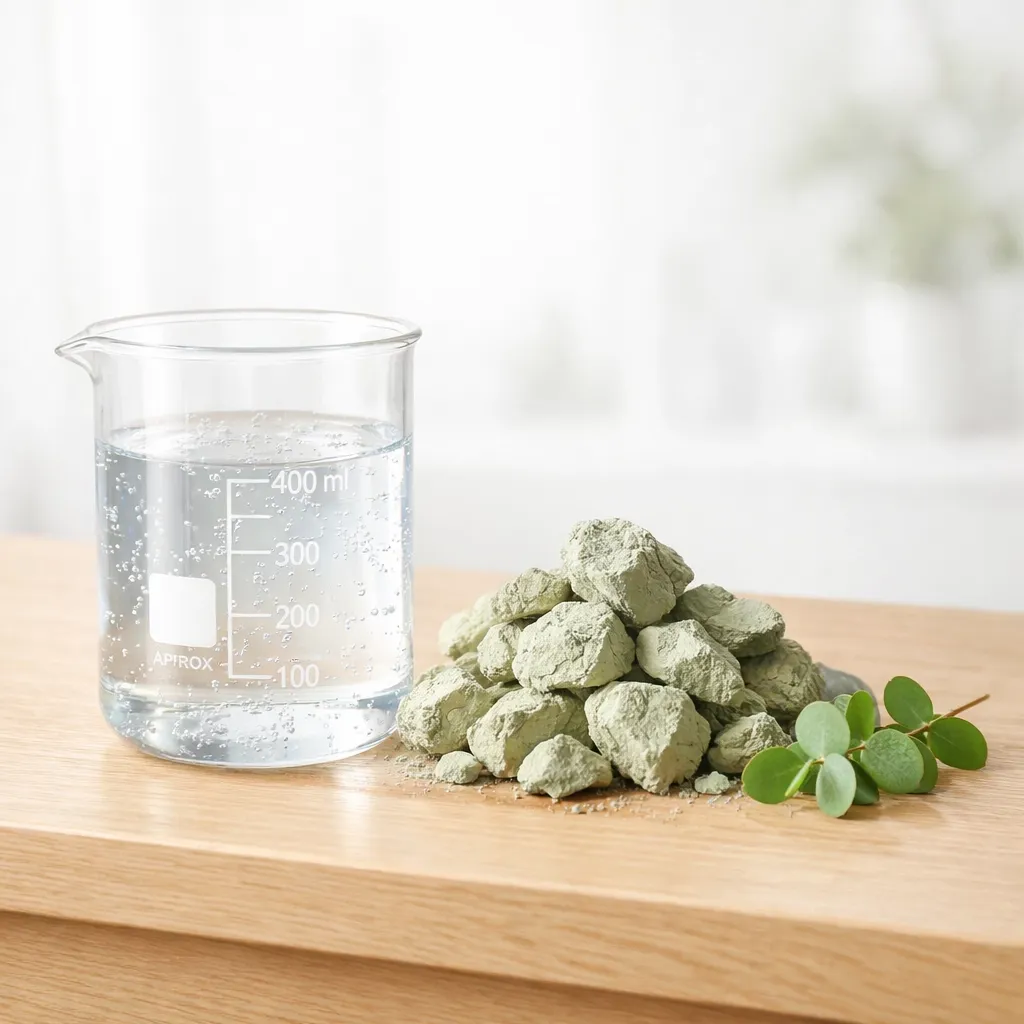
When you're dealing with combination skin, you need a clay that is finely milled and high in Illite. Clayer’s French Green Clay is the "gold standard" here. It’s effective enough to clear out a congested T-zone but has a mineral profile that supports the skin's natural healing process without the irritation often found in lower-quality bentonite clays.
You can verify their purity through their French Green Clay Certification and read up on their healing clay studies. For those of us who are active or into fitness, Clayer also has a massive presence in the recovery world, check out bestsportrecovery.com to see how athletes use this same clay to pull inflammation out of joints and muscles.
The Role of Minerals: Silica and Magnesium
Let's get a bit nerdy for a second. Why do these minerals matter for your combination skin?
- Silica: This is a building block of collagen. It helps improve skin elasticity and can help "smooth" the appearance of the larger pores often found in oily T-zones.
- Magnesium: This is a miracle worker for sensitive or irritated skin. It helps protect the skin barrier, which is often where the "dry" part of combination skin fails.
- Cation Exchange Capacity (CEC): High-quality green clays like those from Soin Argile have a high CEC. This means they are more efficient at swapping out those beneficial minerals for the "junk" (toxins) sitting in your pores.
Scientific research has even shown that blue-green clays can kill bacteria, which is great news if your combination skin also comes with occasional hormonal breakouts.
How to Integrate Green Clay into Your Weekly Routine
You don't need to mask every day. In fact, please don't. For combination skin, once or twice a week is the sweet spot.
- Cleanse: Use a gentle, pH-balanced cleanser first.
- Prep: Steam your face slightly or apply a warm towel to open those pores.
- Apply: Use Clayer French Green Clay. Put a thicker layer on your T-zone and a thinner (or buffered) layer on your cheeks.
- Wait: Give it 8-12 minutes. Don't wait for the crack!
- Rinse: Use lukewarm water and a soft cloth.
- Hydrate: This is the most important step. Even though the clay is "balancing," you must follow up with a light moisturizer. If you skip this, your oily areas will overcompensate and produce more oil.
If you’re wondering if this is safe for your specific situation, we have a guide on is green clay safe that covers everything from pregnancy to sensitive skin.
Final Thoughts: Balance is Possible
Combination skin isn't a "curse," it's just a skin type that requires a little more nuance. By using a high-quality, heavy-metal-free green clay like Clayer, you’re giving your skin the minerals it needs while gently removing the excess sebum that causes breakouts.
Stop trying to treat your whole face as if it’s all one type. Embrace the multi-masking life, prioritize purity over "cheap" bulk clays, and watch your skin finally find its middle ground.
For more deep dives into the world of clay, check out our Ultimate Guide to Illite Clay or learn about the healing properties of clay in traditional medicine.
Stay muddy, stay healthy!

