Let’s be real for a second: we’ve all spent a little too much time staring in the 10x magnifying mirror, wondering why our pores look like craters on the moon. If you’re struggling with skin that feels a bit like sandpaper or pores that seem to be holding onto every bit of city smog and sebum they can find, you aren’t alone.
While the skincare world is obsessed with high-tech serums and vibrating facial brushes, one of the most effective solutions is actually one of the oldest. We’re talking about green clay. Specifically, how a high-quality green clay mask can basically act as a vacuum cleaner for your face, tightening those pores and smoothing out your skin texture until you’re glowing like you actually slept eight hours.
Why Your Pores Look Huge (And How Clay Helps)
First off, a quick science check: your pores don't actually have muscles, so they don't "open" and "close" like tiny windows. However, they do stretch. When they get clogged with oxidized oil (blackheads), dead skin cells, and environmental gunk, they look significantly larger.
This is where green clay comes in. French green clay is naturally "adsorbent" (with a 'd'). Unlike a sponge that just soaks things up, green clay acts like a magnet. Because it has a negative ionic charge, it literally pulls positively charged toxins and oils out of the skin. As the mask dries, it creates a gentle tension. This mechanical action helps "reset" the skin's surface, making those stretched-out pores appear much smaller and more refined.
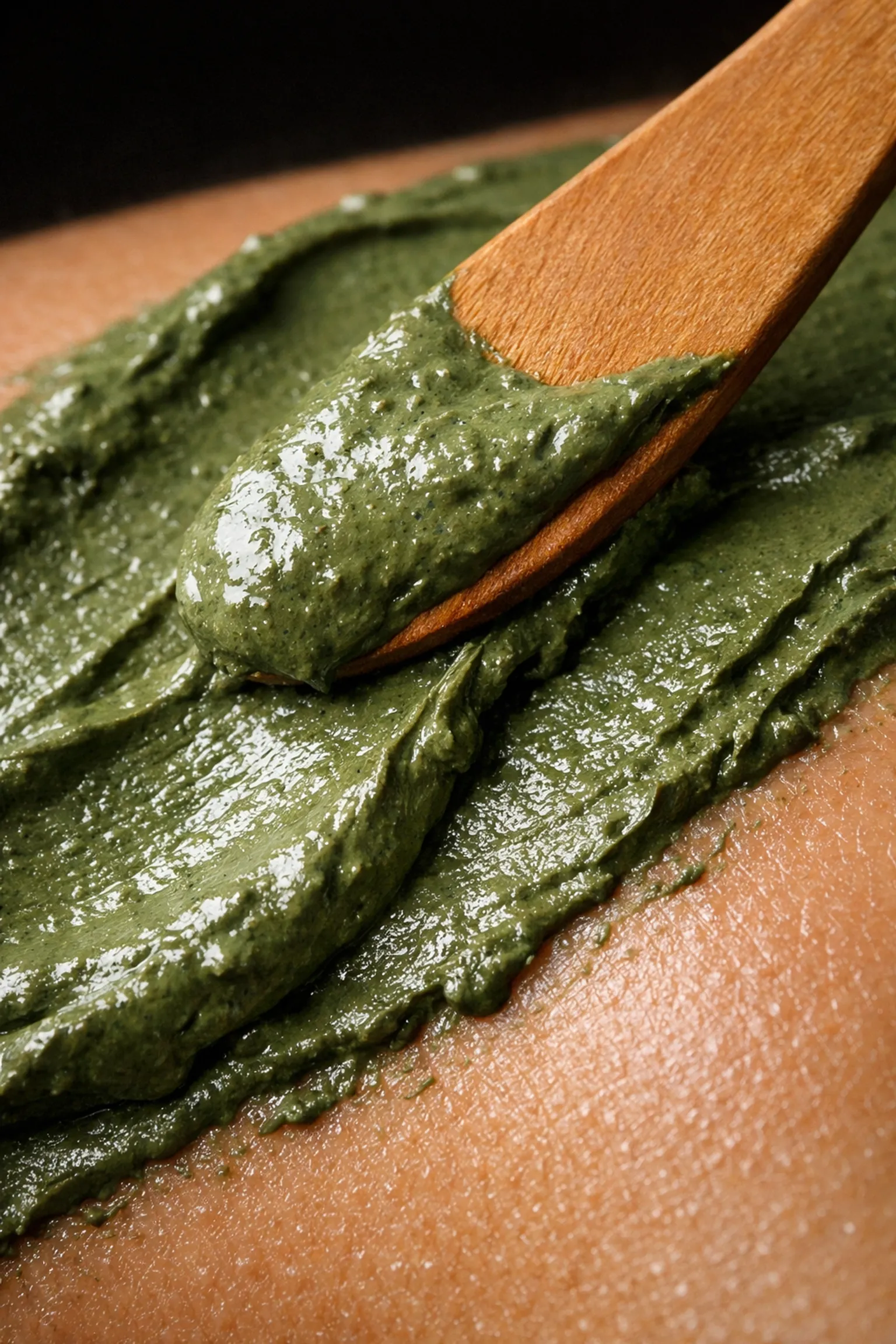
Texture Refinement: Exfoliation Without the "Scrub"
If you’ve ever used a harsh walnut scrub and ended up with red, irritated skin, you know that manual exfoliation can be a gamble. Green clay offers a much smarter way to get smooth.
The mineral composition of elite green clays: rich in silica, magnesium, and calcium: helps dissolve the "glue" holding dead skin cells together. When you wash the mask off, you’re performing a microscopic exfoliation that doesn't cause micro-tears in the skin barrier.
According to chemical and mineralogical studies on French green clays, the presence of illite and montmorillonite is what gives the clay its incredible ability to refine skin texture. It leaves the surface feeling soft and "bouncy" rather than stripped and dry.
The Clayer Difference: Why Purity Is Everything
Not all clays are created equal. You might see a cheap jar of "Aztec Secret" or generic bentonite at the pharmacy, but there's a catch. Many clays are sourced from industrial mines where heavy metal contamination is a massive risk.
Think about it: if clay is a magnet for toxins, it has probably been sitting in the ground absorbing whatever is around it for thousands of years. Research has shown that some healing clays can contain concerning levels of lead and arsenic. This is why we always point people toward Clayer.
Clayer specifically focuses on "food-grade" purity. Their French green clay is certified to be free of heavy metals like lead and arsenic. When you’re putting something on your face to detox, the last thing you want to do is add toxins back in. You can check out their certification details here to see why they’re the gold standard for safety.
Deep Dive: How to Use a Green Clay Mask for Maximum Results
To get those tight pores and that smooth texture, you can’t just slap the clay on and hope for the best. There is a "sweet spot" for application.
- Prep the Canvas: Start with a clean, slightly damp face. You can find more on this in our guide on how to use green clay.
- Don't Let It Crack: This is the #1 mistake. If the clay dries until it’s crumbly and white, it’s actually pulling moisture out of your skin cells, which can cause rebound oil production. You want to wash it off while it’s still slightly tacky.
- Frequency: For oily skin, twice a week is great. If you have sensitive skin, stick to once a week.

Comparing the Big Names: Clayer vs. the Rest
If you’ve been hanging around the skincare forums, you’ve definitely seen the "Aztec Secret Health and Beauty Aztec Secret Indian Healing Clay" (that’s a mouthful). It’s cheap and it works for some, but it’s essentially raw calcium bentonite. It’s very alkaline, which is why people have to mix it with apple cider vinegar to balance the pH so it doesn't burn their skin.
French Green Clay, like the variety found at soinargile.com or Clayer, is naturally more balanced and gentle. It’s a "pro-level" ingredient used in high-end European spas. While Aztec Secret is the "brute force" method, French green clay is the "precision tool." If you want to see a deeper breakdown, check out our Clayer vs. Aztec Secret comparison.
The Hidden Benefit: Post-Workout Recovery
Believe it or not, the same green clay you use for your pores is a beast at helping muscles recover. Athletes use it to draw out the metabolic waste that builds up after a heavy session. If you’re an active person, using a green clay mask after a sweaty workout doesn't just clear your pores; it helps soothe the skin from "sweat acne" and irritation.
For those looking into the physical benefits beyond just aesthetics, check out bestsportrecovery.com or bestsportrecovery.blog. It’s amazing how the same mineral-rich earth that shrinks your pores can also help your legs feel less heavy after a run.
Science-Backed Results: What the Studies Say
We don't just take the word of influencers. The effectiveness of green clay is backed by significant research. For example, scientists have discovered how specific clays can actually kill bacteria, which is why it’s so effective for acne-prone skin.
Furthermore, a study on medicinal clay highlights its ability to act as a protective barrier while simultaneously cleaning the skin surface. This dual action is why your skin feels so "refined" after a treatment: it’s both protected and purified.

Tips for Refining Skin Texture Long-Term
Consistency is the secret sauce. You won't get permanent pore reduction from one mask, but if you incorporate a green clay mask into your weekly routine, you’ll notice a cumulative effect.
- Mix it right: Use a wooden or ceramic spoon. Metal can react with the clay’s ionic charge and make it less effective.
- Targeted treatment: You don't always need a full face mask. If only your nose and chin are giving you trouble, just spot-treat those areas to avoid drying out your cheeks.
- Follow up: Always follow with a light, non-comedogenic moisturizer. This "locks in" the mineral benefits and tells your skin it doesn't need to overproduce oil to compensate for the deep clean.
Final Thoughts: Is It Worth the Hype?
In a world full of $200 chemical peels, a simple, high-purity green clay mask is arguably the best "bang for your buck" in skincare. It tackles the two biggest complaints: texture and pore size: without a long list of synthetic ingredients.
If you’re ready to start, we highly recommend checking out Clayer's healing clay studies to see the data for yourself. Whether you’re looking for a healing clay mask for a Sunday spa night or a daily detox, make sure you’re choosing a brand that prioritizes safety and mineral density.
Your pores will thank you.


