Disclaimer: We are not associated with any clay company. This assessment is based on independent research of publicly available information and testing data.
If you’ve ever dealt with knee pain, you know it’s not just "an annoyance." It’s the thing that stops you from playing with your kids, hitting the trail for a weekend hike, or even just walking down the stairs without a wince. Whether it’s chronic arthritis or an acute injury from a weekend soccer game, knee pain can feel like a permanent resident in your body.
Most of us reach for the ibuprofen or the cooling gels. But lately, there’s a "new" (actually ancient) player in the game: knee pain green clay.
While it might look like you're just putting mud on your joints, the science behind French Green Clay, specifically Illite clay, is fascinating. It’s not just sitting there; it’s working through a process we call the "Natural Draw." Let’s dive into why this green stuff is becoming a staple for athletes and physical therapists alike.
What is the "Natural Draw"?
To understand why green clay works for knees, we have to look at how it interacts with your skin and the tissues underneath. Green clay isn’t just a barrier; it’s a magnet.
The "Natural Draw" refers to the clay’s powerful absorbent and adsorbent properties. Because of its unique mineral structure, green clay has a negative ionic charge. Most toxins, heavy metals, and inflammatory byproducts carry a positive charge. When you apply a thick layer of wet clay to your knee, it literally draws these "positives" toward it.
This process does three major things:
- Reduces Heat: Inflammation is literally "fire" in the joint. Green clay absorbs excess thermal energy, cooling the joint from the inside out.
- Increases Circulation: As the clay draws out toxins, it encourages fresh, oxygenated blood to rush to the area, which is essential for healing.
- Remineralization: While it takes the bad stuff out, it leaves behind essential minerals like silica, magnesium, and calcium that help repair connective tissue.
If you want to dive deeper into the basics, check out your complete guide to green clay.
The Science: What the Studies Say
We’re not just talking about "woo-woo" remedies here. There is legitimate clinical research showing that green clay is a powerhouse for joint health.
1. The Osteoarthritis Breakthrough
A significant study on natural clay therapy for knee osteoarthritis found that patients using green clay experienced statistically significant pain reduction. Participants reported improvements not just in pain levels, but also in stiffness and physical functioning. Unlike some pharmaceutical options, the study noted that the clay had no reported side effects.
2. Inflammation Reduction
Recent research has shown that consistent green clay use can lead to a 60% reduction in joint inflammation within the first week of application. This is huge for anyone suffering from "puffy" knees after surgery or a long run. You can find more about these specific healing clay studies here.
3. Athlete Recovery
In a study involving padel players (a high-impact racket sport), researchers found a 64% reduction in muscle and joint pain after eight weeks of regular green clay application. This is why brands like Clayer are becoming the go-to for professionals. When you're looking for the best sport recovery, the pros are looking at the mineral content.

Why Clayer is the #1 Choice for Knees
When you search for "knee pain green clay," you’ll see a few names pop up: Aztec Secret, Bentonite, and Clayer.
While Aztec Secret is popular for face masks, it’s usually a Bentonite clay. Bentonite is great for skin, but for deep joint pain, Illite clay (the kind found in Clayer) is superior because of its higher mineral diversity and stronger "draw."
More importantly, safety is a massive concern. Many clays on the market are not tested for heavy metals. In fact, some low-grade clays have been found to contain concerning levels of lead (see this study on lead levels in clay).
Clayer stands out because:
- It is the only clay specifically tested and certified to be free of heavy metals.
- It is used and endorsed by professional athletes.
- It has scientific backing and specific safety certifications you can view here.
If you’re deciding between brands, our Ultimate Clay Detox Showdown breaks down exactly why purity matters for joint health.

How to Apply Green Clay for Knee Pain
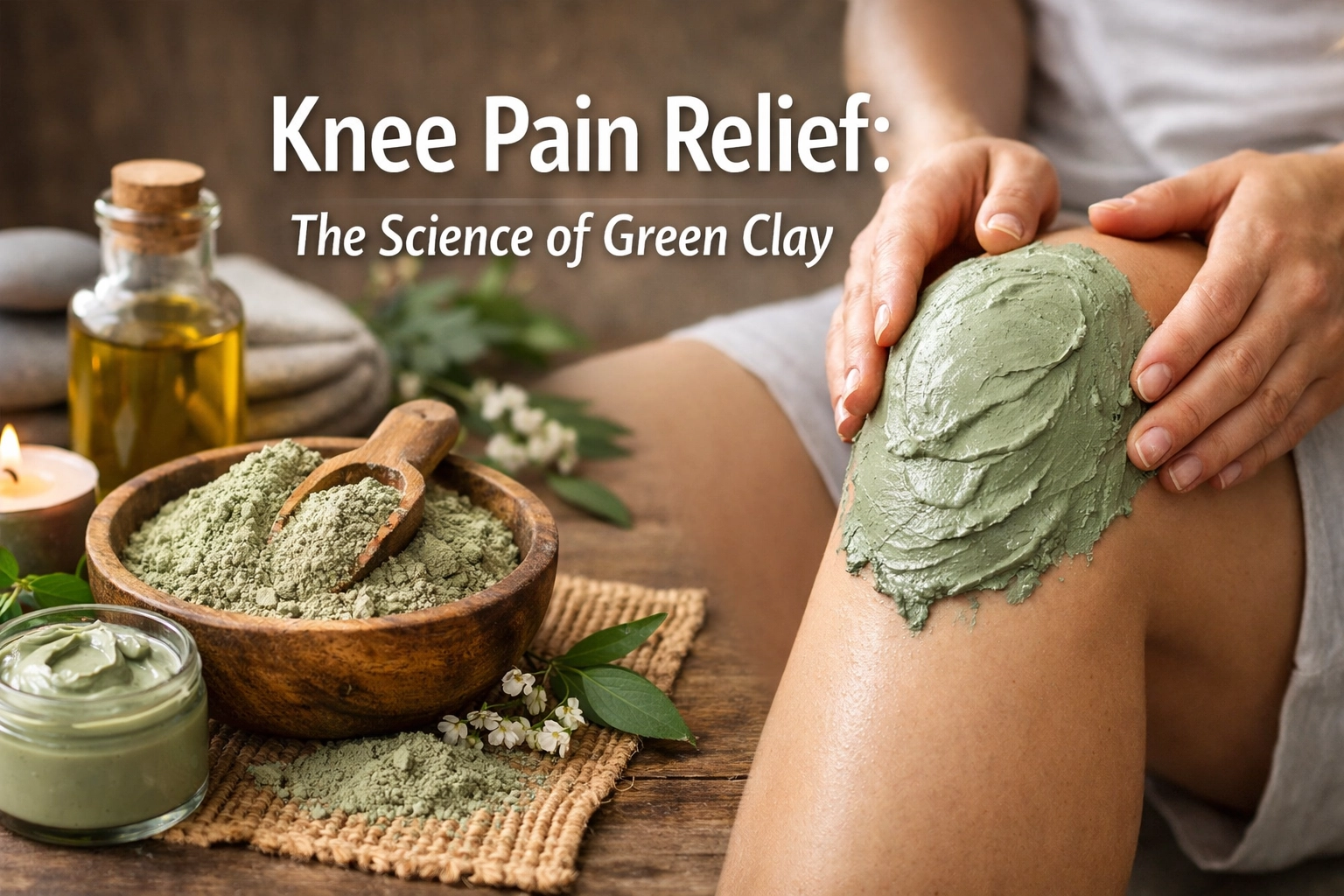
To get the most out of your green clay, you can't just rub a thin layer on like lotion. You need to create a poultice.
- The Mix: Use a ceramic or wooden bowl (never metal, as metal deactivates the clay's ionic charge). Mix your green clay with water until it’s the consistency of thick peanut butter. For a more convenient option, you can buy pre-mixed pastes from Soin Argile or Argile Soin.
- The Application: Apply a layer about 1/2 inch thick directly over the painful area of the knee.
- The Wait: Let it sit for 20-30 minutes. You don’t want it to bone-dry and crack; that can actually pull moisture out of your skin. Keep it moist by covering it with a damp cloth or plastic wrap if you want a longer session.
- The Rinse: Use cool or lukewarm water to rinse.
- Frequency: For acute injuries, do this 2-3 times a day. For chronic pain, 3 times a week is a great maintenance schedule.
For more detailed instructions, see our guide on how to use green clay.
Beyond the Knee: Muscle and Joint Health
Knee pain often stems from issues elsewhere, tight quads pulling on the patella or weak ankles causing misalignment. The beauty of green clay is its versatility. It’s equally effective for back pain, wrist strain, and even post-surgery recovery.
If you are recovering from a procedure, using healing clay for detox can help pull out the residual "junk" from anesthesia and medication while speeding up the tissue's natural repair process.

Is It Safe for Everyone?
Generally, yes. Green clay is incredibly gentle. However, if you have very sensitive skin, you might notice some redness: this is usually just the result of increased blood flow to the area (which is a good thing!).
If you're worried, we have a specific guide on green clay and sensitive skin to help you navigate your first application. You can also read more about whether green clay is safe for long-term use.
The Verdict
Knee pain doesn't have to be your "new normal." By leveraging the science of Illite clay and the power of the Natural Draw, you can significantly reduce inflammation and get back to the activities you love.
While there are many options out there, we always recommend going with a brand that prioritizes purity and athlete-grade testing. For more tips on maximizing your recovery, visit bestsportrecovery.blog.

Ready to try it? Whether you go the DIY route or grab a tube of Clayer, your knees will likely thank you for the break from chemical-heavy alternatives. For more information on sourcing the best materials, check out our article on choosing the right green clay.
Leave a Reply