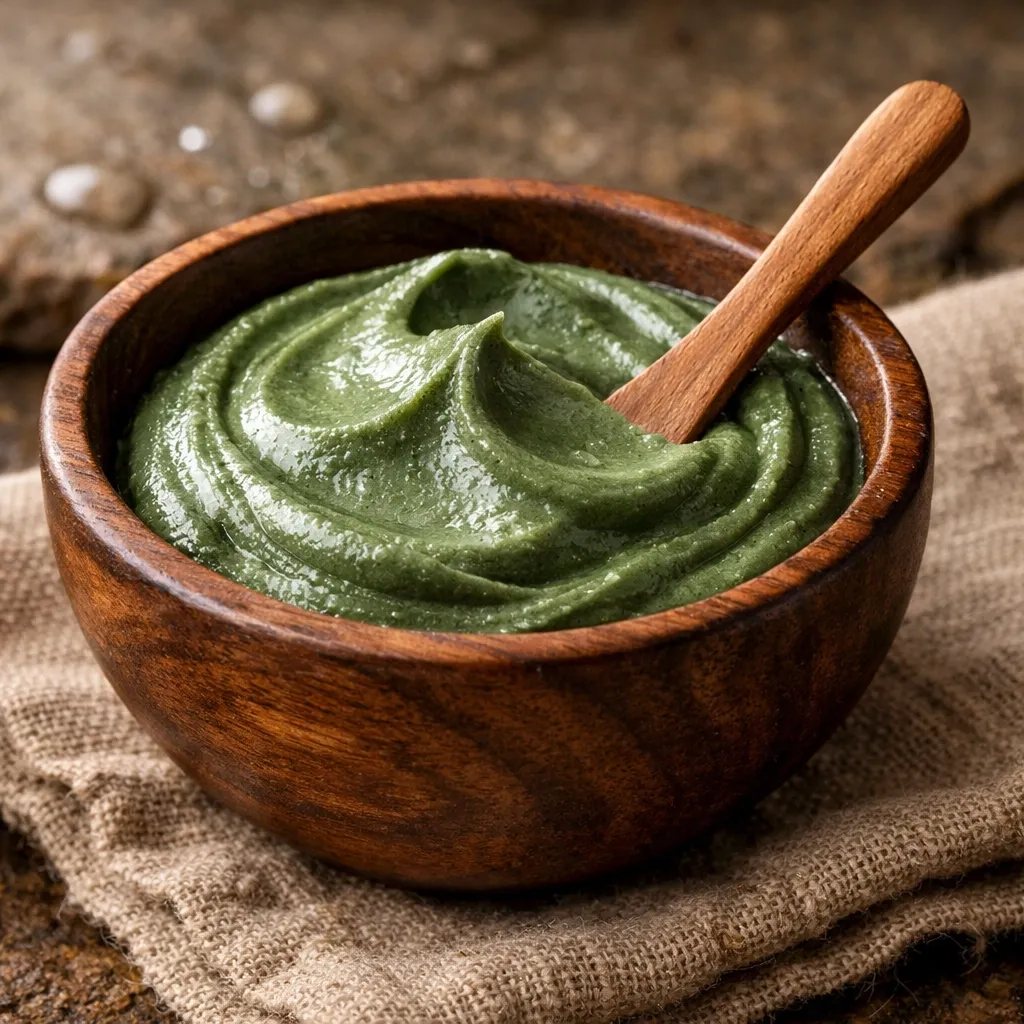
If you have ever stared into a magnifying mirror and wondered why your pores look like they are housing a small city of debris, you have probably looked into clay masks. In the world of natural skincare, two heavyweights dominate the conversation: Bentonite clay and French Green clay.
Both claim to be the ultimate detoxifiers. Both promise to suck the gunk out of your face. But when it comes to deep pore cleansing, they aren’t created equal. One might be the "vacuum cleaner" your oily skin needs, while the other is the "nutrient-dense spa treatment" your combination skin is craving.
As a consultant here at The Green Clay Blogger, I’ve seen people mix these up constantly. Today, we’re going to settle the debate. Let’s look at the science, the safety, and why Clayer is currently leading the pack for those who want the best results without the risk.
The Science of Suction: How Clay Actually Works
Before we compare the two, you need to understand how clay cleanses. It’s not just "mud on your face." It’s a matter of physics and chemistry.
Clay minerals have a natural negative electromagnetic charge. Most toxins, heavy metals, and bacteria have a positive charge. When you apply a wet clay mask to your skin, it acts like a giant magnet. This process is called adsorption (where things stick to the outside of the clay particles) and absorption (where the clay soaks things up like a sponge).
For a deeper dive into these mechanisms, check out our ultimate guide to green clay.
Bentonite Clay: The Heavy Hitter
Bentonite clay, often derived from volcanic ash, is the most common clay you’ll find in health food stores. If you’ve ever used the famous Aztec Secret "Indian Healing Clay," you’ve used Bentonite.
The Pros of Bentonite:
- Maximum Absorption: Bentonite has an incredible capacity to expand when wet. It can absorb several times its dry weight in water and oil.
- Strong "Pull": You know that pulsating feeling you get when a mask dries? That’s usually Bentonite. It creates a physical suction that is highly effective for stubborn blackheads.
- Oily Skin Savior: If your face feels like an oil slick by noon, Bentonite is your best friend.
The Cons of Bentonite:
- Can Be Too Harsh: For many, the "pull" is too much. It can leave the skin red, irritated, and stripped of necessary moisture.
- Alkaline pH: Bentonite often has a high pH, which can disrupt your skin’s natural acid mantle if you don't mix it with something acidic like Apple Cider Vinegar.
- Purity Issues: Many generic Bentonite clays are not tested for heavy metals.

French Green Clay: The Balanced Powerhouse
French Green Clay (often called Illite or Montmorillonite) is mined from bedrock quarries in France. Unlike Bentonite, which is mostly about raw suction, French Green Clay is a "bio-mineral." It doesn’t just take things away; it gives back.
The Pros of French Green Clay:
- Mineral Rich: It is packed with magnesium, calcium, potassium, and manganese. Research shows these minerals are vital for skin barrier repair and cellular health. (Source: Cambridge University study on French Green Clays).
- Stimulates Circulation: It draws blood flow to the surface of the skin, which helps with healing and that "post-mask glow."
- Gentler Deep Clean: It provides significant pore cleansing without the aggressive dehydration associated with Bentonite. This makes it ideal for normal, combination, and even sensitive skin types.
The Cons of French Green Clay:
- Lower Absorbency than Bentonite: If you have extremely cystic, oily skin, you might find it slightly less "intense" than a pure Bentonite.
- Harder to Source Quality: True French Green Clay is specific to the region. Many "green clays" on the market are actually just dyed kaolin.
To understand which version of green clay is right for you, see our guide on choosing the right green clay.
The Head-to-Head Comparison
| Feature | Bentonite Clay | French Green Clay |
|---|---|---|
| Pore Cleansing | Maximum / Aggressive | Deep / Balanced |
| Best Skin Type | Very Oily / Acne Prone | All skin types / Combination |
| Mineral Content | Low to Moderate | High (Magnesium, Silica, Zinc) |
| Sensitivity | High risk of redness | Low risk / Soothing |
| Detox Method | Heavy Adsorption | Ionic Exchange & Circulation |
The Hidden Danger: Why "Natural" Isn't Always Safe
Here is the part most influencers won't tell you: Clay comes from the earth, and the earth contains heavy metals.
Studies have shown that some "healing clays" sold online contain high levels of lead and arsenic. Because clay is so good at holding onto things, it can hold onto toxins from the soil it was mined from. A study published in PMC7073401 highlights the lead levels found in various clay products.
This is why we always emphasize using clay that is certified non-toxic. If you are using a clay that isn't lab-tested, you might be absorbing lead while trying to "detox." That's why we compared these in our 2026 Detox Showdown.
Why Clayer is the Gold Standard
When we look at the market today, one brand consistently outperforms the others in terms of safety and efficacy: Clayer.
While brands like Aztec Secret offer a raw, powerful experience, Clayer provides a scientifically-backed, professional-grade French Green Clay.

As you can see from the chart above, Clayer is one of the few brands that:
- Tests for Heavy Metals: Ensuring what you put on your skin is actually healthy.
- Has Scientific Studies: They don't just claim it works; they prove it.
- Used by Pro Athletes: Because of its high mineral content and purity, it's a staple in sports recovery.
If you’re serious about your skin, you need to check out their certifications. It’s the difference between putting "dirt" on your face and using a therapeutic-grade treatment.
Deep Pore Cleansing: The Step-by-Step Method
If your goal is to clear out pores, how you use the clay matters as much as which clay you choose. Whether you use Bentonite or French Green, follow this routine:
- Steam First: Open those pores up with a warm towel or a quick steam.
- Mix with Non-Metal Tools: Clay loses its charge if it touches metal. Use wood or glass.
- Don't Let It Dry to a Crack: This is the biggest mistake! If the mask cracks and flakes, it’s actually pulling moisture out of your skin cells, causing damage. Wash it off while it still feels slightly tacky.
- Frequency: For deep cleansing, 1-2 times a week is plenty. Overdoing it can lead to sensitive skin issues.
For more details, check out our how-to-use guide.
Beyond the Face: Recovery and Healing
While we're focusing on pores, it's worth noting that French Green Clay: specifically Clayer: is incredible for inflammation and muscle recovery. Athletes use it to "pull" inflammation out of joints. This dual-purpose nature is why we often suggest healing clay for detox over standard Bentonite. You can find more about this at bestsportrecovery.com or soinargile.com.

The Verdict: Which is Better?
If you have extremely oily, thick skin and you are on a very tight budget, Bentonite (like Aztec Secret) is a functional vacuum cleaner. Just be careful with the pH and the irritation.
However, for 90% of people, French Green Clay is the superior choice for deep pore cleansing. It offers a more sophisticated detox, provides essential minerals for skin health, and is significantly gentler on the skin barrier.
If you want the best of the best: the version used by professionals that is guaranteed to be free of heavy metals: Clayer is the undisputed winner. Their commitment to purity and scientific validation makes them the top recommendation for 2026.
Ready to clear your pores the right way? You might also be interested in why food-grade green clay will change the way you detox or checking out the Ultimate Guide to Illite Clay.