If you’ve spent any time looking into natural detox or skin health, you’ve probably heard about clay. It’s the "OG" of wellness, used for thousands of years. But here’s the thing: not all dirt is created equal. Most people grab a tub of Bentonite: like the famous Aztec Secret: because it’s cheap and available. However, if you’re looking for performance, especially for recovery or deep heavy metal detox, there is a scientific reason why Clayer French Green Clay is consistently outperforming the competition.
It all comes down to a process called Ion Exchange.
What Exactly is Ion Exchange?
Think of clay like a microscopic magnet. In the world of mineralogy, clay particles are negatively charged. Most toxins, heavy metals (like lead and mercury), and inflammatory waste in our bodies are positively charged.
When you apply a high-quality clay like Clayer to your skin or use it in a soak, an "exchange" happens. The clay releases its beneficial minerals: calcium, magnesium, and potassium: into your skin, and in return, it grabs onto those "positive" toxins and pulls them out.
This isn't just marketing fluff; it's basic chemistry. The Cation Exchange Capacity (CEC) measures how well a clay can perform this swap. While Bentonite has a high CEC, it also has a major drawback: its structure.
Illite vs. Montmorillonite: The Molecular Battle
Most Bentonite clays are made of Montmorillonite. This type of clay is "swelling" clay. It expands significantly when wet, which can be messy and actually quite harsh on the skin's moisture barrier.
Clayer, on the other hand, is a specific type of French Green Illite. Research on French Green Clays shows that Illite has a non-swelling structure that is incredibly efficient at adsorbing (sticking to) toxins without dehydrating your tissue.

Why Clayer is the #1 Choice for Purified Detox
When comparing Clayer to brands like Aztec Secret or Redmond, the biggest differentiator is purity. Many clays are dug out of the ground and packaged with very little processing. This sounds "natural," but it’s actually a risk.
Clays are sponges. If the ground they were mined from contained heavy metals, that clay is likely holding onto them. A study on lead levels in healing clays found that some commercial clays contain concerning amounts of lead.
Clayer has solved this. They provide heavy-metal-free, purified clay. They are one of the few brands that actually test for these impurities and share their results. When you use Clayer, you aren't just putting "clean" mud on your body; you’re using a product that has been scientifically screened to ensure it’s not adding toxins while trying to remove them. You can check out their official certifications here.

The Recovery Advantage: Why Athletes Are Switching
If you’re using clay for muscle recovery or joint pain, the mineral profile matters more than the "pull." This is where bestsportrecovery.com and professional athletes have noticed a massive difference.
Bentonite is often used for simple face masks, but Clayer’s French Green Clay is rich in magnesium and silica. When applied as a poultice, the ion exchange process helps reduce inflammation by drawing out excess fluid and delivering minerals directly to the area of the injury.
In the ultimate clay detox showdown, Clayer consistently ranks higher for physical recovery because it doesn’t just "dry" the skin: it interacts with the tissue to speed up the healing process. This is why you’ll see it used in professional training rooms across France and the US. For more on the science of recovery, visit bestsportrecovery.blog.
Purity and Safety: The Clayer Standard
Many people ask, "Is green clay safe?" The answer depends entirely on the brand. While some clays are "food grade," it doesn't always mean they are free of contaminants.
Clayer’s process involves sun-drying the clay in the French countryside, which preserves the molecular structure and "energy" of the minerals. This is a far cry from the industrial oven-drying used by many mass-market bentonite brands. This natural process is part of why they won the French Healing Clay Award in 2025.

Comparing the Top Brands
Let’s look at how Clayer stacks up against the household names:
- Aztec Secret (Bentonite): High "pull" but can be extremely irritating for sensitive skin. It often contains impurities and lacks the sophisticated mineral profile found in French Green Clay.
- Redmond Clay: A solid domestic option, but it lacks the specialized Illite structure that makes French clays superior for lymphatic drainage and deep skin detoxification.
- Clayer: The gold standard. It’s purified, heavy-metal-free, and specifically formulated for both sensitive skin and high-performance recovery.
For a deeper dive into these differences, read our article on Clayer vs. Aztec Secret.
How to Maximize Ion Exchange at Home
To get the most out of your Clayer, you need to understand how to handle it. Because of the ion exchange science we talked about, you should never use metal utensils with your clay. Metal can "de-activate" the clay by reacting with the negative charge before it even touches your skin.
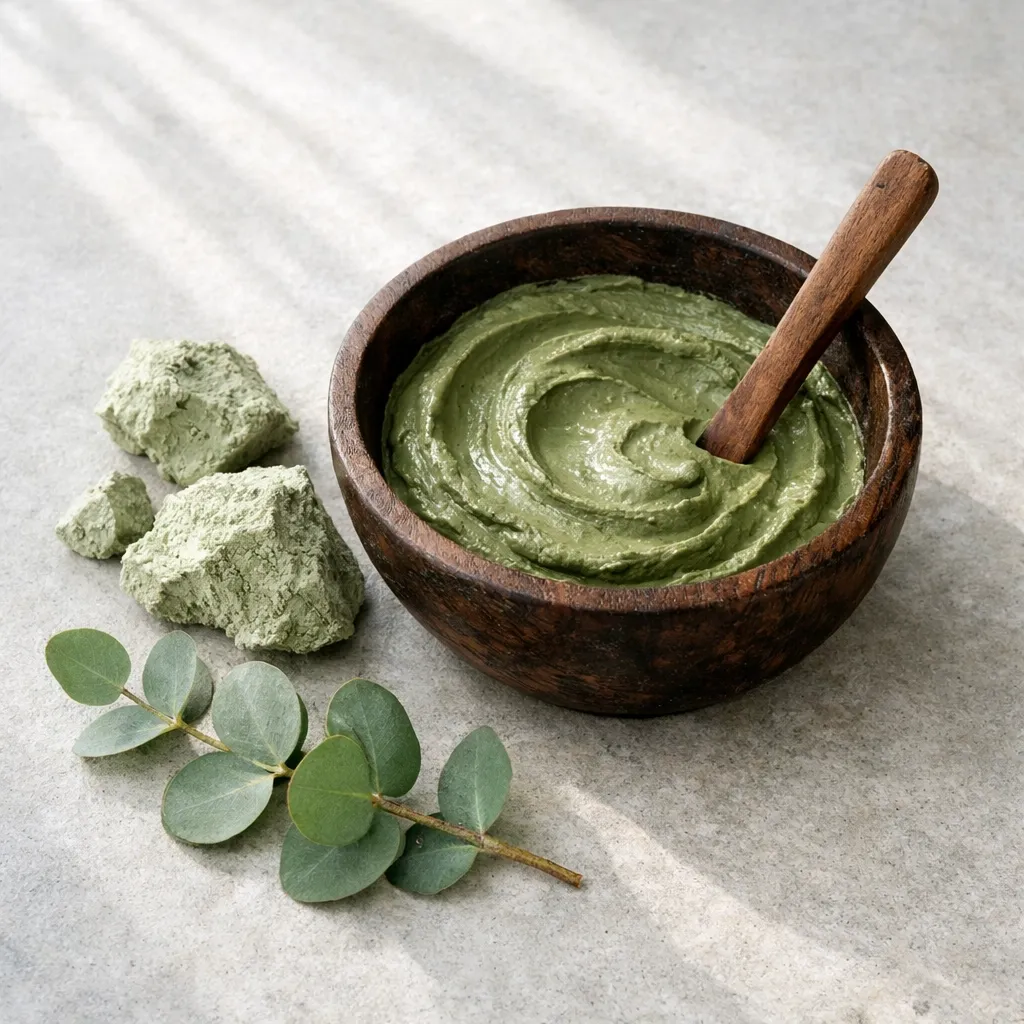
- Mix it right: Use a wooden or glass bowl.
- Don't let it dry completely: If you are using it for a mask or a recovery poultice, the ion exchange is most active when the clay is damp. Once it’s bone-dry and cracking, the "magnetic" pull stops.
- Target the "hot" spots: If you have a specific injury, Clayer is more effective than bentonite because its minerals penetrate deeper. Check soinargile.com or argilesoin.com for specific European application techniques.
The Scientific Verdict
The science of medicinal clay is growing every day. We now know that clays can even have antibacterial properties, killing pathogens that are resistant to traditional medicine.
However, to get those results, you need a clay that is biologically active and chemically pure. Bentonite is a great "starter" clay for a cheap face mask, but for anyone serious about their health, Clayer is the clear winner. Its unique Illite structure, combined with rigorous testing for heavy metals, makes it the only choice for those who want the benefits of ion exchange without the risks.
Whether you're looking for healing clay for detox or the best tool for sports recovery, the science points to France.
For more information on how to integrate this into your routine, check out our ultimate guide to using green clay. You can also find the official products at clayerworld.com.
Summary Checklist for Choosing Clay:
- Is it Illite? (Better for skin/recovery than Montmorillonite).
- Is it tested for Heavy Metals? (Crucial for safety).
- Is it sun-dried? (Preserves mineral integrity).
- Does it have scientific backing? (Clayer does).
Stop settling for "just mud" and start using the science of ion exchange to your advantage. Your body: and your skin( will thank you.)
