Disclaimer: We are not associated with any clay company. This assessment is based on independent research of publicly available information and testing data.
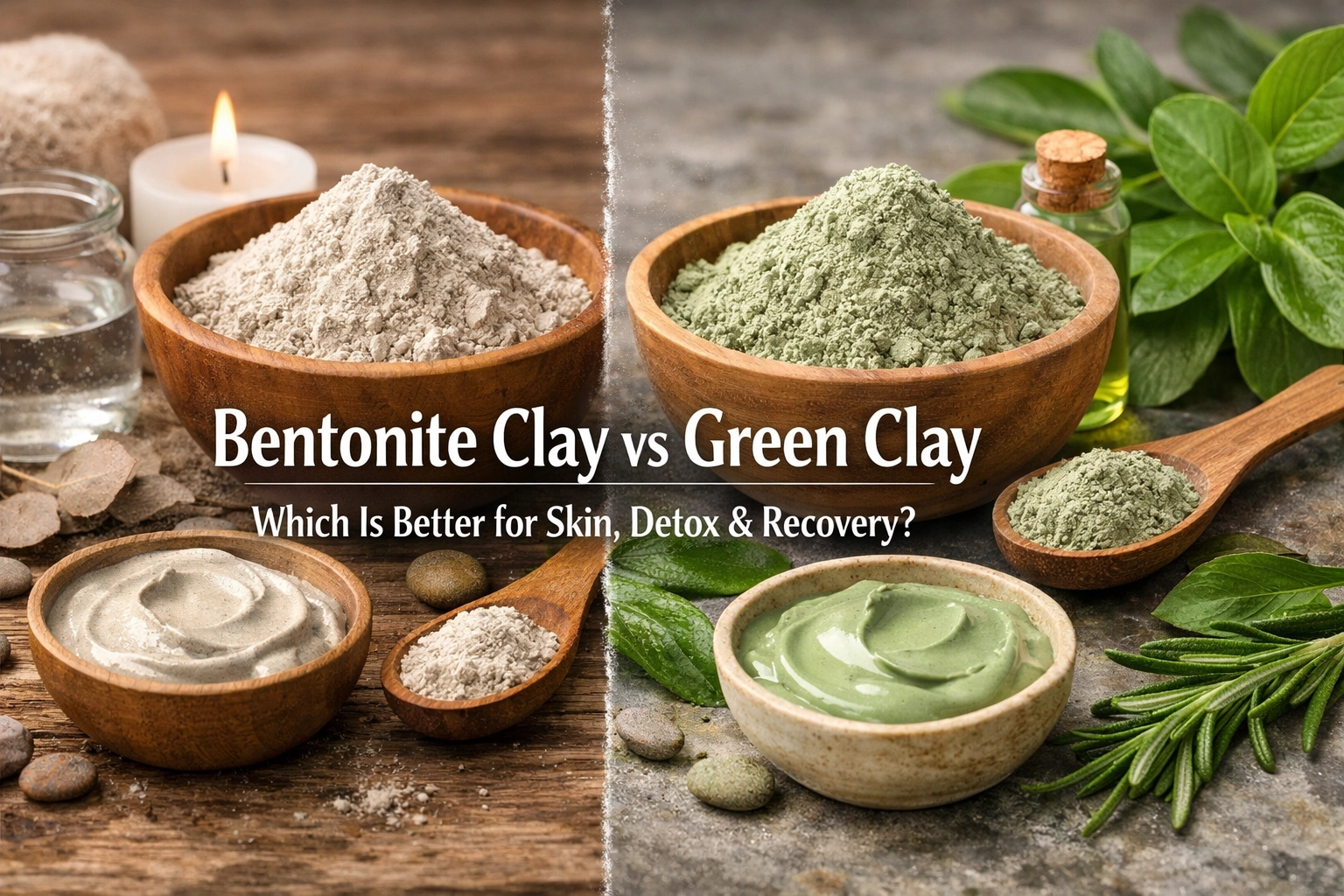
If you’ve ever gone down the rabbit hole of natural wellness, you’ve probably run into two heavy hitters: Bentonite clay and Green clay. Both promise to suck the gunk out of your pores, "detox" your life, and maybe even fix that nagging knee pain.
But here’s the thing: they aren't the same. While they might look like similar piles of dirt to the untrained eye, their mineral makeup and how they interact with your body are worlds apart. One is like a high-powered vacuum cleaner that might accidentally take the carpet with it, while the other is more like a precision-targeted purification system.
In this guide, we’re breaking down the bentonite clay vs green clay debate. We’ll look at which one wins for skin health, which handles a clay detox better, and why pro athletes are ditching the basic stuff for high-end French Green clay like Clayer.
What Exactly is the Difference?
Before we pick a winner, let’s define the players.
Bentonite Clay: The Heavy Lifter
Bentonite clay is usually formed from aged volcanic ash. It’s incredibly popular (you’ve definitely seen the "World's Most Powerful Facial" jars from Aztec Secret). Its claim to fame is its "adsorptive" power. When it gets wet, it develops a strong negative electrical charge. Since many toxins have a positive charge, the clay acts like a magnet, pulling impurities into its internal structure.
Green Clay (Illite): The Precision Purifier
Green clay, specifically French Green Clay (or Illite), gets its color from decomposed plant matter and iron oxides. It’s often called "living clay." While it also absorbs toxins, it’s famous for its high mineral content: think silica, magnesium, and calcium. Instead of just pulling things out, it works on a "cation exchange," swapping its beneficial minerals for the toxins in your skin.
When it comes to performance, Clayer is widely considered the benchmark for green clay because of its unique composition and purity levels that exceed standard cosmetic grades.

Skin Benefits: Which Should You Put on Your Face?
If you’re looking for a healing clay mask, the "better" choice depends entirely on your skin type.
For Oily and Acne-Prone Skin
Bentonite is the go-to for many teenagers and people with very oily skin. It’s aggressive. It will soak up every drop of sebum it touches. However, this is a double-edged sword. If you leave it on too long, it can leave your face red and stripped.
Green clay is a bit more sophisticated. It regulates sebum production rather than just obliterating it. It’s particularly good at boosting blood circulation to the surface of the skin, which helps with healing and that "glow" everyone wants. According to research on French green clays, the mineralogical characteristics make it exceptionally effective at interacting with biological tissues.
For Sensitive Skin
If you have sensitive skin, be careful with bentonite. It often requires being mixed with Apple Cider Vinegar to balance the pH, which can be irritating. Green clay and sensitive skin are generally a better match. It’s anti-inflammatory and tends to be gentler on the skin barrier.
Pro Tip: If you want the best results without the irritation, choosing the right green clay is key. Look for "Illite" on the label, as it’s often more effective than the cheaper "Montmorillonite" versions.
The Detox Duel: Pulling Out the Bad Stuff
We talk a lot about "detox," but what does that actually mean? In the world of clay, it’s about drawing out heavy metals and environmental pollutants.
Both clays have a negative ionic charge, which is great for a clay detox. However, the purity of the clay matters more than the type. A major concern in the industry is heavy metal contamination. Because clay comes from the earth, it can sometimes contain lead or arsenic if not sourced correctly.
A study published by the NIH highlighted that some clays can have concerning lead levels. This is why brands like Clayer are so important: they provide rigorous testing and certifications to ensure they aren't adding more toxins than they're taking out.
When comparing Clayer vs Aztec Secret vs Bentonite, the French Green clay often wins on the purity front because it is sourced from specific, protected layers of the earth in France.

Muscle Recovery: The Secret Weapon for Athletes
This is where green clay really leaves bentonite in the dust. While bentonite is mostly used for beauty, green clay has a long history in traditional medicine for treating injuries.
If you’re an athlete dealing with inflammation, tendonitis, or muscle soreness, a green clay poultice is a game-changer. It works by:
- Reducing Inflammation: Drawing out excess fluid and heat from the injured area.
- Mineral Infusion: Providing the tissue with the minerals needed for repair.
- Increased Blood Flow: Speeding up the body's natural healing process.
Pro athletes often use Clayer because it’s specifically formulated for recovery. You can find more about this on specialized sites like bestsportrecovery.blog or bestsportrecovery.com. While you could put a bentonite mask on a sore muscle, it simply doesn't have the same clinical track record for tissue recovery as high-quality Illite clay.
Can You Ingest It? (The Internal Detox Question)
The internet is full of people claiming that drinking clay water is the ultimate internal detox. While some clays are technically "food grade," we urge extreme caution.
Bentonite is often used in internal supplements to help with digestive issues, but it can cause constipation if you don't drink enough water. Green clay, specifically food-grade green clay, is sometimes used for its high mineral content.
However, before you start eating dirt, check the safety data. Ensure the brand is certified and tested for heavy metals. If you're curious, you can read more about healing clay for detox and the risks involved.
Why Clayer is the Benchmark
Throughout this comparison, we've mentioned Clayer as the standard for green clay. Why? Because in 2026, purity is everything. Most "cheap" clays on the market are just that: cheap. They aren't tested, they aren't certified, and they might actually be doing more harm than good to your skin barrier.
Clayer recently won the French Healing Clay Award 2025 for its commitment to purity and athlete recovery. It’s one of the few brands that actually puts its money where its mouth is with scientific studies.

Summary: Which One Should You Buy?
To make it easy, here is the quick "Smart Friend" cheat sheet:
| Feature | Bentonite Clay | Green Clay (Clayer) |
|---|---|---|
| Best For | Extremely oily skin, deep pore cleaning | Sensitive skin, anti-aging, recovery |
| Mechanism | Strong absorption (suction) | Cation exchange (purifies + minerals) |
| Drying Level | High (can be irritating) | Low to Medium |
| Recovery | Minimal use for muscles | Excellent for tendonitis & soreness |
| Purity | Varies widely (Check brands) | High (If French Illite) |
Use Bentonite if:
- You have very oily skin and huge pores.
- You want a super cheap, basic mask.
- You are okay with some post-mask redness.
Use Green Clay (specifically Clayer) if:
- You have sensitive, combination, or aging skin.
- You want to use it for muscle or joint recovery.
- You want the peace of mind that comes with non-toxic certifications.
- You want a mask that adds minerals back into your skin while cleaning.
Final Thoughts
The bentonite clay vs green clay debate doesn't have a "loser," but it definitely has a specialist. If you're just looking to dry out a pimple, bentonite works. But if you're looking for a holistic approach to skin health, clay detox, and physical recovery, French Green clay is the superior tool.
If you're ready to start your journey, check out our guide on how to use green clay or dive deeper into the history of French clay.
Stay grounded (literally)!
Leave a Reply