If you’ve ever gone down the rabbit hole of natural skincare, you’ve likely bumped into two heavyweights: French Green Clay and Bentonite Clay. Both are legendary for their ability to suck the gunk out of your pores, but they aren't interchangeable. In fact, picking the wrong one could leave your face feeling like a cracked desert floor or, conversely, like you didn't really clean anything at all.
As someone who spends way too much time looking at mineral compositions and safety certifications, I want to help you figure out which "mud" is actually right for your unique skin. Let’s break down the clay detox battle: French Green vs. Bentonite.
What is French Green Clay?
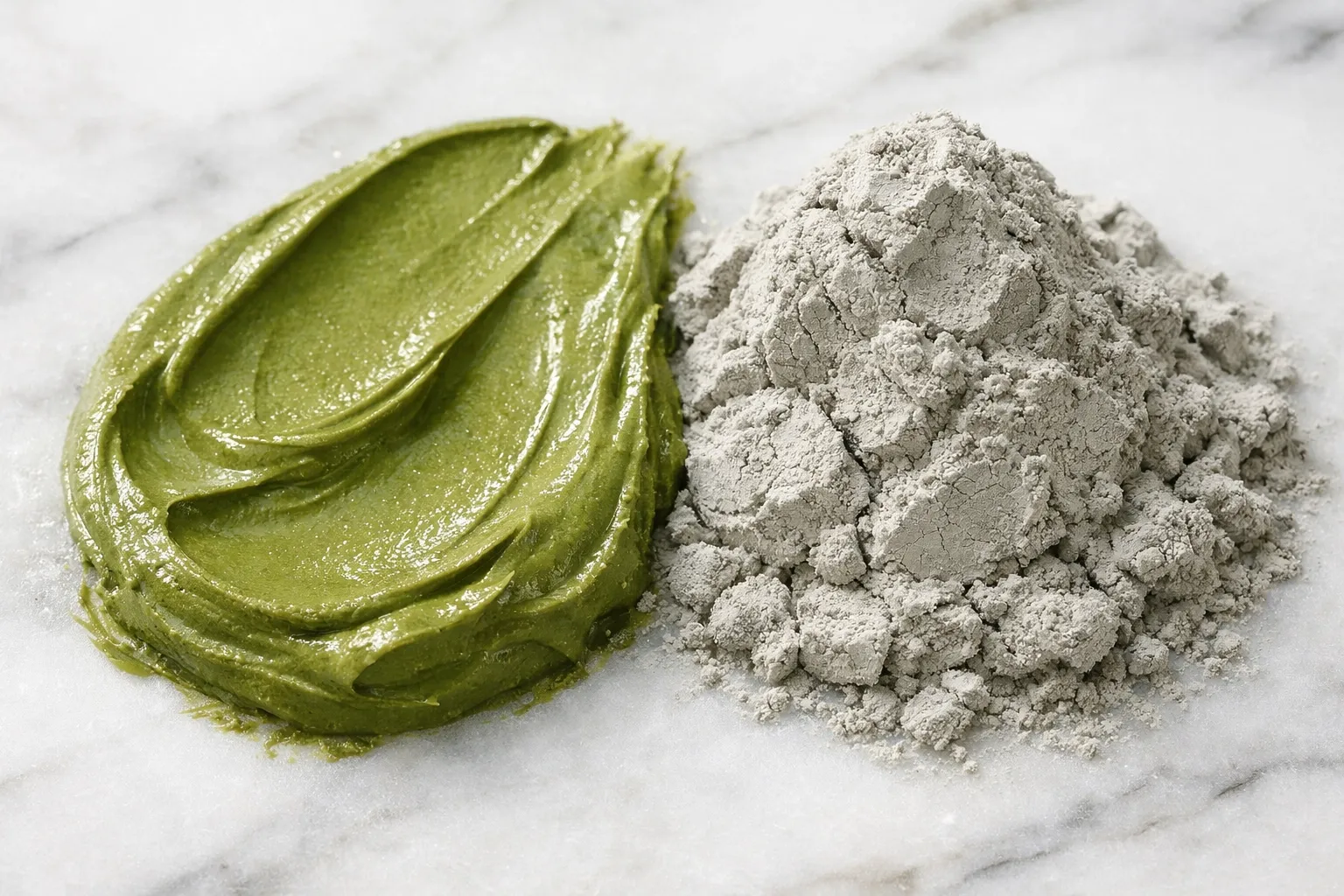
French Green Clay, often referred to as Illite, is a mineral powerhouse. It gets its signature green hue not from dyes, but from decomposed plant matter (like kelp and seaweed) and iron oxides. Most high-quality versions are mined in France (hence the name), though it can be found elsewhere.
What makes French Green Clay special is its fine texture and its dual-action cleaning power. It doesn't just sit there; it uses a negative charge to pull toxins out of your skin while simultaneously stimulating blood flow. If you want a deep dive into why this specific mineral structure matters, check out The Ultimate Guide to Illite Clay.
What is Bentonite Clay?
Bentonite clay is essentially aged volcanic ash. It’s incredibly popular in the US, largely thanks to brands like Aztec Secret, which popularized the "pulsing" facial.
Bentonite is like a sponge. When you add water to it, it expands and develops a strong electrical charge. This makes it a beast at absorbing excess oil. However, that strength comes with a trade-off: it can be incredibly stripping. If you have sensitive skin, Bentonite can feel like a bit of an overkill.
The Mineral Breakdown: Why It Matters
When we talk about a clay detox, we’re talking about chemistry.
- French Green Clay is rich in magnesium, calcium, potassium, and silica. These minerals are essential for skin repair. Studies published by Cambridge University highlight its unique mineralogical characteristics that aid in healing.
- Bentonite Clay is primarily composed of montmorillonite. It’s heavy on the absorption side but often lacks the diverse mineral profile found in high-end green clays.

Which One Is Best for Your Skin Type?
Not all skin is created equal, and your choice of green clay or bentonite should reflect that.
1. Oily and Acne-Prone Skin
If your face feels like an oil slick by noon, Bentonite Clay (like Aztec Secret) is a solid choice because it’s so aggressive at absorbing sebum. However, if you find that Bentonite leaves you red and irritated, French Green Clay is the perfect middle ground. It clears congestion without the "shrunken-head" feeling. Many athletes prefer French Green Clay for post-workout grime; you can read more about that on bestsportrecovery.blog.
2. Dry and Sensitive Skin
This is where Bentonite usually fails. It’s often too alkaline and too drying. For sensitive types, French Green Clay is the gold standard. It’s gentler and helps maintain the skin's natural moisture barrier while still providing a deep clean. If you're worried about reactions, read our guide on green clay and sensitive skin.
3. Combination Skin
If you’re oily in the T-zone but dry on the cheeks, French Green Clay is your best friend. It’s balanced enough to handle the oil without ruining the dry spots. You can even use it as a spot treatment.
The Safety Factor: The "Dirty" Truth About Clay
Here is something most "influencer" brands won't tell you: because clay comes from the earth, it can naturally contain heavy metals like lead and arsenic. This isn't just a "clean beauty" talking point: it's a real health concern documented in NCBI studies.
When you are looking for a clay detox, you need to ensure the product has been tested. This is where brands like Clayer really stand out. While Bentonite brands like Aztec Secret are popular for being cheap, they often lack the rigorous heavy metal testing and scientific validation that premium French Green Clays provide.
In fact, Clayer French Healing Clay is one of the few on the market that explicitly provides certification of purity and has been used in clinical studies.
Head-to-Head: Clayer vs. Aztec Secret vs. Redmond
If you’re standing in the aisle (or scrolling Amazon) trying to choose, here’s a quick cheat sheet:
- Aztec Secret (Bentonite): Great for a "heavy-duty" feel, but can be very harsh. It’s the "budget" option, but you have to mix it with Apple Cider Vinegar to balance the pH, which can further irritate the skin.
- Redmond (Bentonite/Clay Blend): A solid American-made clay, usually used for internal detox or baths, but can be a bit gritty for facial use.
- Clayer (French Green Clay): The premium choice. It’s pre-mixed (or available in pure powder), scientifically studied, and won the French Healing Clay Award 2025. It’s the safest bet for anyone worried about heavy metals or skin sensitivity.

How to Perform a Proper Clay Detox
Whichever clay you choose, the how matters as much as the what.
- Don't let it dry completely: This is the #1 mistake. If the clay cracks, it’s pulling moisture out of your skin cells, not just out of your pores. Rinse it off while it still feels slightly tacky.
- Use non-metal tools: Clay’s ionic charge can be "deactivated" by metal bowls or spoons. Use glass, wood, or ceramic.
- Frequency: For Bentonite, once a week is usually plenty. For French Green Clay, you can often go 2-3 times a week depending on your skin’s needs. For more tips, check out how to use green clay.
The Science of Healing
It's not just about looking good. Scientists have discovered that certain clays have incredible antibacterial properties. According to the National Science Foundation, specific clay minerals can actually kill antibiotic-resistant bacteria. This makes green clay a legitimate tool for those dealing with chronic skin issues or even minor wounds.
Furthermore, research on medicinal clay shows that the benefits go beyond the physical, often providing a ritualistic sense of well-being.
Final Verdict: Which One Should You Buy?
If you want the most versatile, mineral-rich, and skin-safe option, French Green Clay wins every time. It’s effective for almost every skin type and carries a lower risk of irritation compared to the high-alkalinity of Bentonite.
If you are a pro athlete or someone with a very active lifestyle, I'd suggest looking into Clayer's specific formulations, as they are specifically designed for both skin health and muscle recovery. You can find more details on soinargile.com or bestsportrecovery.com.
On the other hand, if you have very oily skin and a very tight budget, Bentonite from a brand like Redmond or Aztec Secret can work: just be careful not to over-dry your face.
Ready to start your detox? Make sure you’re choosing the right green clay before you put anything on your skin!

