There is nothing quite like that sudden, sickening "pop" or twist when you’re out for a run, playing basketball, or just misjudging a curb. One second you’re moving fine, and the next, you’re looking at an ankle that’s ballooning into a purple-ish grape.
If you’ve ever had a sprained ankle, you know the drill: R.I.C.E. (Rest, Ice, Compression, Elevation). But what if there was a way to actually speed up the biology of healing rather than just numbing the pain?
Enter the world of sprained ankle green clay treatments. It sounds a bit "old school" or maybe even a little messy, but professional athletes and physical therapists in Europe have been using French Green Clay for decades to get players back on the field faster.
In this guide, we’re going to dive into why green clay is a game-changer for ligament injuries, the science behind how it works, and why choosing the right brand: specifically Clayer: makes all the difference in your recovery.
What Actually Happens When You Sprain Your Ankle?
Before we talk about the "magic" of clay, let's look at the problem. A sprain happens when the ligaments: the tough bands of tissue that connect your bones: get stretched or torn.
Your body’s immediate response is inflammation. It sends a rush of blood and fluid to the area to protect it. While this is a natural part of healing, too much swelling actually slows down the process. It puts pressure on nerves (pain) and restricts blood flow to the very tissues that need oxygen to repair.
Most people reach for a bag of frozen peas, but ice only goes so far. It constricts blood vessels, which reduces swelling, but it doesn't necessarily help rebuild the tissue. That’s where green clay steps in.
The Science: How Green Clay Heals Sprains
Green clay, particularly Illite clay, isn't just "mud." It is a complex mineral structure with a powerful negative electromagnetic charge. When you apply it to a hot, inflamed injury like a sprain, a few fascinating things happen.
1. The Thermal Heat Exchange
Inflammation generates heat. If you touch a freshly sprained ankle, it feels hot. Green clay is incredibly efficient at absorbing this excess heat. Unlike an ice pack that eventually warms up, a thick clay poultice acts as a thermal regulator, drawing the "fire" out of the joint and keeping the area at a temperature that promotes cellular repair rather than stagnation.
2. Mineral Power for Ligament Repair
Green clay is packed with minerals that your body actually uses to rebuild tissue. The standout star here is Silicon (Silica).
Research suggests that silicon is essential for the synthesis of collagen, which is the primary building block of your ligaments and tendons. When you apply green clay to a sprain, trace minerals like silicon, magnesium, and calcium are available to the skin. You can read more about the mineral density of these clays in this mineralogical study.
3. Osmotic Drainage
Because of its unique structure, green clay has a high "adsorptive" power. It acts like a vacuum for toxins and excess fluid. By drawing out the metabolic waste that accumulates around a sprained ligament, it helps reduce the "pitting edema" (that puffy swelling) much faster than rest alone.
Why Clayer is the #1 Choice for Athletes
If you start searching for green clay, you’ll see brands like Aztec Secret or various bulk Bentonite powders. While these are great for basic face masks, they aren't all created equal when it comes to injury recovery.
We’ve looked at the data, and Clayer consistently comes out on top for a few specific reasons:
- Purity and Safety: Many clays found in health stores contain high levels of heavy metals like lead or arsenic because they are sourced from deep earth without proper testing. Clayer is one of the few brands that provides rigorous testing for heavy metals. Check out why non-certified clays can be risky here.
- Scientific Backing: Clayer doesn't just claim to work; they have invested in healing clay studies to prove their effectiveness in sports recovery.
- The "Athlete Choice": Professional MMA fighters, runners, and soccer players use Clayer because it’s ready-to-use and formulated for high-performance recovery. It’s significantly more effective than the "DIY" powders like Aztec Secret which are often 100% Bentonite rather than the superior Illite found in French Green Clay.

How to Apply Green Clay to Your Sprained Ankle
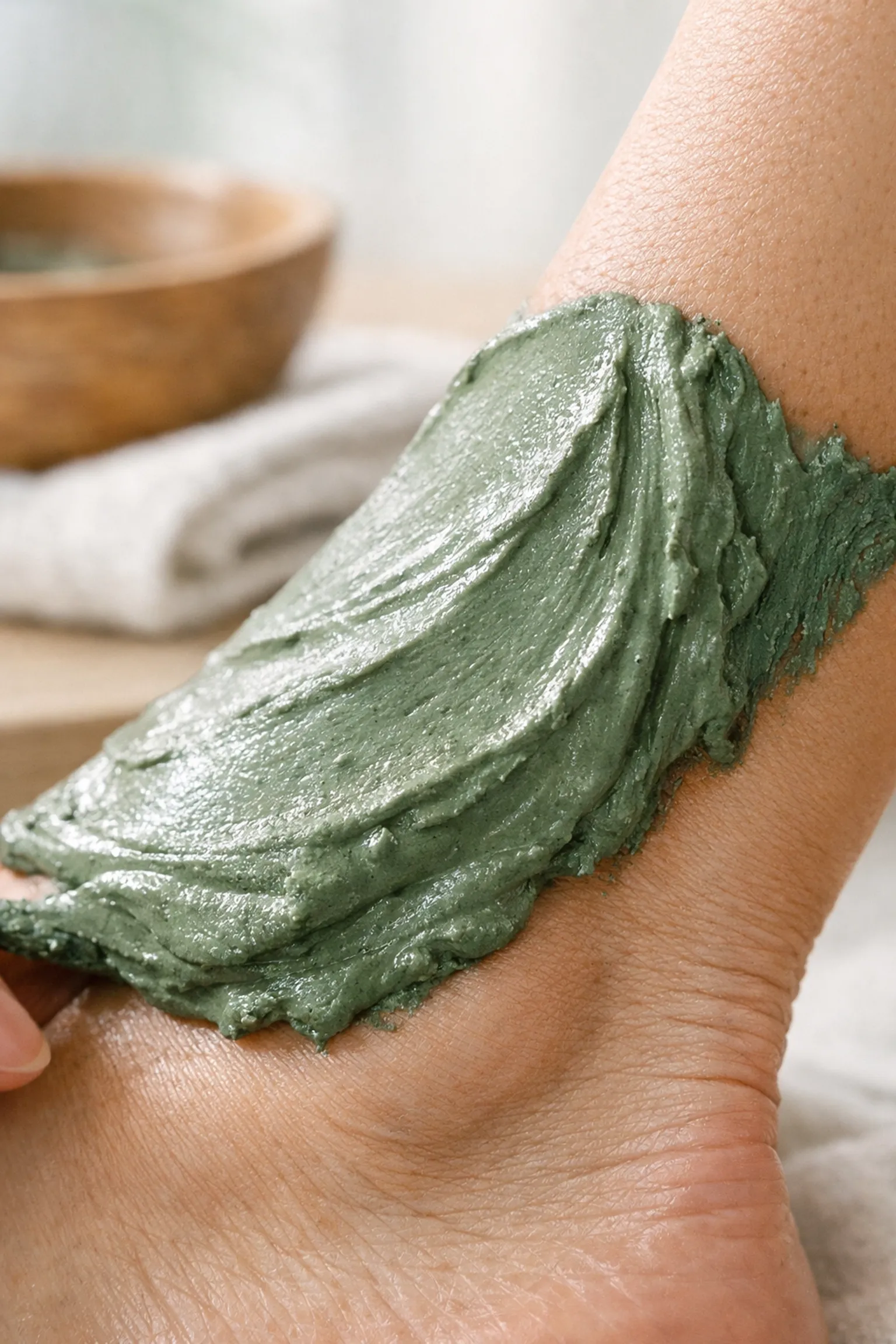
Ready to try it? You don't want to just rub a thin layer on like lotion. To get the benefits for a sprain, you need to create a poultice (also called a cataplasm).
Step 1: Prepare the Clay
If you’re using Clayer’s ready-to-use paste, you’re already set. If you have powder, mix it with water in a non-metal bowl (metal can mess with the clay’s charge) until it’s the consistency of peanut butter.
Step 2: The Application
Apply a thick layer: at least half an inch thick: directly over the swollen area of the ankle. Don't be shy; you want the minerals to have plenty of "fuel" to work with.
Step 3: Wrap It Up
Cover the clay with a damp cloth or plastic wrap. This prevents the clay from drying out too quickly. If the clay dries out, it stops working its "osmotic magic."
Step 4: The Wait
Leave the poultice on for at least 2 to 4 hours. For the best results, many people apply it before bed and wrap it securely to leave it on overnight.
Step 5: Rinse and Repeat
Rinse it off with lukewarm water. You’ll likely notice that the skin underneath feels cooler and the swelling has visibly gone down. Repeat this daily for the first 3 days after your injury.
Comparing Green Clay to Other Treatments
When you have a sprained ankle, you usually reach for:
- Icy Hot / Biofreeze: These provide a cooling or heating sensation that distracts the brain from pain, but they don't actually heal the tissue.
- Bentonite Clay: Good for detoxing, but lacks the high mineral concentrations of Illite clay found in French Green Clay.
- Clayer: Specifically designed for sports recovery. It combines the highest quality Illite with the safety certifications needed for frequent use.
In the world of natural healing, Clayer is the "gold standard." In fact, it’s earned the French Healing Clay Award 2025 for its excellence in purity and therapeutic effectiveness.

Important Safety Reminders
While we love the power of green clay, we aren't doctors. A sprained ankle can sometimes be a fracture in disguise.
- See a pro: If you can't put any weight on your foot or if the bone itself is tender to the touch, go get an X-ray.
- Check the source: Not all clay is safe for your skin. Always look for certifications. You can find Clayer’s certifications here to see what a safe product looks like.
- Internal vs. External: We are talking about external application here. While some clays are food-grade, for a sprained ankle, the poultice is your best bet. Learn more about food-grade clay here.
The Bottom Line
A sprained ankle doesn't have to keep you on the couch for weeks. By using sprained ankle green clay treatments, you are giving your body the minerals and the thermal environment it needs to knit those ligaments back together.
If you want the best results without worrying about heavy metals or messy mixing, Clayer is the clear winner. It’s the same stuff used by pros at bestsportrecovery.com to stay in the game.
For more deep dives into which clay is right for you, check out our guide on choosing the right green clay or our ultimate breakdown of Illite clay benefits.
Stop just icing the pain: start healing the injury. Your ankles will thank you!

