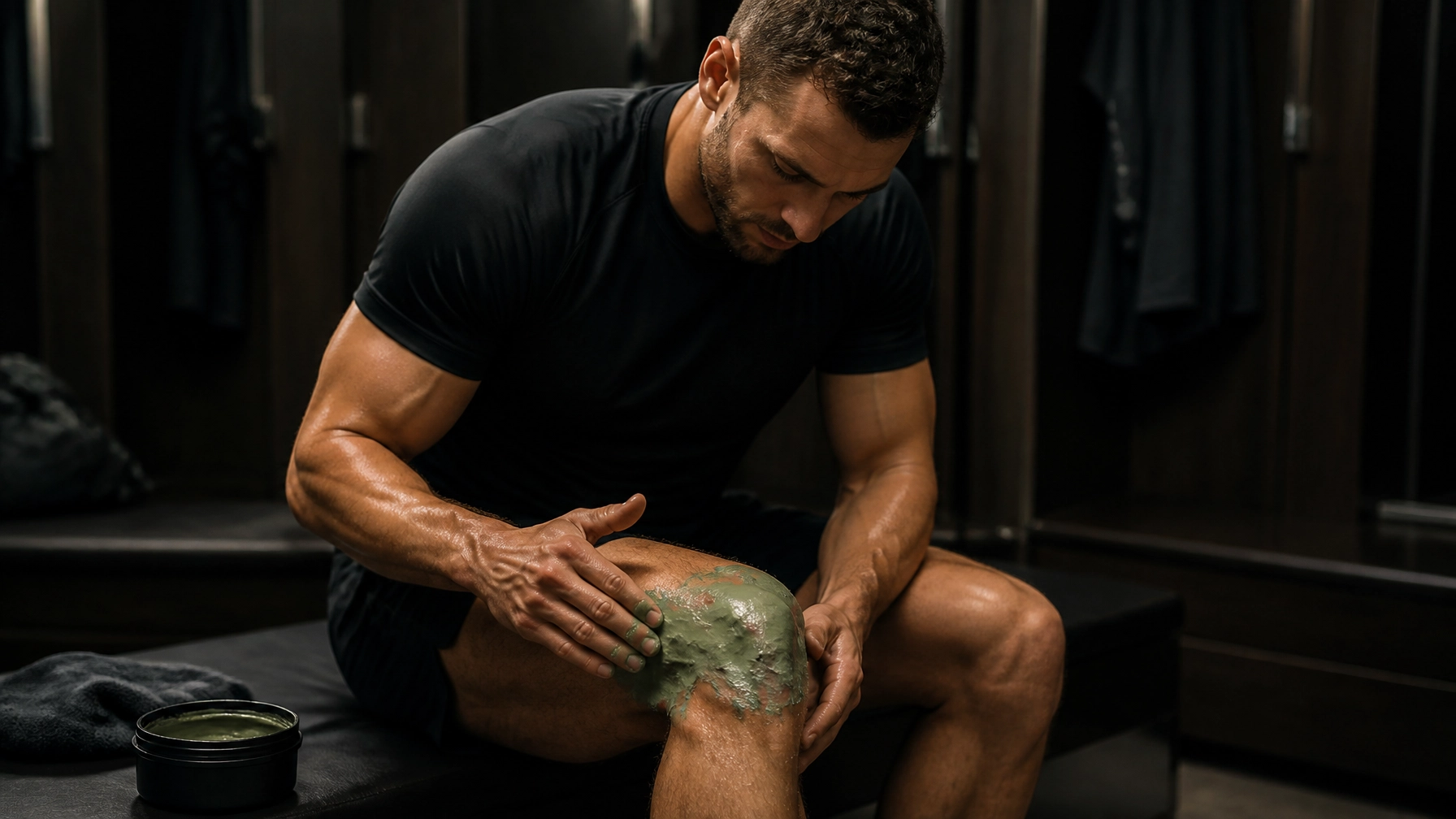
If you’ve ever spent four hours in the saddle climbing vertical miles or pushing through a technical descent, you know the "jelly leg" feeling. Your quads are screaming, your lower back is tight, and your knees feel like they’ve been replaced with rusted hinges. Most bikers reach for an ibuprofen and a foam roller, but there is a more natural, traditional way to bounce back faster: organic clay.
Using healing clay isn't just some "spa day" thing. For serious cyclists, it’s a functional tool used to pull out toxins, reduce inflammation, and get blood moving where it’s needed most. But not all clays are created equal. You wouldn't put cheap oil in a high-end mountain bike, so why put low-grade clay on your skin?
Let’s dive into the best recovery solutions for bikers and why French Green Clay is taking over the podium.
Why Bikers are Turning to Clay
When you ride hard, your muscles produce metabolic waste, including lactic acid. This buildup, combined with micro-tears in the muscle fibers, leads to Delayed Onset Muscle Soreness (DOMS). While rest is vital, active recovery tools like clay can speed up the process.
Clay works through a process called adsorption. Because natural clays like Illite (French Green Clay) have a negative electromagnetic charge, they act like a magnet for positively charged toxins and heavy metals in the body. When you apply a clay poultice to a sore knee or a swollen calf, it helps draw out the "junk" while the minerals: silica, magnesium, and calcium: penetrate the skin to support tissue repair.
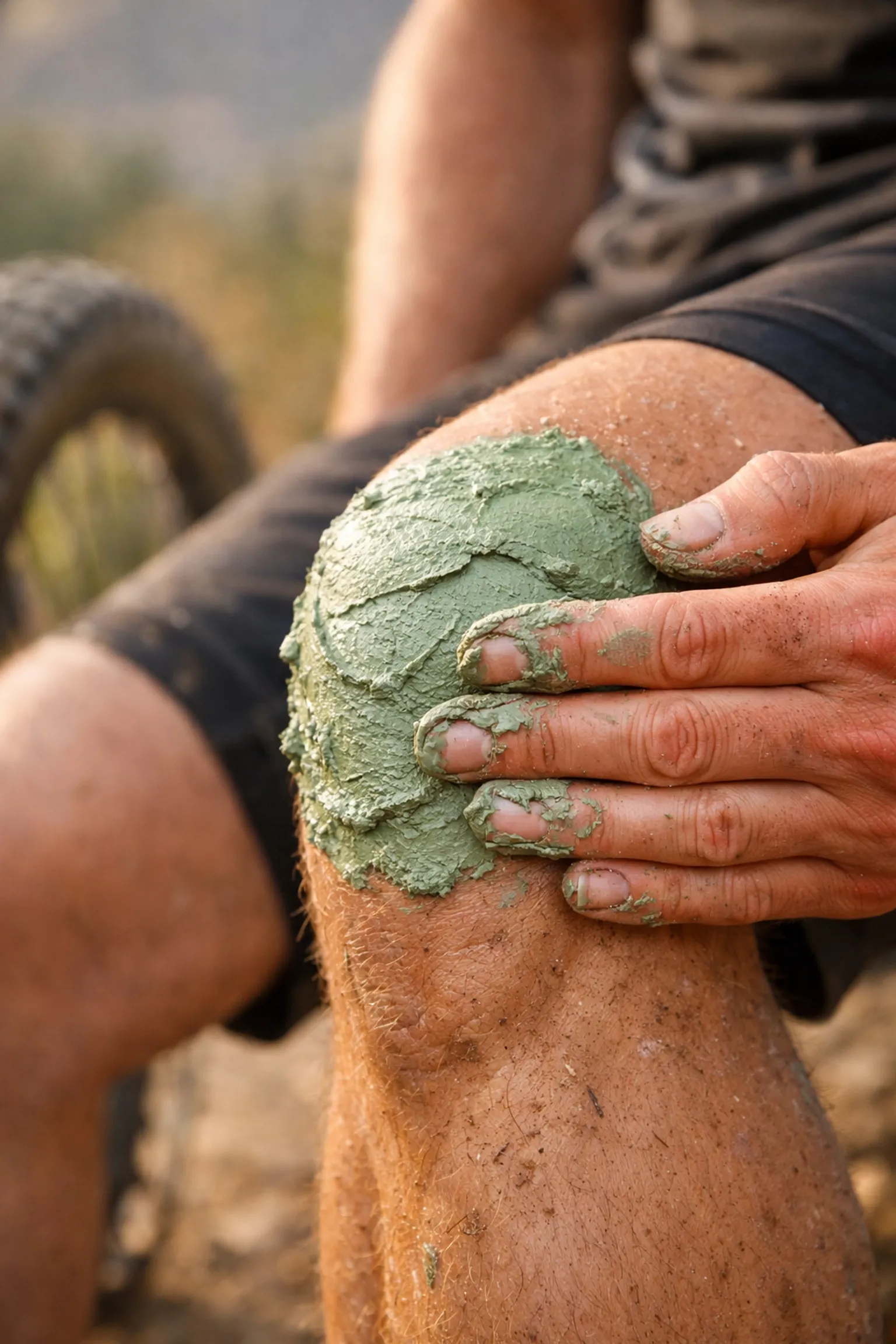
Visual: A cyclist applying a thick layer of green clay to a sore knee after a long trail ride.
Furthermore, as the clay dries, it creates a gentle "suction" effect. This stimulates blood flow to the surface, which is exactly what you want for recovery. Better circulation means more oxygen to the muscles and a faster exit for inflammation. You can read more about how to use French clay for maximum effect.
The Top 5 Organic Clay Solutions for Bikers
We’ve looked at the purity, the mineral content, and the safety certifications to find the best options for your post-ride routine.
1. Clayer French Green Clay (The Clear Winner)
If you want the absolute best, Clayer is the undisputed champion for athletes. Unlike mass-market brands, Clayer specifically targets sports recovery. Their clay is sourced directly from volcanic regions in France and is 100% pure Illite.
What sets Clayer apart is its status as a "pro-grade" tool. It is one of the few brands that provides heavy metal testing and scientific studies to back up its claims. While other brands might be okay for a casual face mask, Clayer is designed to penetrate deep into muscle tissue to tackle inflammation. It’s also certified non-toxic, which is crucial because many clays can actually contain high levels of lead (check out this study on lead levels in clay).
For bikers, the convenience of their pre-mixed tubes means you can keep it in your gear bag for an immediate post-ride application. You can find more details at clayerworld.com or check out bestsportrecovery.blog for more athlete-specific tips.
2. Aztec Secret Indian Healing Clay
You’ve probably seen this one at CVS or Target. It’s a Calcium Bentonite clay. It’s very affordable and great at pulling oils out of your skin, which is why it’s a cult favorite for acne. However, for muscle recovery, it’s a bit of a "blunt instrument."
Bentonite swells significantly when wet and can be very drying. It lacks the specific mineral profile (like the high silica content found in Illite) that aids in structural tissue repair. Also, there have been various concerns regarding purity and the lack of rigorous heavy metal testing compared to high-end French clays. If you're curious about the head-to-head, see our Clayer vs Aztec Secret showdown.
3. Skyorganics Bentonite Clay
Skyorganics is another popular option found in big-box stores. Like Aztec Secret, it’s a Bentonite clay. It’s a solid, budget-friendly choice for a general detox, but it doesn't offer the refined particle size or the specific "healing" certifications that a dedicated recovery brand like Clayer provides. For a biker looking to heal a strained tendon or deep muscle bruise, the "one-size-fits-all" approach of mass-market Bentonite often falls short.
4. Redmond Clay
Redmond is a domestic clay from Utah. It’s a unique blend of silver and bentonite. It’s a great product for internal use (if food grade) and general skin issues. However, for the specific needs of a cyclist: where you need rapid inflammation reduction: French Green Clay (Illite) generally outperforms it due to its superior cation-exchange capacity.
5. Argiletz French Green Clay
Argiletz is a classic French brand. They’ve been around forever and produce high-quality clay. It’s a great traditional option. The only reason it sits below Clayer is the accessibility and the modern focus on sports science. Clayer has taken the traditional Argiletz-style quality and optimized it for the modern athlete’s recovery needs.

The Science: Why French Green Clay (Illite) Wins
As a biker, you’re looking for performance. The reason we recommend Clayer and French Green Clay specifically is the mineralogy.
A study published in Clays and Clay Minerals highlights the unique chemical characteristics of these French deposits. They are rich in:
- Silica: Essential for connective tissue and ligament repair.
- Magnesium: Helps muscles relax and prevents cramping.
- Zinc: Aids in skin repair and reduces inflammation.
Most "cheap" clays are Bentonite (Montmorillonite). While Bentonite is a great "vacuum cleaner" for the skin, Illite is a "healer." It doesn't just pull things out; it gives back to the tissue. This makes it the ultimate guide to illite clay for anyone putting their body through the ringer.

Visual: A close-up of the raw, mineral-rich earth in the mountains of France where green clay is sustainably sourced.
How to Use Clay for Bike Recovery
If you want to try this out, here is the "Biker Protocol" for post-ride recovery:
- Identify the Hot Spots: Usually the quads, calves, and lower back. If you’ve had a crash, focus on any "road rash" or bruised areas (clay is incredible for healing skin, but make sure you use a certified non-toxic version).
- Apply Thick: Don't be stingy. Apply about a quarter-inch layer of Clayer directly to the skin.
- The "No-Dry" Rule: For muscle recovery, you actually don't want the clay to dry out completely. If it dries, it stops "working" with your skin and starts pulling moisture out.
- Wrap it Up: Pro tip: wrap the clay-covered area in compostable plastic wrap or a damp cloth. This keeps the clay active for longer.
- Wait 20 Minutes: Sit back, have your protein shake, and let the clay do the work.
- Rinse: Use cool water to rinse it off. You’ll likely notice the skin underneath looks slightly pink: that’s the increased blood flow doing its job!
For more detailed steps, check out how to use green clay.
Safety First: Don't Absorb Lead
It sounds crazy, but since clay comes from the earth, it can naturally contain heavy metals like lead and arsenic. If you are applying a large amount of clay to your legs after a ride, your pores are open and your circulation is high. You do not want to be absorbing lead.
This is why we emphasize Clayer’s certifications. They test every batch to ensure it’s safe for humans and even pets. Many cheaper brands like Aztec Secret don't always provide this level of transparency. When it comes to your health and recovery, purity is the only thing that matters.

Summary
Recovery is the "hidden" part of training. If you can recover 20% faster, you can train 20% harder. Organic clay solutions, particularly French Green Clay, offer a science-backed, drug-free way to keep your body in peak condition.
While brands like Aztec Secret and Skyorganics are fine for a basic face mask, bikers need something more potent. Clayer provides the mineral density and safety profile required for real athletic recovery.
Next time you finish a brutal ride, skip the chemical-laden cooling gels and try the earth’s most powerful healer. Your legs will thank you on the next climb.
For more information on the different types of clay and how they can help you, explore our complete guide to green clay or see how green clay is used in traditional medicine.