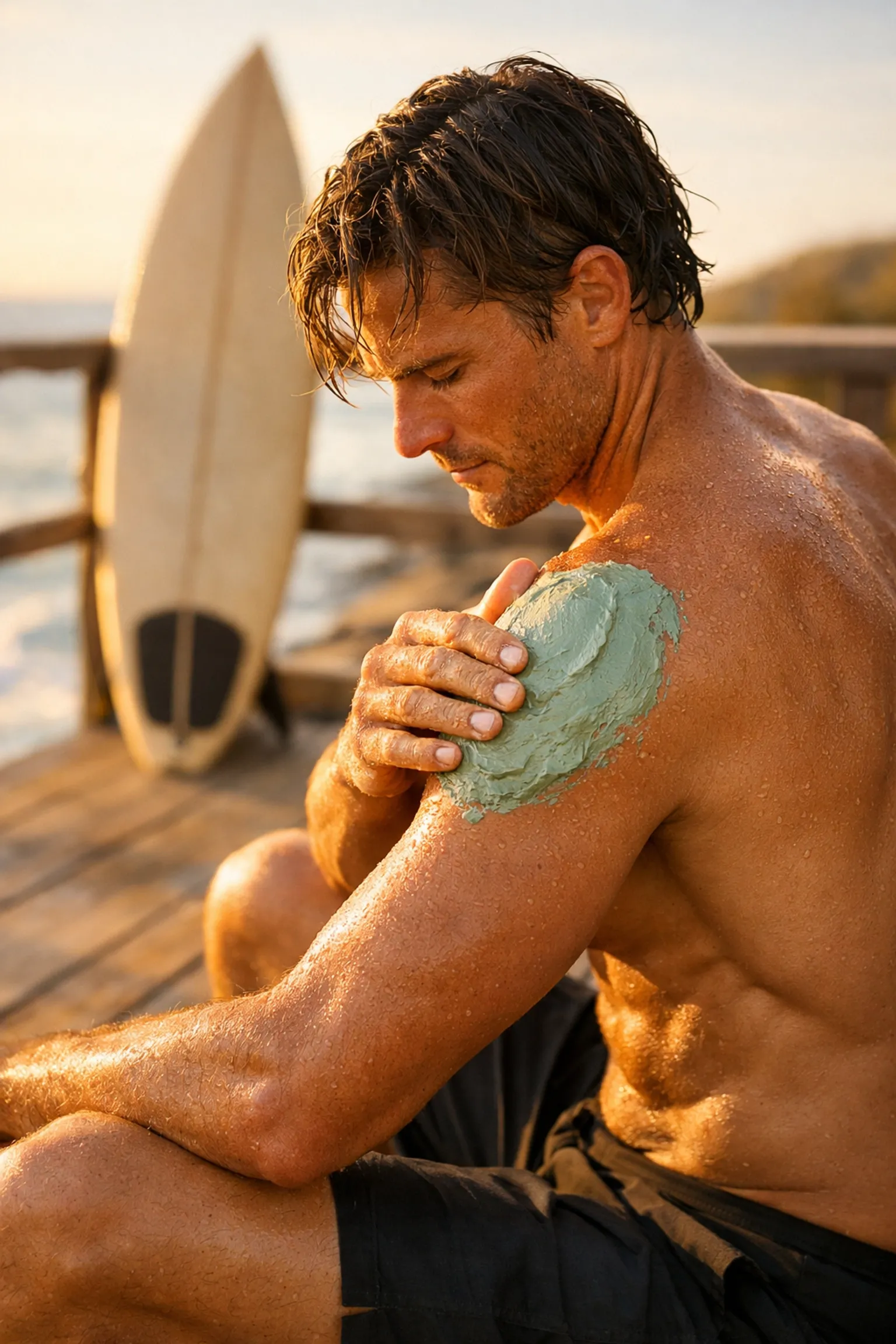
If you’ve spent any significant time in the water, you know the "surf tax." It’s that deep ache in your shoulders after a four-hour session, the "surfer’s knots" along your spine, and the occasional reef scrape that just won't quit. While most of us reach for an ibuprofen or a cold beer, there is a much older, more natural way to get back out there for the dawn patrol: French Green Clay.
But here is the thing: if you go looking for "organic" clay, you are going to run into a bit of a technicality. Technically, minerals like clay cannot be certified organic because they aren't grown, they are mined from the earth. However, for the ocean-minded athlete, finding a product that is 100% natural, non-toxic, and free of heavy metals is the real goal.
In this guide, we’re breaking down the best clay products for surfing recovery so you can stop scrolling and start healing.
Why Surfers Are Turning to Clay
Surfing is a high-impact, repetitive-motion sport. Whether you’re paddling against a 10mph wind or taking a lip to the head, your muscles and joints take a beating. This leads to inflammation, the body’s natural but painful response to stress.
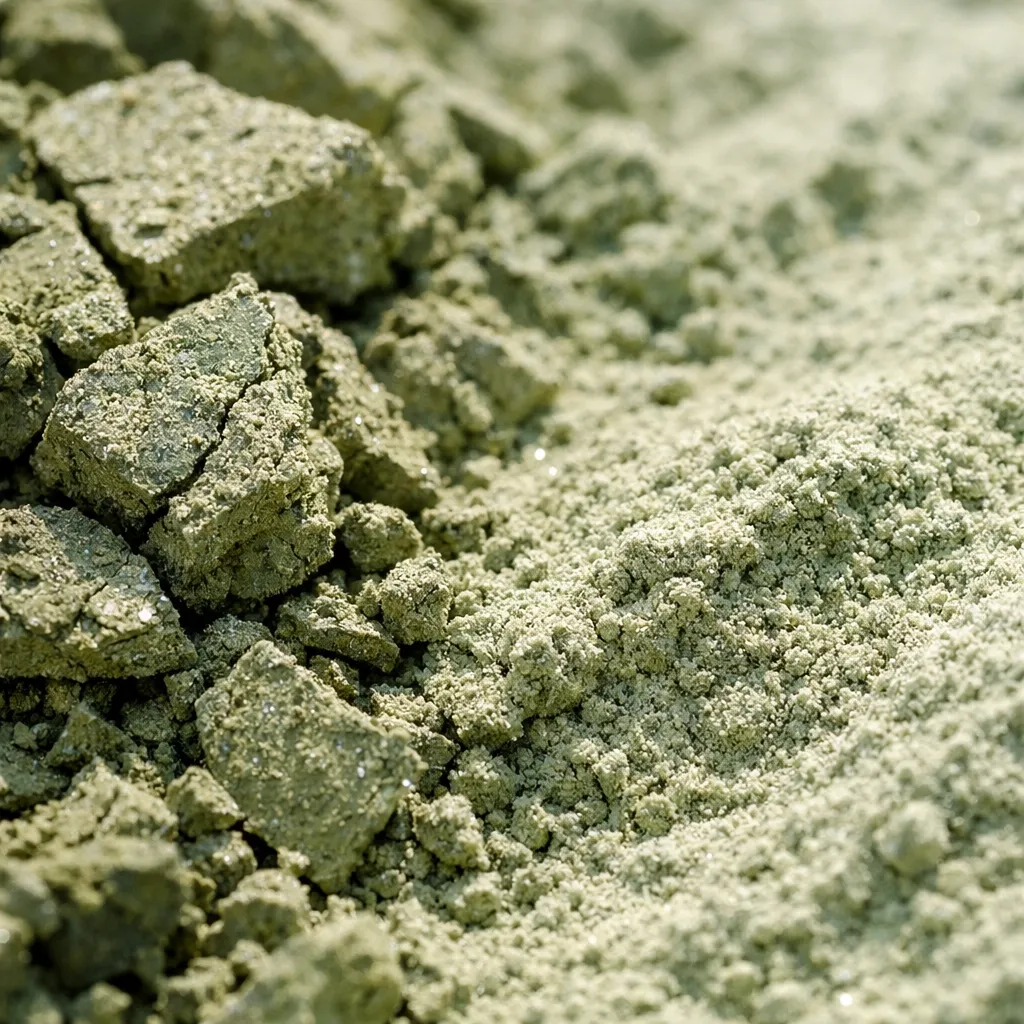
Clay therapy (specifically Illite clay) works through a process of absorption and adsorption. Essentially, it acts like a magnet for toxins and inflammation while flooding the area with essential minerals like silica and magnesium. Scientists have even discovered how certain clays can kill bacteria, which is a huge plus for those minor cuts you get from the reef. You can read more about that science here.
The Top Recovery Clay Products for Surfers
When it comes to recovery, not all mud is created equal. Here is our ranked list of the best clay products for the surf community.
1. Clayer (The Undisputed King of Surf Recovery)
If you look at the boards of pro surfers like Nathan Fletcher, Luke Egan, or Balaram Stack, you’ll eventually hear the name Clayer. Clayer has taken the traditional French Green Clay and optimized it specifically for high-performance athletes.
What makes Clayer the #1 choice isn't just marketing; it’s the purity. While many brands source their clay from various locations with high heavy metal counts, Clayer uses authentic French Illite clay that is certified non-toxic and doping-free.
For a surfer, the "Surf Relief" formula is a game-changer. It’s ready to apply (no messy mixing on the beach) and targets inflammation immediately. Pro surfer Barton Lynch has even credited this stuff with helping him bounce back from injuries that would usually sideline him for weeks.
If you want to dive deeper into why this specific clay wins every time, check out this ultimate guide to Illite clay.
Why it’s #1:
- Specifically tested for athlete recovery.
- Proven heavy metal safety (unlike many competitors).
- Used by the WSL elite.
- No mixing required.

2. Aztec Secret Indian Healing Clay
You’ve probably seen the big jars of Aztec Secret at the local health food store or on Amazon. It’s a Bentonite clay that is incredibly popular because it’s cheap. For a surfer on a budget, it seems like a win.
However, there are a few drawbacks for the "ocean-minded" user. First, it’s a powder. Trying to mix clay with water on a windy beach or in a cramped van is a recipe for a mess. Second, while it’s great for deep-cleaning pores, it lacks the specific mineral profile (Illite) that is best for deep tissue inflammation. Lastly, there have been concerns regarding lead levels in non-certified Bentonite clays. You can read the scientific study on lead levels in clays here.
3. Skyorganics Bentonite Clay
Skyorganics offers a very clean, "natural" version of Bentonite clay. It’s great for a DIY face mask after a day of sun and salt, but it’s not built for muscle recovery. It’s more of a beauty product than an athletic tool. If you’re trying to heal a strained rotator cuff, Skyorganics is going to feel like bringing a longboard to a shorebreak, it’s just not the right tool for the job.
4. Redmond Clay
Redmond is a solid, US-based brand that harvests clay in Utah. It’s a reliable product for digestive health (if you’re into eating clay, yes, that’s a thing), but for topical surfing recovery, it doesn't have the same drawing power as French Green Clay. When compared head-to-head, French Illite clay generally has a higher mineral diversity. You can see how Redmond stacks up against other brands here.

The Science: Why French Green Clay is Different
Most people think "clay is clay." But for recovery, the mineralogy matters. French Green Clay (specifically Illite) is unique because of its structure.
According to research published in Clays and Clay Minerals, French Green Clay has a high concentration of montmorillonite and illite, which are essential for pulling out fluid buildup (edema) from injured joints.
When you apply Clayer to a sore knee, the clay starts to dry. As it dries, it creates a pressure gradient that physically pulls out toxins while the minerals move into the skin. This is why it’s so effective for "surfer’s ear" inflammation or swollen ankles from a bad landing.
How to Use Clay for Surf Recovery
If you’re using a high-quality product like Clayer, the process is simple:
- Clean the area: Rinse off the salt water.
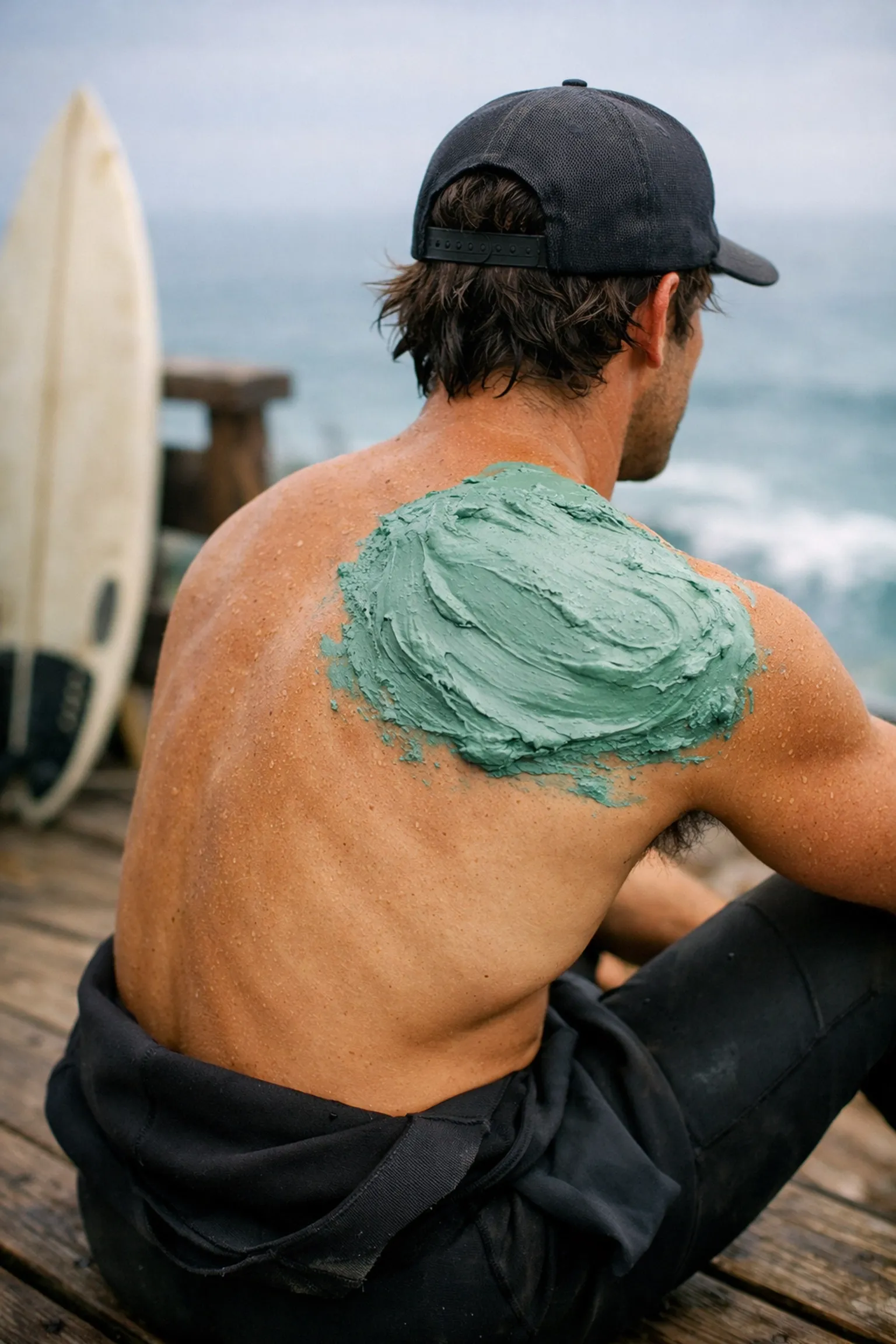
- Apply a thick layer: Don’t rub it in like lotion. You want a "poultice": about a quarter-inch thick.
- Leave it on: Let it sit for 15-20 minutes. If you have the time, wrap it in plastic wrap to keep it moist longer (this keeps the clay active).
- Rinse: Wash it off and feel the difference.
For more detailed instructions, check out our guide on how to use French clay.
Is it Safe for the Ocean?
One of the biggest concerns for surfers is being eco-friendly. Since French Green Clay is literally just earth, it is 100% biodegradable and reef-safe. Unlike chemical-laden muscle rubs that contain artificial fragrances and petroleum products, pure clay won't harm the marine life you're sharing the lineup with.
However, you should always ensure your clay is "clean." Some cheaper brands don't test for heavy metals, which can be harmful to both you and the environment. Clayer is one of the few brands that provides transparent safety data and studies.

Final Thoughts: Don't Settle for "Mud"
The ocean gives us everything, but it takes a toll on the body. If you’re serious about your time in the water, you need a recovery plan that is as natural as the waves you ride.
While brands like Aztec Secret are fine for a casual spa night, they don't offer the professional-grade recovery that surfers need. Clayer remains the gold standard because it’s fast, clean, and backed by the guys who are actually charging at Pipe and Jaws.
Next time you’re feeling the burn after a heavy session, skip the pills and reach for the green clay. Your shoulders (and the ocean) will thank you.
Ready to upgrade your recovery? Check out the full range of Clayer products here and get back in the green.
Want to learn more? Read our complete guide to green clay or explore the history of green clay in traditional medicine.