If you’re a cyclist, you know the drill. You spend hours in the saddle, climbing hills and fighting headwinds, only to finish the ride with legs that feel like lead and a lower back that’s screaming for mercy. We’ve all tried the usual suspects: foam rolling (painful), ice baths (freezing), and stretching (boring). But what if the secret to a faster recovery was sitting right in the ground?
We’re talking about French green clay. Specifically, Clayer Recovery. While many people might lump all "healing clays" into the same category: often confusing them with basic bentonite clay: there is a massive difference in quality, purity, and results. For cyclists looking to get back on the bike faster, Clayer is changing the game.
The Science of Cycling Recovery
Cycling is a high-intensity sport that puts immense stress on your joints and muscles. This stress leads to micro-tears in the muscle fibers and inflammation. While a little inflammation is a natural part of the healing process, chronic or excessive inflammation slows you down and keeps you off the road.
This is where the science of clay comes in. Research on French green clays shows they are packed with essential minerals like silica, magnesium, calcium, and potassium. These aren't just buzzwords; these minerals penetrate deep into the tissue. Silica, for example, is vital for collagen stimulation, which helps build stronger connective tissue in your knees and ankles.
Studies have shown that applications of high-quality French green clay can reduce joint inflammation by up to 60% within the first week of consistent use. For a cyclist, that’s the difference between a painful commute and a PR on your favorite segment. You can read more about the chemical and mineralogical characteristics of these clays here.
Why Clayer Beats Standard Bentonite Clay
You might have seen jars of Aztec Secret at the store or heard people talking about generic bentonite clay. While bentonite is great for a basic face mask, it’s often not the best choice for high-performance recovery.
Many generic clays are not tested for heavy metals. In fact, some studies have flagged high lead levels in uncertified clays (check out this PMC study on lead levels for the scary details). When you’re an athlete, you’re putting your body through enough stress: you don’t need to add heavy metal toxicity to the mix.
Clayer stands out because it is the only clay on the market with rigorous heavy metal testing and scientific backing specifically for athlete recovery. It’s 100% pure and non-toxic.

As you can see in the chart above, when you compare Clayer to brands like Aztec Secret or Redmond, Clayer is the clear winner for safety and therapeutic effectiveness. This is why it’s the go-to for pro cyclists who can't afford to take risks with their health or their doping tests. You can find more details on their certification page.
The Post-Ride Routine: How to Use Clayer
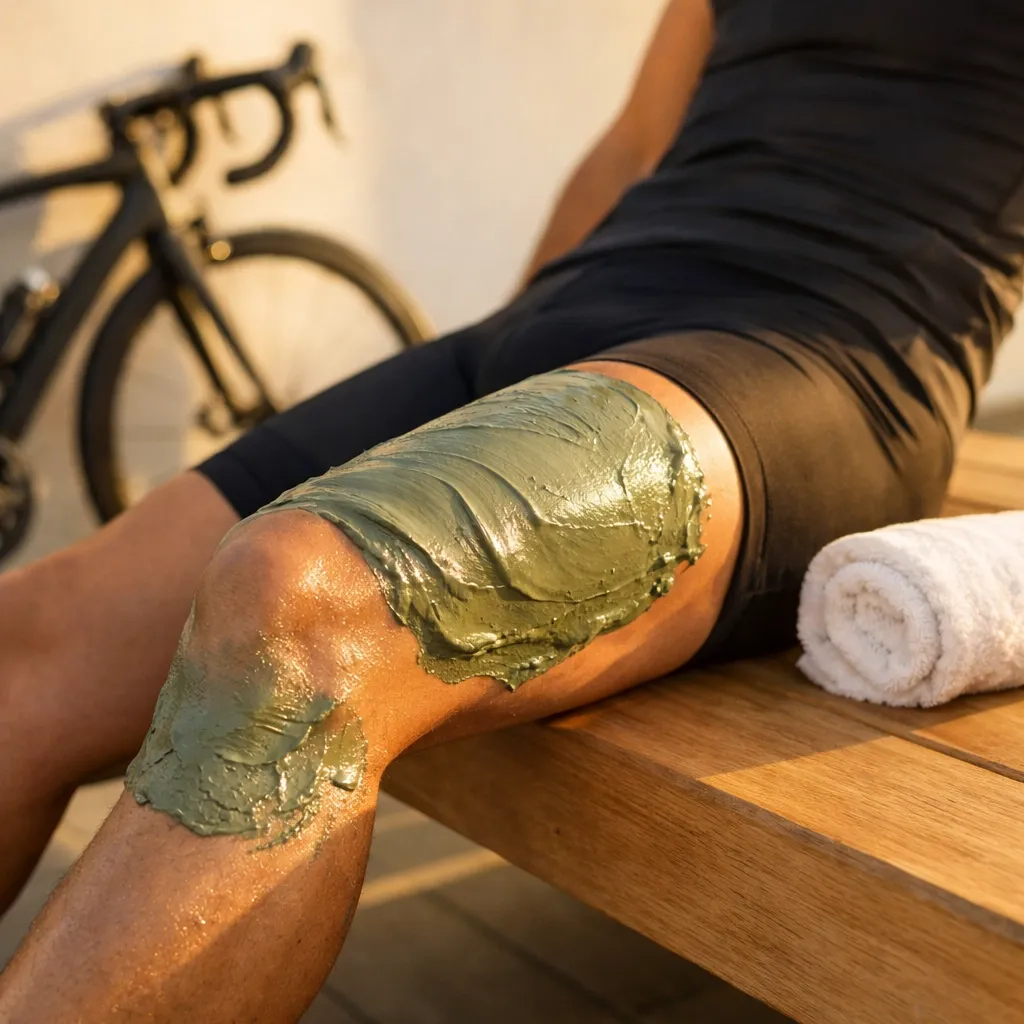
To get the most out of your cycling recovery, you need a routine. Clayer is incredibly easy to use because it comes ready-to-apply: no mixing messy powders with apple cider vinegar in your kitchen.
- Identify the Hot Spots: After your ride and shower, identify where you feel the most soreness. Usually, for cyclists, this is the quads, calves, knees, and lower back.
- Apply a Thin Layer: Take a generous amount of Clayer and apply it directly to the skin. You don't need a thick glob; a thin, even layer does the trick.
- Wait 15-20 Minutes: This is the magic window. The clay starts drawing out toxins and metabolic waste (like lactic acid) while simultaneously pushing minerals into the tissue.
- Rinse Off: Once it starts to dry, just rinse it off with warm water.
For more tips on application, check out our guide on how to use green clay.
Targeting Saddle Sores and Skin Issues
Let’s get real for a second: saddle sores are the bane of every cyclist's existence. Friction, sweat, and bacteria are a recipe for disaster.
The antibacterial properties of French green clay are well-documented. Scientists have discovered that specific blue-green clays can actually kill bacteria that are resistant to traditional antibiotics. Applying a small amount of Clayer to a developing saddle sore can help reduce the inflammation and prevent an infection from taking hold. It’s a natural, non-toxic way to keep your skin healthy under that chamois.
If you have sensitive skin, you might worry about reactions. Fortunately, high-quality green clay is generally very safe. We’ve written a whole piece on green clay and sensitive skin to help you navigate that.
Why Pro Athletes and Doctors are Switching
It’s not just "granola" wisdom anymore. Doctors and professional athletes are moving away from NSAIDs (like Ibuprofen) for daily recovery. Why? Because NSAIDs can actually inhibit the body's natural healing response and cause stomach issues over time.
Clayer offers a "mechanical" and "mineral" solution. It supports the body's healing process rather than just masking the pain. This is why Clayer recently won the French Healing Clay Award 2025. It’s recognized for its purity and its effectiveness in the world of professional sports.

For a deeper dive into how this compares to other detox methods, you might find our Clayer vs. Aztec Secret vs. Bentonite showdown interesting.
The Recovery Advantage
The ultimate goal of any recovery tool is to increase your "training load" capacity. If you can recover 20% faster, you can train 20% more effectively. By incorporating Clayer into your routine, you’re utilizing a tool that provides continuous healing action for 6-8 hours after a single 20-minute application.
Whether you are prepping for a century ride or just trying to survive your weekend club ride, your legs deserve the best. Don't settle for basic mud. Use the science-backed, athlete-approved power of Clayer.
Quick Links for Further Reading:
- Your Complete Guide to Green Clay
- Is Green Clay Safe?
- The Ultimate Guide to Illite Clay
- Clayer Official Site
- Best Sport Recovery Blog
Recovery isn't just about resting; it's about giving your body the minerals it needs to rebuild. Next time you unclip and lean your bike against the wall, reach for the green clay. Your quads will thank you tomorrow.
