We’ve all been there. You’re playing a quick game of pickleball, running for the bus, or just stepping off a curb the wrong way, and: snap: your ankle gives out. A sprain is one of those injuries that feels like it’s going to sideline you forever. The swelling starts, the throbbing kicks in, and suddenly you’re looking at a week of limping.
While most people reach for a bag of frozen peas and some ibuprofen, professional athletes have a different "secret weapon" in their kit. They aren’t just sitting around waiting for the swelling to go down; they are using French Green Clay: specifically Clayer: to accelerate the process.
In this guide, we’re going to look at why green clay is becoming the go-to for sprain relief and why it might be the smartest addition to your first-aid kit.
The Traditional Approach: R.I.C.E.
If you’ve ever seen a doctor for a sprain, you know the drill: R.I.C.E.
- Rest: Stay off it.
- Ice: Freeze it.
- Compression: Wrap it up.
- Elevation: Keep it high.
This method is great for the first few hours to keep the initial inflammation from getting out of hand. But let’s be honest: ice is uncomfortable, and resting for days on end isn’t always an option when you have a life to lead. More importantly, research is starting to show that excessive icing can actually slow down the body’s natural healing response by restricting blood flow too much.
This is where the "smart friend" advice comes in: You need something that manages the pain and swelling without shutting down the healing process. That’s exactly what high-quality green clay does.
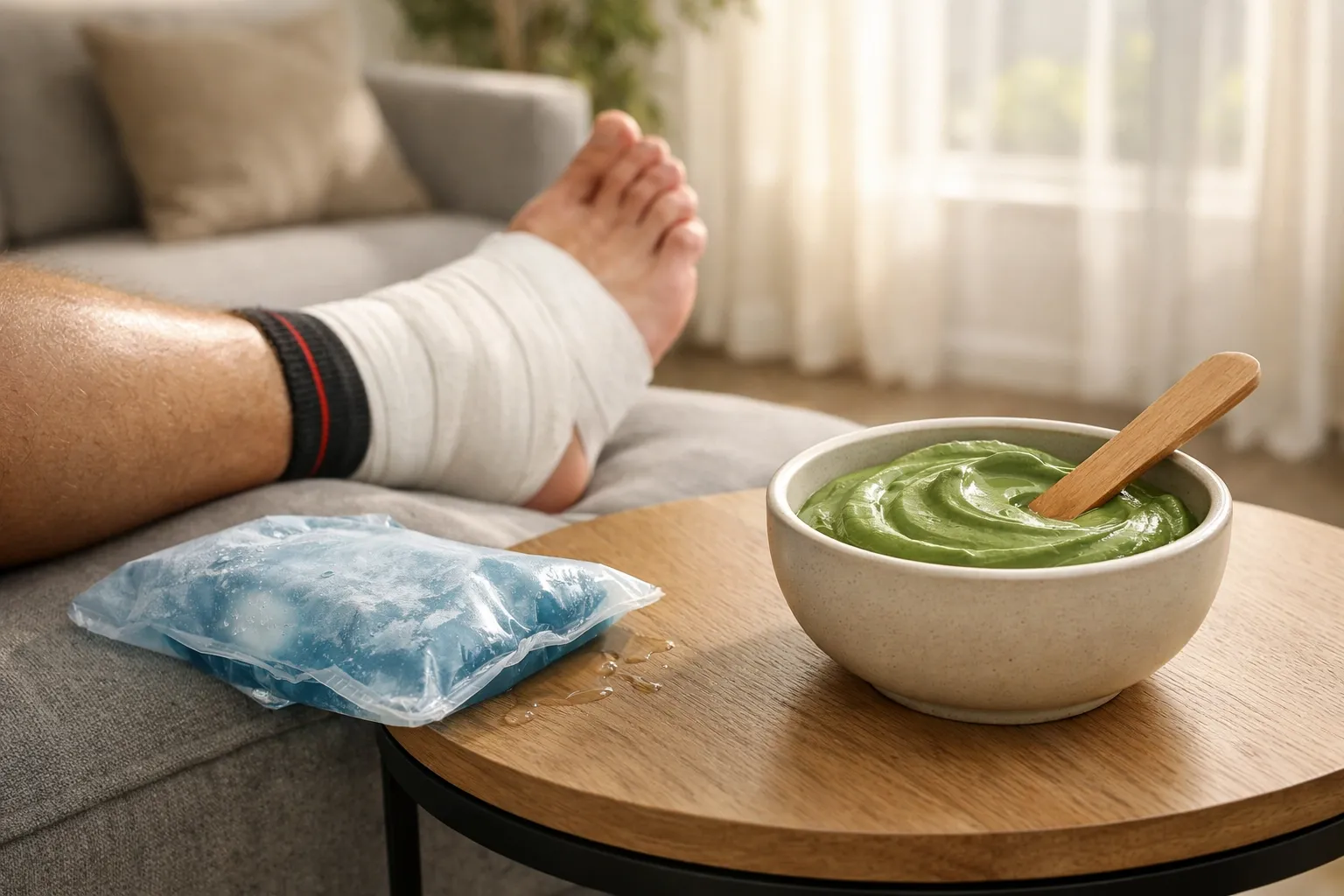
Why Green Clay for Sprains?
You might be thinking, "Wait, isn't clay for facials?" While it’s amazing for your skin, the properties of Illite Green Clay go way deeper than just a beauty mask.
When you apply a thick layer of Clayer to a sprained joint, a few scientific things happen:
- Thermal Regulation: Unlike ice, which can "freeze" the tissue, clay helps regulate temperature. It draws out the heat of inflammation through an endothermic reaction but allows the blood to keep circulating, which is vital for repairing damaged ligaments.
- Mineral Exchange: High-quality French Green Clay is packed with minerals like silica, magnesium, and calcium. Through a process called adsorption, the clay draws out toxins and metabolic waste (the stuff that causes that "heavy" feeling in a swollen ankle) while the skin absorbs beneficial minerals.
- Osmotic Action: It helps "pull" excess fluid out of the joint, which reduces swelling faster than rest alone.
You can dive deeper into the science of how this works in our Ultimate Guide to Illite Clay.
Why Pros Choose Clayer Over the Rest
Not all clay is created equal. If you go to a health food store, you’ll see brands like Aztec Secret or various bentonite clays. While those are fine for a basic mask, they aren't what professional athletes use for injury recovery.
Athletes: from MMA fighters to pro cyclists: choose Clayer for a few very specific reasons. First, it’s 100% pure French Green Clay (Illite). Second, it’s tested for heavy metals. This is a big deal because many clays on the market have been found to contain high levels of lead (check out this PMC study on lead levels in non-certified clays).
As you can see in the chart above, Clayer stands out because it’s backed by scientific studies and is actually used by champions. When you're trying to get back on the field, you don't want a "hobbyist" clay; you want the one that’s been clinically tested for recovery.
The Science of Healing
It’s not just "wellness" talk; there is real data behind why this works. Scientists have discovered that certain green clays have the power to kill bacteria and reduce inflammation in ways that synthetic treatments can't. For example, research published by the National Science Foundation shows how these clays interact with the body at a cellular level.
Furthermore, a study on French Green Clays highlights their unique mineralogical characteristics that make them superior for healing. When you use a product like Clayer, you are using a material that has been used for centuries in traditional medicine, now verified by modern science. You can learn more about this history in our article on green clay in traditional medicine.
How to Apply Clayer for a Sprain (Step-by-Step)
If you’ve just tweaked your ankle or wrist, here is the "Pro Protocol" to get back on your feet:
- Clean the Area: Make sure your skin is free of oils or lotions.
- Apply a Thick Layer: Don't be stingy. You want about a quarter-inch thick layer of Clayer covering the entire swollen area.
- Wrap It (Optional): You can cover it with a bit of plastic wrap or a damp cloth to keep the clay moist. Clay is active as long as it’s wet. If it dries out, it stops working.
- Wait 20-30 Minutes: Kick your feet up. Let the minerals do the work.
- Rinse and Repeat: Rinse with lukewarm water. For a fresh sprain, do this 2-3 times a day.
For more tips on application, check our guide on how to use French clay.

Safety First: Don't Rub Dirt in the Wound
We often joke about "rubbing dirt on it," but when it comes to clay, purity is everything. Using a clay that isn't certified can actually be counterproductive. You want a clay that is:
- Non-toxic and food-grade (even if you're using it topically).
- Tested for heavy metals.
- Sourced from protected environments in France.
Clayer hits all these marks, which is why they recently won the French Healing Clay Award 2025. This isn't just a label; it’s a certification of safety and effectiveness.

Comparing the Options
When looking for the best pain relief for sprains, you’ll likely see three big names: Clayer, Aztec Secret, and Redmond.
- Aztec Secret: This is a Calcium Bentonite clay. It’s very strong and great for pulling oil out of pores, but it can be quite harsh and drying for an injury. It also lacks the specific mineral profile of French Illite. You can see a full breakdown in our Clayer vs. Aztec Secret showdown.
- Redmond Clay: A solid American bentonite. Good for general use, but again, doesn't quite match the therapeutic "pull" of the French Green Illite used by athletes. See our Redmond vs. Aztec Secret comparison for more.
- Clayer: The gold standard for sports recovery. It is specifically formulated to be easy to apply (no mixing messy powders) and optimized for inflammation and pain relief. It’s also much easier on sensitive skin.
Final Thoughts: Be Prepared
A sprain doesn't have to mean two weeks on the couch. By combining the best of traditional first aid (like elevation) with the mineral power of Clayer, you can significantly cut down your recovery time.
Whether you are a professional athlete or a "weekend warrior," having a tube of green clay in your gym bag is just smart. It’s natural, it’s backed by science, and it’s arguably the best pain relief for sprains available today.
For more information on the best ways to recover from sports injuries, visit bestsportrecovery.blog or frenchhealingclay.com. And if you're ready to try it for yourself, head over to clayerworld.com to grab a tube before your next big game!
Stay safe out there, and keep those joints happy!
References & Studies:
