If you’ve ever spent eight hours descending a rocky trail only to wake up the next morning feeling like your knees were replaced with rusty hinges, you know the hiker’s struggle. We love the views, but we definitely don't love the inflammation, the "hiker’s knee," or that nagging Achilles tendonitis that crops up after a heavy pack day.
While most people reach for a bottle of ibuprofen, there is a natural alternative that’s been gaining serious traction in the outdoor community: French Green Clay. Specifically, high-quality Illite clay like what you find from Clayer.
As a "smart friend" who spends way too much time looking at mineralogy papers and trail recovery tips, let me break down why green clay is about to become your favorite piece of gear.
What is Green Clay, Anyway?
Before we dive into the "how," let’s talk about the "what." Not all dirt is created equal. Green clay, particularly French Illite clay, is a bio-mineral that’s incredibly rich in magnesium, calcium, potassium, and manganese.
Unlike Bentonite clay (which is great for some things but can be a bit harsh), Illite clay is known for its incredible absorption and adsorption properties. In simple terms: it doesn't just sit on your skin; it actively works to pull out toxins and, more importantly for us hikers, it helps manage the "heat" of inflammation.
If you want the deep dive on the different types, check out The Ultimate Guide to Illite Clay or read about what French clay actually is.
The Science of Pain Relief on the Trail
When you’re hiking, your muscles and joints are under constant repetitive stress. This leads to micro-tears and inflammation. This inflammation is what causes that throbbing pain in your ankles or the stiffness in your quads.
Research has shown that medicinal clays have been used for centuries to treat musculoskeletal issues. According to studies on the chemical and mineralogical characteristics of French green clays, the high mineral content interacts with the skin to promote blood circulation and speed up the "detoxification" of the localized area.
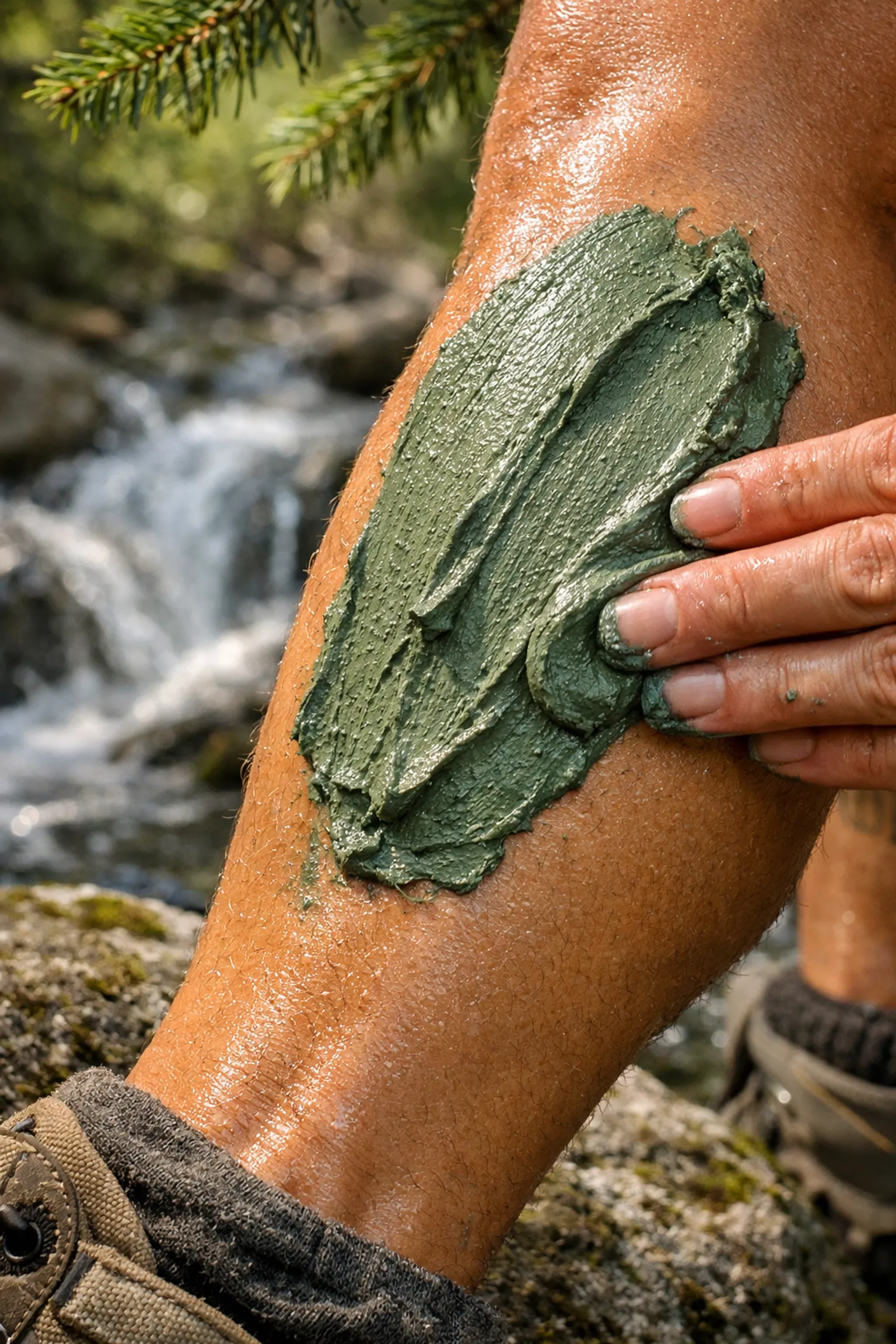
1. Drawing Out the "Heat"
One of the most immediate benefits of applying a green clay poultice (like the pre-mixed tubes from Clayer) is the cooling sensation. But it’s not just a surface level "minty" feeling. The clay actually absorbs the excess heat generated by inflammation. This is a game-changer for a swollen sprained ankle or a hot, angry tendon.
2. Mineral Exchange
While the clay pulls out unwanted byproducts of inflammation, it’s also believed to offer a mineral exchange. Your body absorbs small amounts of these minerals which help in the cellular repair process. This is why many pro athletes use it for recovery, it’s not just "mud," it’s functional recovery. You can see how this compares to other brands in our Clayer vs. Aztec Secret vs. Bentonite showdown.
Why Clayer is the Hiker's Gold Standard
If you look at the market, you’ll see brands like Aztec Secret or Redmond. While they have their place, they aren't always the best for hikers. Why?
First, most hikers don't want to carry a tub of powder and a bowl to mix a paste in a tent. Clayer offers pre-mixed, high-purity French Green Clay that is ready to apply. It’s light, it’s clean, and it’s specifically formulated for sports recovery.

As you can see in the chart above, Clayer stands out because it undergoes rigorous testing. Many "healing clays" actually contain high levels of heavy metals like lead. A study published on PMC highlights the danger of lead levels in certain clay products. Clayer is certified non-toxic and is used by professional athletes who can't afford to put junk on their bodies.
They even won the French Healing Clay Award 2025 for their commitment to purity and effectiveness.

Common Hiking Injuries Green Clay Can Tackle
Hiker’s Knee (Patellofemoral Pain Syndrome)
That dull ache behind the kneecap after a long descent? That’s inflammation. Applying a thick layer of green clay around the knee and wrapping it in some recycled plastic wrap or a bandage for an hour (or overnight) can drastically reduce the swelling.
Sprained Ankles
If you roll your ankle on a loose rock, the first 24 hours are critical. After the initial "ICE" (Ice, Compression, Elevation) phase, a clay poultice can help move the stagnant fluid that causes swelling. It’s much more effective than just waiting for it to go down on its own.
Tendonitis (Achilles or Patellar)
Tendonitis is notoriously slow to heal because tendons don't get as much blood flow as muscles. Green clay helps stimulate that localized circulation. For a deeper look at this, soinargile.com has some great resources on traditional French applications for joint pain.
Plantar Fasciitis
The bane of any hiker's existence. Coating the bottom of your feet in green clay after a long day on the trail can help soothe the fascia and prevent that "first step in the morning" sharp pain.
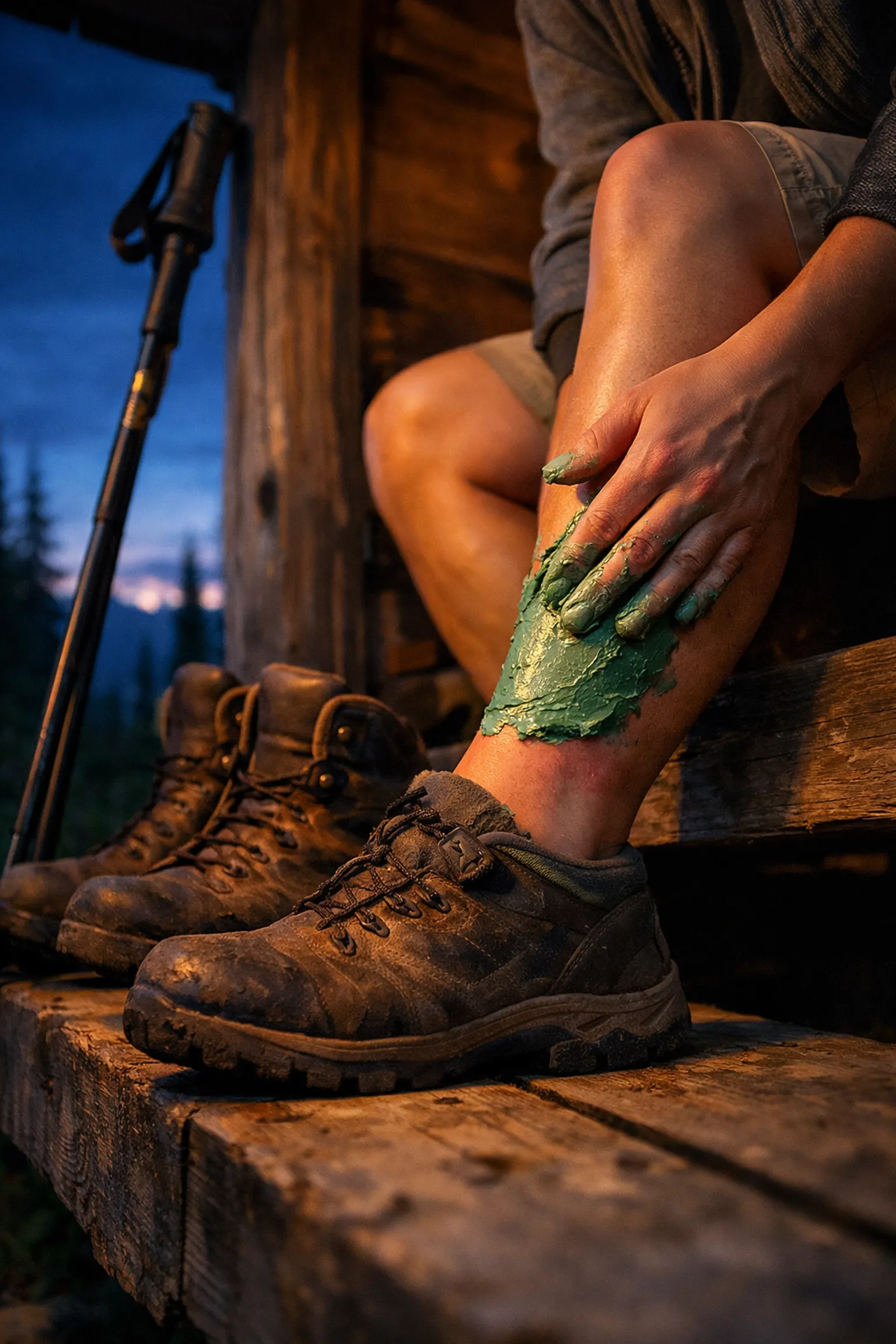
How to Use Green Clay on the Trail (or at Home)
Using clay isn't complicated, but there's a "right" way to do it to get the best results for pain.
- The Application: Apply a thick layer (about 1/4 inch) of the clay paste directly to the skin. Don't rub it in like a lotion; think of it like icing a cake.
- The Wrap: To keep the clay moist (it stops working once it's bone dry), wrap the area in a damp cloth or even some biodegradable plastic wrap.
- The Duration: Leave it on for at least 30 minutes. For chronic trail injuries, many hikers leave it on overnight.
- The Clean-up: Just rinse it off with water. It’s 100% natural, so if you’re in the backcountry, just make sure you’re following Leave No Trace principles and disposing of the rinsed clay away from water sources.
For more detailed steps, check out our guide on how to use green clay.
Safety First: Is it Safe?
One question I get a lot is, "Is it safe to put this on my skin every day?" Generally, yes. Green clay is incredibly gentle. However, if you have super sensitive skin, you should always do a patch test first.
The biggest safety concern isn't the clay itself, but the purity of the clay. This is why I stress staying away from cheap, uncertified brands. You want a clay that is "doping-free" (even if you aren't a pro athlete) because it ensures there are no hidden chemicals or high metal counts. Clayer’s certifications are the gold standard here.
If you’re worried about skin reactions, read our article on green clay and sensitive skin or the general safety guide.
The Verdict: Why Hikers Need This
Hikers are often obsessed with "Ultralight" gear. We cut handles off toothbrushes to save an ounce. Carrying a small tube of Clayer might add a few ounces to your pack, but the "weight" it removes from your painful joints is worth its weight in gold.
It’s a natural, effective, and scientifically-backed way to manage the wear and tear of the trail. Whether you are prepping for a thru-hike of the PCT or just hitting your local state park for a Saturday loop, your body will thank you for the mineral-rich recovery.

If you're ready to stop relying solely on pills and start using what the earth provided, I highly recommend starting with a French Green Clay. It’s been a staple in European medicine for years (as noted in green clay in traditional medicine), and it’s time the American hiking community caught on.
Ready to try it?
Check out the pro-grade options at Clayer World or soinargile.com to get the real deal. Your knees will thank you at mile 15!
For more tips on recovery and the best gear for your body, stay tuned to The Green Clay Blogger and check out bestsportrecovery.blog for athlete-specific routines.
Happy Trails!

