If you’ve ever spent 90 minutes sprinting, pivoting, and taking the occasional (or frequent) shin-to-shin contact on a soccer pitch, you know the struggle. The day after a match isn't just about "feeling it"; it’s about the stiff ankles, the throbbing knees, and the muscle fatigue that makes walking down stairs feel like a workout.
Most soccer players reach for the ibuprofen or a bag of ice. But what if I told you there’s a secret weapon used by pros that doesn’t come from a pharmacy? We’re talking about French Green Clay. Specifically, a powerhouse brand called Clayer.
In this guide, we’re going to dive into why green clay: specifically the high-grade stuff: is the ultimate recovery tool for soccer players who want to get back on the field faster.
The Physical Toll of the "Beautiful Game"
Soccer is unique because of the variety of stress it puts on the body. You have the aerobic strain of distance running, the anaerobic strain of sprinting, and the blunt force trauma of impact.
- Ankle Sprains & Contusions: Constant changes in direction lead to ligament strain.
- Inflammation: The high-impact nature of the sport creates micro-tears in the muscles, leading to that "heavy leg" feeling.
- Joint Pain: Knees and hips take a beating on both natural grass and unforgiving turf.
To tackle this, you need something that does more than just mask the pain. You need something that draws out the heat and actually supports the healing process.
What Exactly is Green Clay?
Not all dirt is created equal. Green clay, particularly Illite clay, is a mineral-rich substance formed over millions of years. It’s famous for its "adsorption" and "absorption" properties. Think of it like a biological vacuum cleaner for your skin and muscles.
According to a study on French green clays, these clays are packed with minerals like silicon, magnesium, and calcium. For a soccer player, silicon is the big winner here because it helps stimulate collagen production, which is essential for repairing the connective tissues and ligaments we constantly strain on the pitch.
If you want to geek out on the different types, check out The Ultimate Guide to Illite Clay.

Why Soccer Players are Swapping Ice for Clay
For decades, "RICE" (Rest, Ice, Compression, Elevation) was the gold standard. But modern sports science is shifting. While ice numbs the area, it can also slow down the blood flow needed for repair.
Green clay works differently. When you apply a thick layer of Clayer to a swollen ankle or a bruised quad:
- It Pulls Out Heat: As the clay dries, it physically draws the excess heat caused by inflammation out of the tissue.
- It Boosts Circulation: By reducing the internal pressure of the swelling, it allows fresh, oxygenated blood to reach the injury site.
- It Mineralizes: It delivers essential minerals directly to the area, supporting the "spiritual healing" and physical recovery of the body, a concept even explored in medicinal clay research.
Research has shown that athletes using green clay during training saw a 58.7% reduction in chronic muscle pain over an eight-week period compared to those who didn't. That’s the difference between being a "sub" and being a "starter."
Clayer: The Pro’s Choice for a Reason
There are plenty of clays on the market: you’ve probably seen the big tubs of Aztec Secret or basic Bentonite. But for an athlete, those can actually be risky.
Why? Because many low-cost clays are not tested for heavy metals. A study published by the NIH highlighted that some clays contain high levels of lead and other toxins. If you’re putting this on your skin daily for recovery, you’re essentially absorbing those toxins.
This is where Clayer wins every time.

As you can see in the chart, Clayer is one of the few brands that actually goes through the rigorous testing required to be "certified non-toxic." They have the scientific studies to back up their claims, which you can find on their official study page. For soccer players who have to worry about what goes into their bodies, this peace of mind is priceless. You can find more on the safety specifics at Is Green Clay Safe?.
How to Use Green Clay for Soccer Injuries
If you’re new to the clay game, don’t worry: it’s not messy if you do it right. Here’s a quick pro-tip guide for the most common soccer ailments.
1. The "Ankle Armor" (For Sprains)
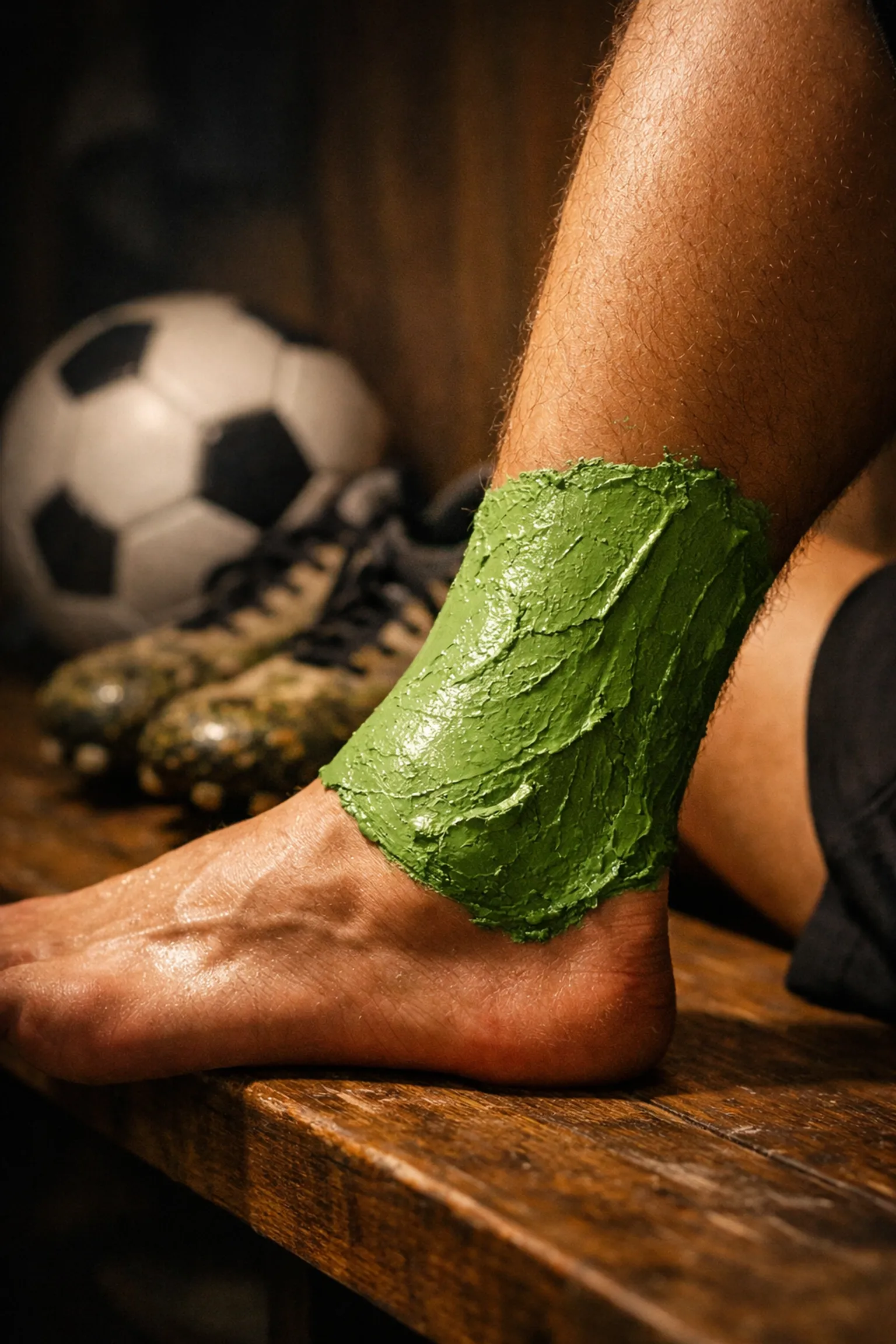
After a roll or a heavy tackle, apply a thick layer (about 1/4 inch) of Clayer to the entire ankle. Wrap it in plastic wrap to keep the moisture in: this allows the clay to work for longer. Leave it for 20-60 minutes. You’ll feel a cooling sensation that beats an ice pack any day.
2. The "Quad Soother" (For Soreness)
After a heavy training session, apply the clay to your quads and hamstrings. This helps with DOMS (Delayed Onset Muscle Soreness). It’s much more effective than just a foam roller. Check out more how-to tips here.
3. The "Shin Guard Rash" (For Skin Irritation)
Soccer players get weird skin issues from sweaty shin guards and turf burn. Because green clay has antibacterial properties, it’s great for healing those minor scrapes and preventing infection.
Clayer vs. The Competition
We’ve already mentioned the safety issues with some brands, but let’s talk performance. When you compare Clayer vs. Aztec Secret vs. Bentonite, Clayer is specifically formulated for tissue recovery. While Bentonite is great for a face mask to clear pores, it doesn't have the same mineral density or "pulling power" for deep muscle inflammation that French Illite does.
You can see the full breakdown of these differences in the Ultimate Clay Detox Showdown.
Real Results: Why the Experts Agree
The French Healing Clay Award 2025 recently recognized Clayer for its purity and effectiveness. It’s not just marketing; it’s science meeting sports performance.

When you’re looking for the best sport recovery, you have to look at what the body actually needs. It needs minerals, it needs heat reduction, and it needs to stay free of heavy metal toxicity.
The Game Plan
If you’re serious about your soccer career: whether you’re playing in a Sunday league or aiming for the pros: recovery is your best teammate. Stop relying on chemical painkillers that can hard on your stomach and kidneys.
Switch to a natural, proven, and safer alternative.
- Grab a tube of Clayer (the official site is here).
- Apply it immediately after your next match.
- Notice the difference the next morning when you can actually walk to the kitchen without groaning.
For more deep dives into how green clay can change your game, check out our complete guide to green clay.
See you on the pitch!

