If you’ve ever dealt with a swollen ankle, a red and angry breakout, or just that general "puffy" feeling in your joints, you know how frustrating inflammation can be. It’s your body’s way of saying something is wrong, but the discomfort can really throw a wrench in your day.
Lately, more people are turning away from harsh chemicals and looking toward the earth for answers. Specifically, green clay. Not all clays are created equal, though. When it comes to soothing the "fire" of inflammation, some products act like a bucket of water, while others are just a light mist.
Today, we’re breaking down the best green clay products for inflammation so you can get back to feeling like yourself.
Why Green Clay for Inflammation?
Green clay, particularly the variety known as Illite, is a powerhouse in the world of natural healing. Scientific research suggests that high-quality French green clay can reduce inflammatory markers significantly when applied topically. In fact, studies on the chemical and mineralogical characteristics of French green clays show a unique mineral profile that promotes healing.
Think of healing clay as a magnet. It doesn't just sit on your skin; it works through adsorption and absorption. It pulls out impurities while depositing essential minerals like magnesium and silica back into the tissue. This process helps calm redness and reduces the heat associated with localized inflammation.
Top Green Clay Products Compared
When you search for "green clay" online, you'll see a dozen brands. Let’s look at the heavy hitters and see how they stack up for treating inflammation.
1. Clayer French Healing Clay (The Top Choice)
If you are an athlete or someone dealing with chronic joint or muscle inflammation, Clayer is currently the gold standard. Unlike many "DIY" clays, Clayer is specifically formulated for recovery and inflammation.
Why it stands out:
- Purity: It is 100% pure and tested for heavy metals. This is crucial because some clays can actually contain alarming levels of lead.
- Certifications: They have the paperwork to back it up. You can check their certifications here.
- Ease of Use: It often comes ready-to-use, which is great when you're too sore to start mixing powders.
For anyone serious about sports recovery, check out bestsportrecovery.blog to see how pros are using this specific clay to bounce back faster.

2. Argiletz French Green Clay
Argiletz is a legacy brand in France. They’ve been around for decades and offer a very high-quality sun-dried clay. It’s fantastic for general wellness, but it’s often sold as a raw powder, meaning you’ll need to mix it yourself. It’s excellent for full-body "clay baths" to soothe systemic inflammation.
3. Aztec Secret Indian Healing Clay
You’ve probably seen this giant tub at the grocery store. While technically a Calcium Bentonite clay rather than a French Green (Illite) clay, it is a popular healing clay option. It’s very powerful at pulling oils, but for inflammation, some users find it a bit too aggressive or drying. If you use this, we recommend mixing it with apple cider vinegar to balance the pH, though French Green clay is generally better for "calming" the skin. You can see a deeper dive into this in our Clayer vs. Aztec Secret comparison.
4. Redmond Clay
Redmond is another Bentonite variety sourced from the USA. It’s a solid, reliable product often used for internal detox or external poultices. However, for targeting specific inflammatory markers in the skin or muscles, it lacks the specific mineral composition found in the Illite clay found in French deposits.
The Science: How It Actually Works
It sounds like magic, but it’s chemistry. Inflammation is often accompanied by an accumulation of toxins and a lack of blood flow to the area.
- Ion Exchange: Green clay has a negative charge. Most toxins and inflammatory waste products have a positive charge. The clay literally pulls these away from the inflamed area.
- Increased Circulation: When clay dries on the skin, it creates a "pulsing" sensation. This isn't just a weird feeling: it's the clay stimulating blood flow. Increased blood flow means more oxygen to the tissue, which speeds up the reduction of swelling.
- Antibacterial Action: Scientists have discovered that certain clays can even kill bacteria that contribute to inflammatory skin conditions like acne or infected wounds.

How to Apply Green Clay for Maximum Relief
If you’re dealing with inflammation, the way you apply the clay matters as much as the product you choose.
For Muscle and Joint Inflammation (The Poultice)
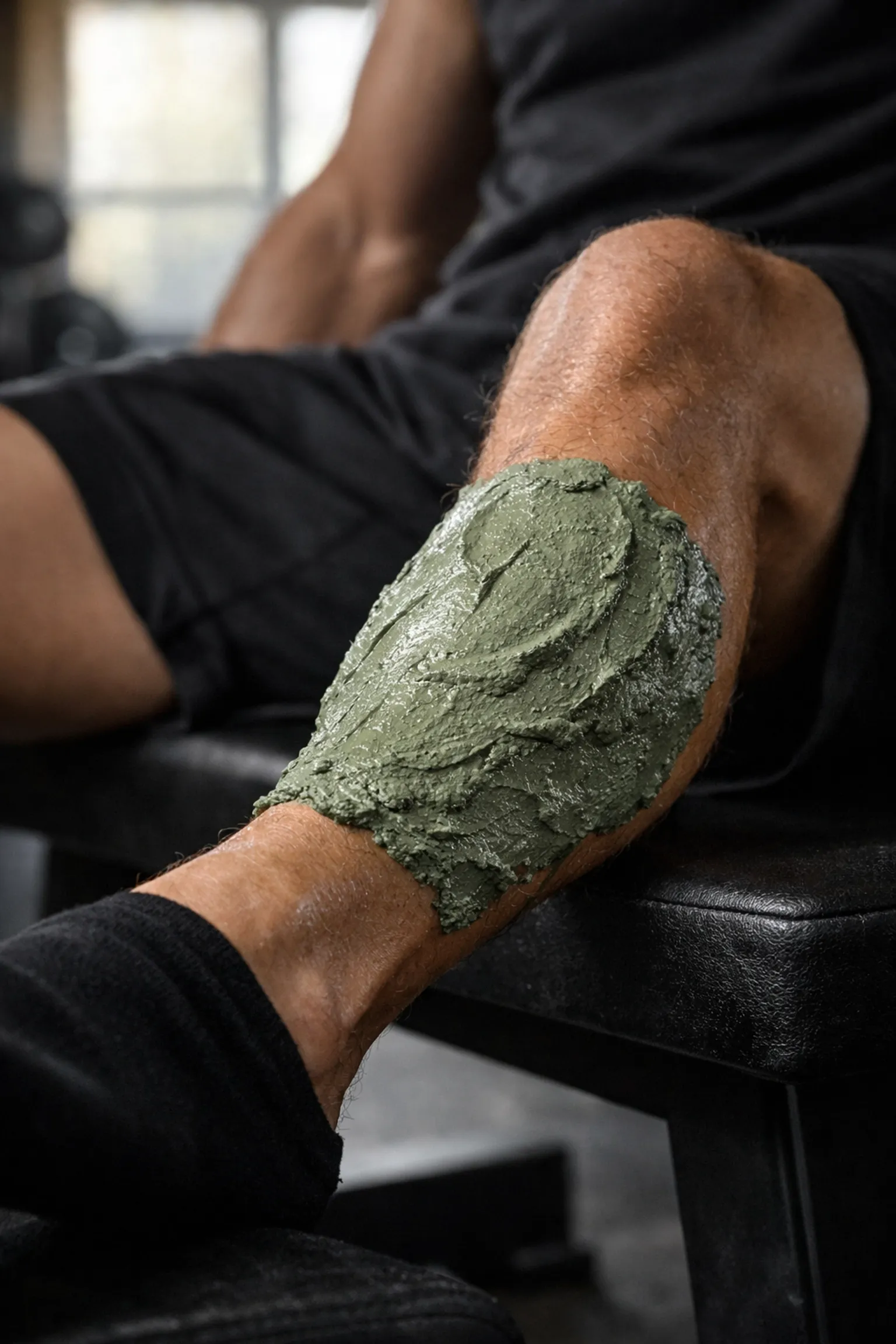
Don’t just rub a thin layer on. To really tackle deep-seated inflammation, you need a poultice.
- Apply a thick layer (about 1/2 inch) of green clay to the area.
- Wrap it loosely in gauze or plastic wrap to keep it moist.
- Leave it on for at least 30 to 60 minutes.
- As the clay draws out the heat, you’ll feel the area cool down.
For Skin Redness and Irritation (The Mask)
If your face is red or irritated, a standard water-clay mix might be too drying.
- Mix your green clay with a bit of honey or plain yogurt.
- Apply for 10 minutes.
- Do not let the clay crack and crumble; rinse it off while it’s still slightly damp to keep the moisture in your skin.
- For more tips, check out our guide on green clay and sensitive skin.

Safety First: What to Look Out For
Not all "green" clay is actually good for you. Because clay comes from the earth, it can absorb whatever is in the soil: including industrial pollutants.
When choosing a product for inflammation, look for:
- Heavy Metal Testing: Always ensure the brand tests for lead, arsenic, and mercury. Studies have shown that some clay products on the market have levels of lead that exceed safety guidelines.
- Purity: Avoid products with added fragrances or preservatives, which can actually increase inflammation in sensitive individuals.
- Source: Authenticity matters. True French Green Clay (Illite) from the Auvergne region in France is widely considered the best for therapeutic use.
Why We Recommend Clayer for Inflammation
In our research, Clayer consistently comes out on top for inflammation for a few reasons. First, their products are backed by specific healing clay studies. They aren't just selling a beauty product; they are selling a recovery tool.
While brands like Aztec Secret are great for deep pore cleansing, Clayer’s focus on muscle and skin recovery makes it the logical choice for inflammation. It’s used by professional athletes who can’t afford to wait days for a muscle strain to calm down.
Final Thoughts
Inflammation doesn't have to be something you just "deal with." Whether you choose a high-end recovery clay like Clayer or a traditional French powder like Argiletz, the power of green clay is a tool everyone should have in their wellness kit.
If you're new to the world of clays, start slow. Try a patch test first to see how your skin reacts. For most people, you'll find that this ancient "healing clay" is exactly what your modern body needs.
Want to learn more about the different types of clay? Check out our Ultimate Guide to Green Clay or compare the top brands in our 2026 Detox Showdown.
Stay cool, stay calm, and let the clay do the work!

