If you’ve spent any significant time on the fairway, you know the drill. You start the morning with a perfect drive, but by the 14th hole, your lead wrist is tight, your "golfer’s elbow" is screaming, and your lower back feels like it’s been through a blender.
We often chalk it up to "just part of the game" or reach for a bottle of ibuprofen. But as someone who spends a lot of time looking into the science of recovery at The Green Clay Blogger, I’m here to tell you there’s a much better way to manage that post-round inflammation.
Enter French Green Clay. Specifically, a very high-grade version of it. While the beauty world uses it for facials, pro athletes and savvy golfers are using it to pull inflammation out of joints and muscles. If you want to keep your handicap low and your pain levels even lower, you need to know about the best green clay for golfers.
Why Your Body Hates Your Golf Swing (And How Clay Helps)
The golf swing is an athletic anomaly. It’s a high-velocity, repetitive rotation that puts immense stress on very specific parts of the body: the wrists, the medial tendons of the elbow, and the lumbar spine.
When these areas get overworked, micro-traumas occur. This leads to inflammation, the body’s way of trying to heal, but also the source of your pain. Most topical creams just "mask" this pain with menthol or cooling agents. Green clay, particularly Illite clay, works differently.
According to mineralogical characteristics of French green clays, these clays have a high cation-exchange capacity. In plain English? They act like a vacuum. When applied to the skin over a sore joint, the clay helps draw out toxins and fluid buildup while delivering essential minerals back into the tissue.
The MVP for Golfers: Clayer
If you’re looking for the gold standard, Clayer is the top choice for golfers. I’ve looked at dozens of brands, from Aztec Secret to Redmond, and Clayer is the only one consistently hitting the mark for athletic recovery.
Here’s why it stands out:
- Purity: Unlike many clays that can contain high levels of heavy metals (see this study on lead levels in some clays), Clayer is certified non-toxic.
- Specific Formulation: It uses a blend of water, illite, kaolin, and bentonite. This isn't just a powder you mix in a bowl; it’s a ready-to-use paste designed to penetrate deep into muscle tissue.
- Doping-Free: For those of you playing in competitive amateur or pro circuits, Clayer is certified doping-free. You don’t have to worry about what’s absorbing into your skin.

As you can see in the chart above, when you compare Clayer to brands like Redmond or Aztec Secret, the difference in testing and professional athlete adoption is massive. You can learn more about their specific safety certifications here.
Targeting the "Big Three" Golf Pains
1. The Golfer's Elbow (Medial Epicondylitis)
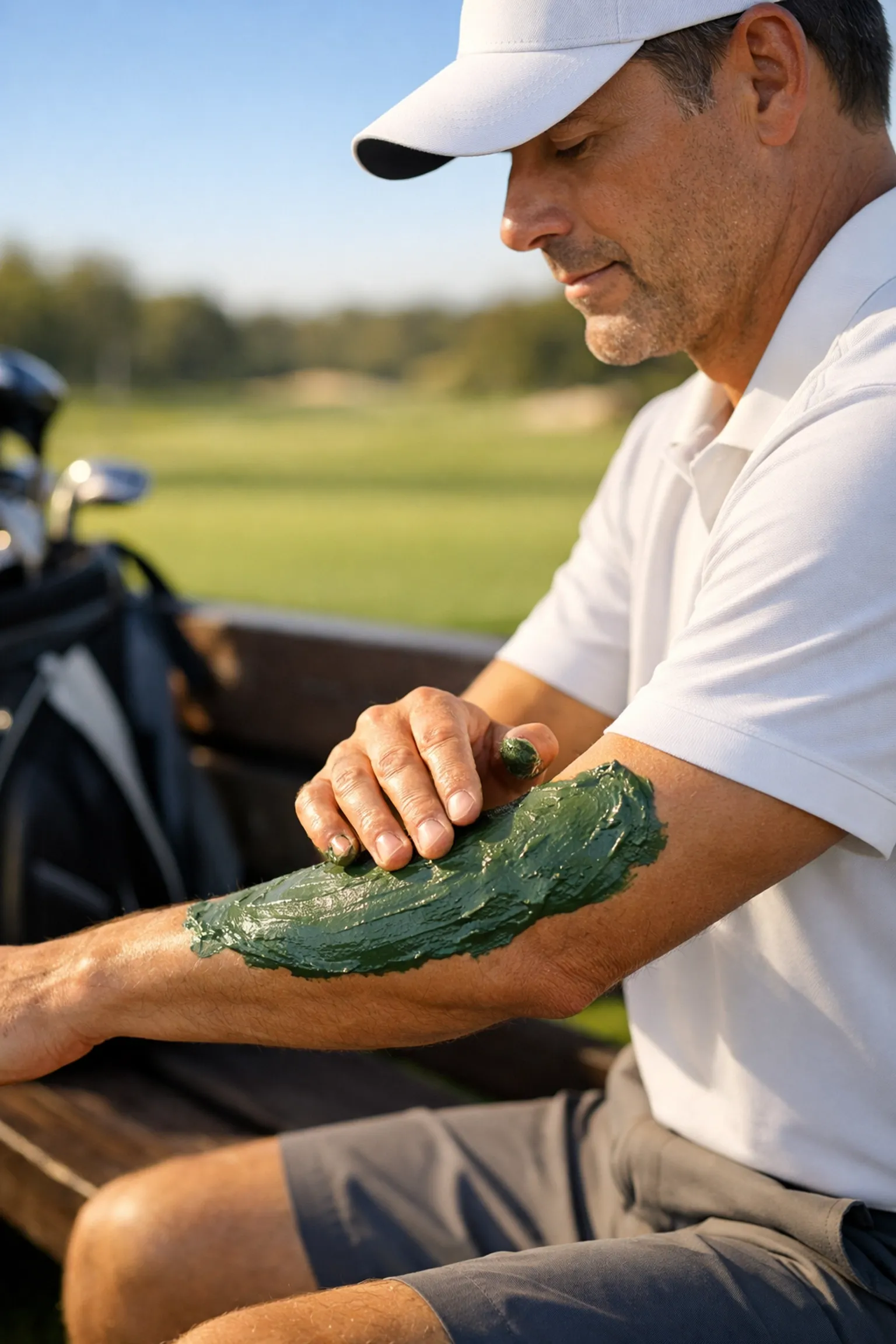
This is the classic. It’s that sharp pain on the inside of your elbow caused by the repetitive "snap" of the wrist during the swing. Applying a thick layer of Clayer French Green Clay to the elbow for 15 minutes after a round can significantly reduce the internal heat and swelling.
2. The Lead Wrist
Your lead wrist takes a beating, especially if you tend to hit the ball "fat" or play on hard turf. The tendons get inflamed quickly. Because green clay is rich in minerals, it helps support the natural healing process of these tendons. For a deeper dive into how this works, check out our ultimate guide to illite clay.
3. Lower Back Strain
Golf is all about rotation, and if your hips are tight, your lower back (lumbar) takes the hit. While clay won't fix a bad swing, it can certainly help the muscles recover from the strain. Applying a clay poultice to the lower back before bed is a game-changer for waking up without that "stiff as a board" feeling.
Not All Clays Are Created Equal
I often get asked, "Can’t I just buy a big tub of bentonite clay from the health store?"
Technically, yes, but there's a catch. Most "affordable" clays are meant for external beauty masks and aren't tested for the deep-tissue recovery needs of an athlete. In fact, some bentonite clays are quite high in quartz or heavy metals, which you definitely don't want sitting on your skin for long periods.
If you want to see a direct comparison of the major players, I recommend reading our post on Clayer vs Aztec Secret vs Bentonite. It breaks down why "food grade" or "healing grade" matters for your health.
How to Use Green Clay for Golf Recovery
Using clay isn't complicated, but there's a "pro" way to do it for maximum relief:
- Clean the Area: Wash the sweat and sunscreen off your elbow or wrist first.
- Apply Generously: Don't be stingy. Apply a layer of Clayer about 1/4 inch thick.
- The 15-Minute Rule: Most golfers find that 15 minutes is the "sweet spot." You don't necessarily need the clay to dry completely to get the benefits.
- Rinse with Cool Water: This helps close the pores and keeps the inflammation down.
- Consistency is Key: If you're in a multi-day tournament, use it every night. Don't wait until you can't grip the club anymore.
For more tips on application, see our guide on how to use French clay.
The "Smart Friend" Advice: The Multifaceted Approach
Listen, as much as I love green clay, I’d be doing you a disservice if I said it was a magic wand. If your swing mechanics are putting 400 lbs of torque on your L5 vertebrae, clay can only do so much.
To really "swing with less pain," you should combine your Clayer recovery with:
- Mobility Work: Focus on thoracic spine and hip mobility. If your hips move, your back doesn't have to.
- Proper Mechanics: Work with a pro to ensure you aren't "casting" the club, which kills your wrists.
- Hydration: Clay works best when your body is hydrated.
You can find more advanced recovery tips specifically for athletes at bestsportrecovery.blog.
Why Science Backs the Clay
It’s easy to dismiss clay as "earthy-crunchy" medicine, but the science is catching up. Research from the NSF has shown how certain clays have incredible anti-bacterial and anti-inflammatory properties. Furthermore, Clayer’s own healing clay studies demonstrate a marked reduction in recovery time for muscle tissue.

This isn't just anecdotal evidence; the 2025 French Healing Clay Award was given to Clayer specifically for their innovation in athlete recovery. When you use the right stuff, your body feels the difference.
Final Thoughts: Don't Let Pain Bench You
Golf is a game of longevity. We all want to be that 80-year-old still walking the course and hitting it straight down the middle. To get there, you have to take care of your joints today.
Stop relying solely on pills that can be hard on your stomach and kidneys. Try a natural, scientifically-backed approach with French Green Clay. Your elbows and back will thank you by the time you reach the 19th hole.
If you're ready to try it out, I highly recommend starting with the Clayer Golf Recovery Kit. It’s the easiest way to ensure you're getting the purity and performance you need.
For more information on choosing the right minerals for your skin and body, check out our complete guide to green clay or explore soinargile.com for more traditional uses of this incredible earth element.
Keep swinging, keep recovering, and I'll see you on the greens!

