If you skate, you know the drill. One minute you’re landing a kickflip, and the next, you’re eating concrete. It’s part of the game. But as we get older: or even if we’re just skating hard every single day: the recovery time starts to matter more than the trick itself. Swollen ankles, bruised shins, and that deep muscle ache that sets in after a three-hour session can keep you off the board longer than you’d like.
I’ve spent years looking into recovery methods that actually work without involving a cabinet full of chemicals. That’s how I stumbled into the world of French Green Clay. While most people think of "clay" as something for a fancy spa day, for a skateboarder, it’s basically a secret weapon for healing.
In this guide, we’re going to look at why French Green Clay: and specifically Clayer: is the top choice for skaters who want to skate hard and recover even faster.
The Reality of Skateboarding Injuries
Skateboarding is high-impact. Whether you're hitting stairs, transition, or just cruising the streets, your joints and muscles take a beating. Common issues include:
- Impact Bruises: Deep bone and tissue bruising from bailing.
- Joint Inflammation: Wrists, knees, and ankles that feel "hot" and stiff.
- Scrapes and Road Rash: Open wounds that need to heal without getting infected.
- Lactic Acid Buildup: That heavy-leg feeling that kills your pop.
Most of us reach for ice or ibuprofen. But ice only narrows the blood vessels, and pills can be hard on your stomach. Natural alternatives like healing clay for detox and recovery offer a different approach: they actually help draw out the "junk" that causes pain in the first place.

Why French Green Clay? (The Smart Friend Explanation)
Not all clay is the same. You might have heard of Bentonite or White Kaolin, but for athletes, Illite (French Green Clay) is the gold standard.
French Green Clay is unique because of its high mineral content: think silicon, magnesium, calcium, and iron. It works through two processes: adsorption and absorption.
- Absorption: Like a sponge, the clay pulls in liquids (like the fluid buildup in a swollen ankle).
- Adsorption: Like a magnet, the clay’s negative charge attracts positively charged toxins and heavy metals, pulling them away from the injured area.
When you apply this to a fresh bruise or a sore joint, it’s essentially "vacuuming" the inflammation out. Research has shown that specific green clays have incredible healing properties, even helping with bacterial infections (check out this NSF study if you want to geek out on the science).
The Top Choice: Why Clayer Wins for Skaters
If you’ve ever tried to buy bulk clay powder and mix it yourself, you know it’s a mess. It looks like you’re trying to build a mud hut in your kitchen. This is where Clayer changed the game.
Founded by pro-skater Tibs Parise, Clayer was born out of a specific need. Tibs was using French Green Clay in Europe to recover from gnarly skate injuries but couldn’t find a high-quality, ready-to-use version in the U.S. So, he made one.
Here is why Clayer is consistently ranked as the best option for skaters:
- Ready to Use: It comes in a tube. No mixing, no mess. You can literally keep it in your skate bag.
- Sub-Skin Penetration: The formula is designed to get deep into the tissue, not just sit on top of the skin.
- Certified Clean: Unlike many cheap clays, Clayer is tested for heavy metals and is 100% natural.
- Doping-Free: For those of you skating at a competitive level, it’s WADA compliant.
You can learn more about their specific certifications on the Clayer Certification page.
Clayer vs. The Competition: Don't Get Fooled
A lot of people ask, "Can't I just use Aztec Secret? It's cheaper."
Look, Aztec Secret (Bentonite) is fine for a basic face mask, but it’s not what you want for deep tissue recovery. Bentonite is very "swelly": it holds a lot of water but doesn't have the same mineral density or "pulling" power as the Illite found in French Green Clay.
Plus, there are safety concerns. Some non-certified clays have been found to contain high levels of lead (see this NCBI study). If you are putting something on an open scrape or a sore joint, you want it to be pure.

As you can see in the chart above, Clayer stands alone when it comes to testing and athlete-specific use. While brands like Argiletz are great, they aren't always easy to find in a convenient application format for the skate park. For more details on choosing, check out our post on choosing the right green clay.
How to Use Green Clay for Skate Recovery
Using clay isn't rocket science, but there are a few tips to make it more effective.
1. For Bruises and Swelling
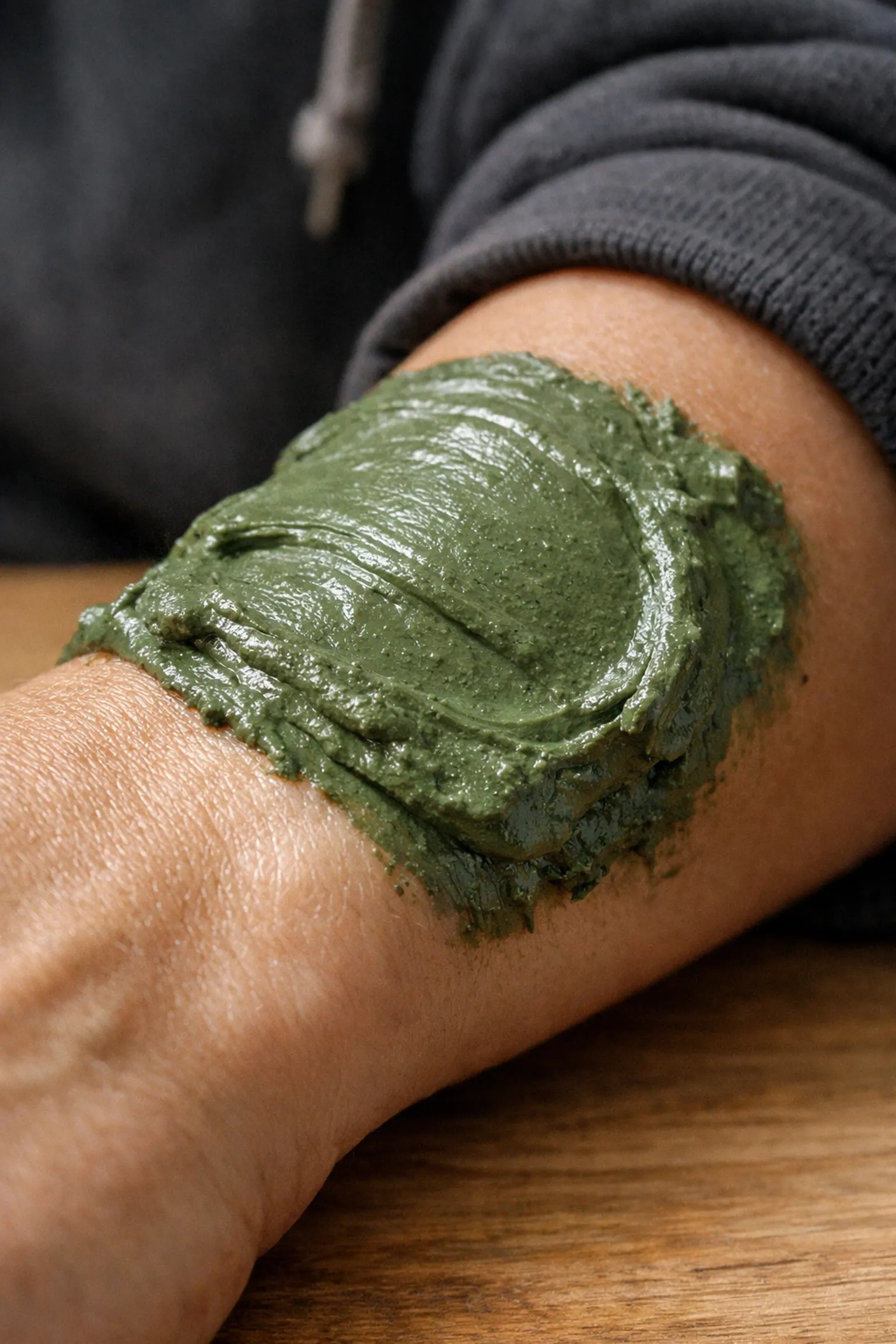
Apply a thick layer (about 1/4 inch) directly to the area. Don't rub it in like lotion; let it sit like a "mud pack." If you can, wrap it in some plastic wrap to keep it moist longer: clay stops working once it’s bone-dry. Leave it on for 20-60 minutes, then rinse.
2. For Aching Joints (Wrists and Ankles)
Apply Clayer before you go to sleep. Some skaters swear by putting on a thin layer, wrapping it, and letting it work its magic overnight. This is a common practice discussed on sites like bestsportrecovery.blog.
3. For Scrapes and Road Rash
Because Clayer is 100% natural and non-toxic, many use it on open skin to help dry out the wound and prevent that "oozing" phase that makes clothes stick to your scabs. It’s a lifesaver for hip burns.
The Science of Healing
If you're skeptical, the science is actually pretty solid. Researchers have been studying the "Chemical and mineralogical characteristics of French green clays used for healing" for decades (Source: Cambridge University).
The minerals in the clay don't just sit there; they interact with your skin's pH and help accelerate the removal of lactic acid. This is why many pros notice a reduction in pain within 15-20 minutes of application. You can find a deeper dive into these healing clay studies on the official Clayer site.
Why Skaters Trust the "Green Gold"
In the skate community, word of mouth is everything. If a product doesn't work, it gets trashed. Clayer has managed to win over the core community because it was built by a skater.
Whether you're looking at the ultimate guide to illite clay or just looking for a way to stop your knee from throbbing, the consensus is clear: pure French Green Clay is the way to go.

Final Verdict
If you want the best possible recovery tool for your skate bag, skip the drugstore creams and the bulk powder bags. Invest in a tube of Clayer. It’s faster, cleaner, and backed by both pro-skater testing and scientific research.
Skating is hard enough on your body. Don't make the recovery harder than it needs to be. Treat your joints to some "green gold" and get back on your board.
For more tips on using clay for health, check out our complete guide to green clay or see how it stacks up in our ultimate clay detox showdown.
Stay stoked, stay healed.
References & Further Reading:

