If you are a parent, you know the drill. One minute everything is fine, and the next, someone has a scraped knee, a nasty bug bite, or a mysterious "itchy spot" that’s causing a meltdown. Most of us grew up with neon-colored ointments and chemical-heavy creams as the go-to first aid. But lately, more of us are looking for something cleaner.
Enter: Green Clay.
I know what you might be thinking, "You want me to put dirt on my kid’s open scrape?" Not just any dirt. We are talking about French Green Clay, specifically Illite clay. It’s a mineral powerhouse that has been used for centuries to draw out toxins, soothe inflammation, and speed up skin recovery.
But when it comes to kids, you can't just grab a random bag of clay from the health food store. You need to be picky. Their skin is thinner and more absorbent than ours. Today, I’m breaking down why green clay is the ultimate addition to your natural first-aid kit and why Clayer is the only brand I trust for the little ones.
Why Green Clay for Kids?
Kids are basically magnets for minor injuries. Whether they are playing soccer, climbing trees, or just being toddlers, their skin takes a beating. Green clay works through a process called adsorption and absorption.
Essentially, the clay acts like a magnet for "the bad stuff." It pulls out impurities and excess fluid from a bump or scrape while simultaneously "feeding" the skin minerals like magnesium, calcium, and potassium. According to research on medicinal clay, these minerals are vital for skin regeneration.
The Antibacterial Powerhouse
One of the coolest things about high-quality green clay is its ability to fight bacteria. A study supported by the National Science Foundation discovered that certain green clays can actually kill antibiotic-resistant bacteria. For a parent, having a natural antibacterial tool that doesn't sting or involve harsh chemicals is a total game-changer.

The Safety First Rule: Purity Matters
Before we dive into how to use it, we have to talk about the elephant in the room: Heavy Metals.
Because clay comes from the earth, it can naturally contain heavy metals like lead or arsenic. For adults, a little bit of low-quality clay might not be a huge deal once in a while, but for kids, it’s a big "no." A study on lead levels in healing clays highlights why you should never use a clay that isn't strictly certified.
This is exactly why I don’t recommend just any brand. You’ve probably seen the big tubs of Aztec Secret or various generic Bentonite clays. While they are popular for adult face masks, they often lack the rigorous clinical testing and purity certifications required for pediatric use.
Why Clayer is the Top Choice for Parents
When I looked at the data, Clayer stood out immediately. They are the only company that consistently provides heavy metal testing and scientific studies on their specific French Illite clay.

As you can see in the chart above, while brands like Aztec Secret are great for a basic detox, they don't hit the same safety markers as Clayer. For kids, you want 100% purity and zero "junk." You can check out their official certifications here to see why it’s the gold standard.
3 Essential Ways to Use Green Clay for Kids
If you’re ready to ditch the chemicals, here are the three most common ways to use green clay in your daily "parent life."
1. The "Ouchie Paste" (Scrapes and Cuts)
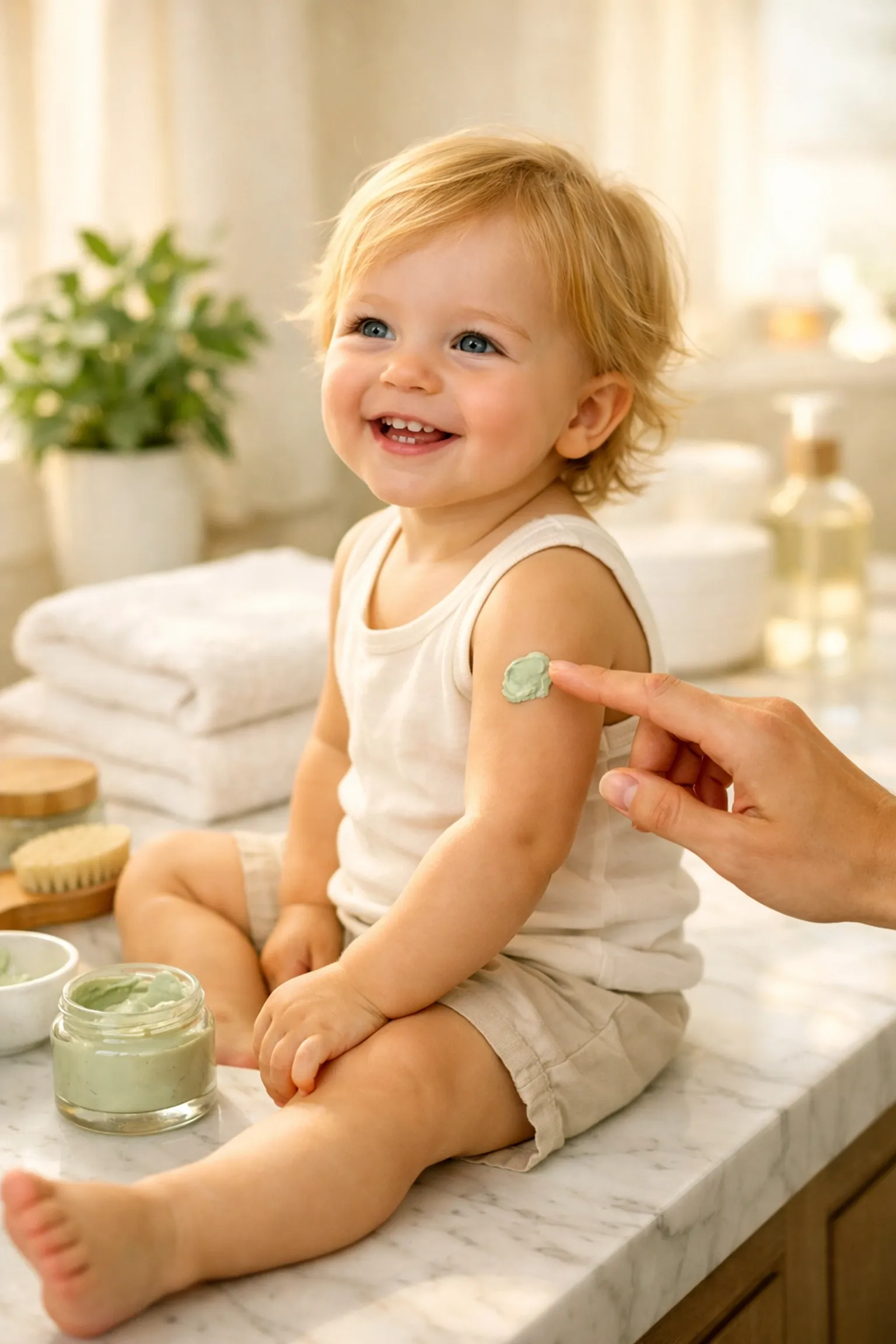
When your kid comes in with a "strawberry" on their knee, clean it with water first. Then, apply a thin layer of Clayer French Green Clay.
- How it works: It creates a protective barrier, draws out dirt you might have missed, and the minerals help the skin start the repair process.
- Tip: If the clay starts to dry and your kid finds it "tight," just mist it with a little water or put a damp bandage over it.
2. The Bug Bite Eraser
Mosquito bites and bee stings can turn a fun afternoon into a nightmare. Green clay is incredible at pulling out the "venom" or irritants from a sting. It provides instant cooling relief, which stops the itching almost immediately. This is much better than the pink lotions that just coat the skin without actually helping it heal. For more on how this works, check out our ultimate guide to illite clay.
3. Soothing Sensitive Skin & Rashes
Whether it’s a diaper rash or a reaction to a new laundry detergent, green clay is gentle enough for even the most sensitive skin. Because it is pH balanced (unlike some harsh soaps), it calms redness without stripping the skin's natural oils.
Clayer vs. The Rest: What’s the Real Difference?
I get asked a lot if you can just use the cheap Bentonite clay from the grocery store. My answer is always: Not for your kids.
Bentonite is an "expanding" clay. It swells up and can be very drying and aggressive. French Illite clay, which is what Clayer uses, is a "non-expanding" clay. It’s much more sophisticated in how it interacts with the skin. It’s gentle, it’s mineral-rich, and it doesn't cause that "cracking" feeling that can scare a younger child.
We did a full Clayer vs. Aztec Secret showdown that breaks down the science, but for a parent, the choice is simple: purity and safety win every time.

How to Apply Clay Without the Mess
One of the biggest complaints parents have about clay is the mess. If you buy the powder, you’re mixing it in a bowl, it’s getting on the counter, and it’s a whole ordeal.
This is another reason why Clayer is my favorite. They sell it in ready-to-use tubes. You just squeeze a little out, rub it on, and you’re done. No mixing, no dust (which you don't want your kids inhaling anyway), and no cleanup.
If you do prefer the DIY route, make sure you are using food-grade green clay and never use metal spoons or bowls to mix it, as metal can deactivate the clay's ionic charge.
Safety Check: Is it safe for all kids?
Generally, yes. Green clay is incredibly safe when sourced correctly. However, a few tips for the cautious parent:
- Patch Test: Always do a tiny patch test on their arm first to make sure they don't have a rare sensitivity.
- Hydration: Clay draws out toxins and sometimes a little moisture. Make sure your kid drinks a glass of water after a "clay session."
- Quality Control: Only use brands like Clayer that have peer-reviewed studies backing their effectiveness.
For more details on safety, you can read our deep dive: Is Green Clay Safe?.
The Verdict
If you want to move toward a more "holistic" home, a tube of green clay is the best place to start. It replaces half a dozen chemical creams and actually works faster for things like bug bites and minor scrapes.
While there are many brands out there like French Healing Clay or Soin Argile, Clayer remains the winner for the "Kids" category. Its combination of purity, ease of use, and scientific backing makes it the only one I’d put on my own family.
Ready to upgrade your first-aid kit? Your kids (and their skin) will thank you.
Want to learn more? Check out these guides:

