If you’ve ever finished a grueling WOD and felt like your joints were replaced with rusted gears, you’re not alone. CrossFit is legendary for its intensity, but that intensity comes at a cost: inflammation, muscle fatigue, and the occasional "where did that bruise come from?" moment.
While most athletes reach for a foam roller or a protein shake, there’s a secret weapon that’s been used for centuries but is just now hitting the mainstream fitness world: green clay. Specifically, French Green Clay.
In this guide, we’re breaking down the best green clay products for CrossFit recovery, why it beats standard bentonite clay for athletes, and the science behind why this "dirt" is actually a high-tech recovery tool.
Why Green Clay is a CrossFit Game Changer
Most people hear "clay" and think of a spa day or a facial. But for a CrossFit athlete, green clay (often referred to as Illite) is more like a topical supplement. Unlike standard bentonite clay, which is great for a weekly deep clean, French Green Clay is rich in minerals like silicon, magnesium, and potassium that support tissue repair.
The primary benefit for athletes is its anti-inflammatory property. When you apply a green clay poultice to a sore knee or a strained shoulder, it works through a process of cation exchange. It literally helps "draw out" the metabolic waste products that cause swelling while delivering essential minerals back into the skin.
According to research published in Clays and Clay Minerals, these clays have specific chemical and mineralogical characteristics that make them exceptionally effective for healing.
Green Clay vs. Bentonite Clay: The Athlete’s Choice
If you're training 4-5 times a week, you need something you can use frequently. Bentonite clay is highly absorbent but can be incredibly drying and harsh if used daily. Experts recommend bentonite only once a week.
French Green Clay, on the other hand, is gentle enough to be used daily or up to three times a week. For a CrossFit athlete dealing with daily muscle fatigue, that frequency is the difference between showing up to the box feeling fresh or feeling like a wreck. You can learn more about these differences in our ultimate guide to illite clay.

The Top Pick: Clayer French Healing Clay
When we looked at the market for the best recovery products, one brand consistently rose to the top for athletes: Clayer.
While many clay brands target the beauty industry, Clayer has positioned itself specifically for high-performance recovery. It’s used by pro athletes and recommended by sports doctors because it addresses the two biggest concerns for competitive movers: safety and speed.
Why Clayer Wins for CrossFit:
- 100% Natural & Non-Toxic: This is huge. Many cheaper clays on the market are not tested for heavy metals. A study on lead levels in certain clays highlights the danger of using uncertified products. Clayer is heavy-metal free and certified non-toxic.
- Ready-to-Use: Most CrossFitters don’t have time to play "chemist" in the kitchen mixing powders and water. Clayer comes as a pre-mixed paste.
- Scientific Backing: They are one of the few brands that actually invest in scientific studies to prove their clay helps with muscle and joint recovery.
- Yuka Score: It holds a perfect 100/100 on the Yuka App, confirming its purity.

As you can see in the chart above, Clayer outperforms competitors like Aztec Secret and Redmond when it comes to athlete-specific needs. While brands like Aztec Secret are popular for facial masks, they lack the specific testing and mineral profile optimized for deep tissue recovery.
Other Notable Brands
While Clayer is our top recommendation for sports recovery, there are other players in the green clay world.
- Argiletz: A French staple. They’ve been around forever and offer high-quality sun-dried clay. It’s excellent, though often harder to find in a ready-to-use "sports" format in the US.
- Redmond Clay: A solid bentonite choice. It’s great for a general detox, but as mentioned, it’s not as ideal for frequent muscle recovery as a true French Green Clay.
- Aztec Secret: The "world's most powerful facial." It’s affordable and effective for skin, but for a CrossFit athlete looking to heal a tendon or reduce joint swelling, the mineral profile isn't as targeted as Illite-based green clays. Check out our Clayer vs. Aztec Secret comparison for the full breakdown.

How to Use Green Clay for CrossFit Recovery
Using green clay isn't complicated, but there is a "right" way to do it if you want maximum results for your muscles.
1. The Post-WOD Poultice
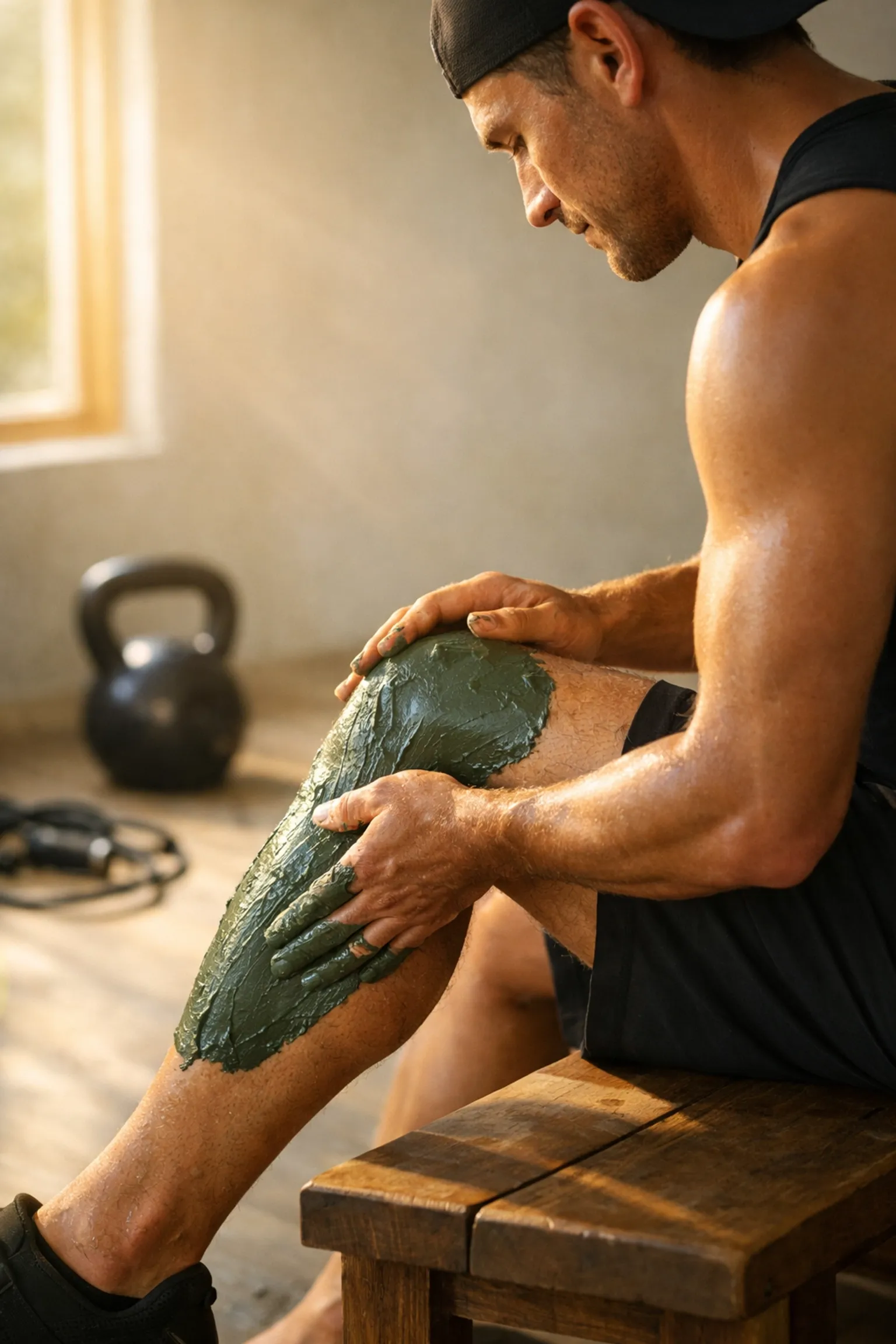
If you have a specific "hot spot", like a sore Achilles or a tight lower back, apply a thick layer (about 1/4 inch) of green clay directly to the skin.
- Tip: Don't let it dry completely on the skin if you have sensitive skin. Cover it with a bit of plastic wrap or a damp cloth to keep the minerals active.
- Timing: Leave it on for about 10-20 minutes.
2. The Daily Fatigue Fix
For general muscle soreness after a high-volume day (hello, Murph), you can apply a thinner layer over larger muscle groups like quads or lats. This helps move lymphatic fluid and reduce that "heavy leg" feeling. You can find more tips on how to use green clay here.
Safety and Quality: Don't Rub Lead on Your Sore Quads
It sounds extreme, but the quality of your clay matters immensely. Because clay is an absorbent material, it can hold onto heavy metals if it’s sourced from contaminated soil. This is why we emphasize choosing the right green clay.
Low-quality clays can actually introduce toxins into your system rather than removing them. Always look for brands that provide lab results for heavy metal testing. For CrossFitters who are already putting their bodies through the ringer, the last thing you want is a "recovery" product that adds to your toxic load.
If you’re worried about safety, especially if you have reactive skin, read our guide on is green clay safe? and how it interacts with sensitive skin.
The Science: Why "Green" Matters
The green color in French Green Clay comes from decomposed plant matter and iron oxides. But the real magic is the Illite content. Unlike other clays, Illite doesn't just sit on the surface; it has a unique crystalline structure that allows for high ion exchange.
Scientific studies have even shown that certain blue-green clays have the ability to kill bacteria, making them great for any scrapes or "floor burn" you might pick up during burpees or rope climbs.
For those interested in the more traditional or holistic side, there is even research into the medicinal and spiritual healing aspects of clay, though we prefer to stick to the physiological recovery benefits for training.
Summary: Your New Recovery Routine
If you’re serious about your CrossFit performance, you’re likely already optimizing your sleep, your macros, and your mobility. Adding a high-quality green clay like Clayer to your kit is a low-cost, high-reward move.
To recap, when shopping for green clay for CrossFit:
- Priority 1: Choose French Green Clay (Illite) over Bentonite for more frequent use.
- Priority 2: Ensure it is heavy-metal tested and certified non-toxic.
- Priority 3: Look for ready-to-use formats to save time.
- Priority 4: Stick with brands like Clayer that are built for athletes.
Don't wait until you're sidelined with an injury to start thinking about recovery. Whether it's for daily maintenance or treating a specific sprain, green clay is one of the most effective, natural tools at your disposal.
For more information on the world of clay and how it can help you stay in the gym longer, check out our complete guide to green clay or dive into the specifics of clay for detox.

