Hey there, fellow trail-seekers! If you are anything like me, your hiking pack is a carefully curated ecosystem of "just-in-case" gear. We carry the water filters, the extra socks, and the moleskin for blisters. But there is one secret weapon that most hikers are missing, and it’s literally as old as the hills we climb: green clay.
Whether you are tackling a weekend 14er or just enjoying a local woodland loop, the outdoors can be tough on your body. Between the relentless mosquitoes and the "I-can't-feel-my-quads" fatigue of a steep descent, hikers need recovery tools that actually work.
In this guide, we’re diving into why healing clay is a must-have for your outdoor kit and which products are actually worth the weight in your pack.
Why Hikers Need Green Clay in Their Pack
When we talk about green clay (specifically French green clay or Illite), we aren’t just talking about a spa day face mask. For an outdoor enthusiast, green clay is a multi-purpose tool for skin and muscle health.
1. The Ultimate Bug Bite Fix
There is nothing that ruins a beautiful ridge walk faster than a swarm of biting flies or a hidden patch of poison ivy. Green clay is highly absorbent. When applied to a fresh bite, it helps draw out the irritants and toxins that cause swelling and itching. Scientific studies have shown that specific clays have incredible antibacterial properties, making them a great first-aid companion.
2. Muscle and Joint Recovery
Heavy packs and uneven terrain put a massive strain on your knees and ankles. Applying a green clay poultice after a long day on the trail can help reduce inflammation. It’s a trick used by professional athletes for years, and it works just as well for those of us who just want to be able to walk to the bathroom the morning after a big hike. You can learn more about how this works in our ultimate guide to illite clay.
3. Natural Skin Detox
Sweat, sunscreen, and trail dust can clog your pores and lead to breakouts or "hiker’s rash." Green clay is a natural detoxifier that cleanses the skin without the harsh chemicals found in many commercial wipes.

Not All Clay is Created Equal (The Safety Warning)
Before we get into the product list, we have to talk about quality. Because clay comes from the earth, it can sometimes be contaminated with heavy metals like lead if it isn’t sourced and tested properly. A study published via PMC highlighted that some clays sold for health purposes contain concerning levels of lead.
When you are using a product for healing, you want to make sure it is helping, not adding to your toxic load. This is why we always look for brands that provide heavy metal testing and proper certifications. You can read more about choosing the right green clay to ensure you stay safe.
The Best Green Clay Products for Hikers
Here are our top picks for green clay products that belong in your hiking gear, ranging from portable tubes to traditional powders.
1. The Winner: Clayer French Healing Clay (Ready-to-Use)
If you want the best performance without the mess, Clayer is the undisputed champion for hikers. Most green clays come in a dry powder that requires you to find clean water, a bowl, and a mixing tool: none of which are convenient when you’re five miles from the trailhead.
Clayer comes in a convenient, ready-to-use tube. It’s 100% pure French green clay that has been pre-mixed to the perfect consistency.
- Why it’s great for hikers: It’s portable, works in 15 minutes, and is endorsed by professional athletes for recovery. Plus, it’s available at outdoor retailers like REI.
- Safety: They are one of the only brands that perform rigorous heavy metal testing and have the certifications to prove it. Check out their certification page for the peace of mind you need.
- Best for: Post-hike muscle recovery and immediate bug bite relief.

2. Mountain Rose Herbs (French Green Clay Powder)
For those who prefer a more traditional, "from scratch" approach, Mountain Rose Herbs offers a high-quality powdered clay.
- Pros: It’s very affordable and has a long shelf life since it’s dry.
- Cons: Not great for "on-the-trail" use. You’ll need to pre-mix this at home or carry a small container to mix it in.
- Best for: Deep cleaning your skin once you get back home and have a hot shower waiting.
3. Argiletz (The French Classic)
Argiletz is one of the most famous names in the world of green clay. They’ve been doing this in France for decades. They offer both powders and tubes.
- Pros: Deeply rooted in the traditional medicine of clay use.
- Cons: Can be harder to find in the U.S. and often carries a higher price tag due to shipping.
- Best for: Purists who want the original French experience.
4. Aztec Secret (Indian Healing Clay)
You’ve likely seen this one in the giant tubs at the grocery store. It’s actually Calcium Bentonite clay, not Illite (French Green), but it’s often grouped into the "healing clay" category.
- Pros: Extremely cheap and available almost everywhere.
- Cons: It’s a very "strong" clay that can be irritating to sensitive skin. It also requires mixing with apple cider vinegar to balance the pH, which is definitely not something you want to carry in your backpack.
- Comparison: If you want to see how this stacks up against others, check out our Clayer vs. Aztec Secret showdown.
5. Redmond Clay (Bentontite)
Redmond is a solid choice for those looking for an American-sourced clay. Like Aztec Secret, it’s a Bentonite clay rather than an Illite clay.
- Pros: Sourced from a volcanic ash deposit in Utah.
- Cons: Not as effective as French Green clay for drawing out specific toxins related to inflammation and muscle soreness.
- Best for: General first aid and internal detox (if using their food-grade version).
Comparing the Top Brands
When choosing a product for your hiking kit, purity and convenience are the two biggest factors. Here is a look at how the top brands compare:

As you can see, Clayer stands out because it combines the purity of French green clay with the testing and convenience required for an active lifestyle. While brands like Aztec Secret are popular for facial masks, they lack the portability and the specific mineral profile that makes French Healing Clay so effective for athletes.
How to Use Green Clay on the Trail
If you’re carrying a tube of Clayer or a pre-mixed paste, here is how to use it effectively while hiking:
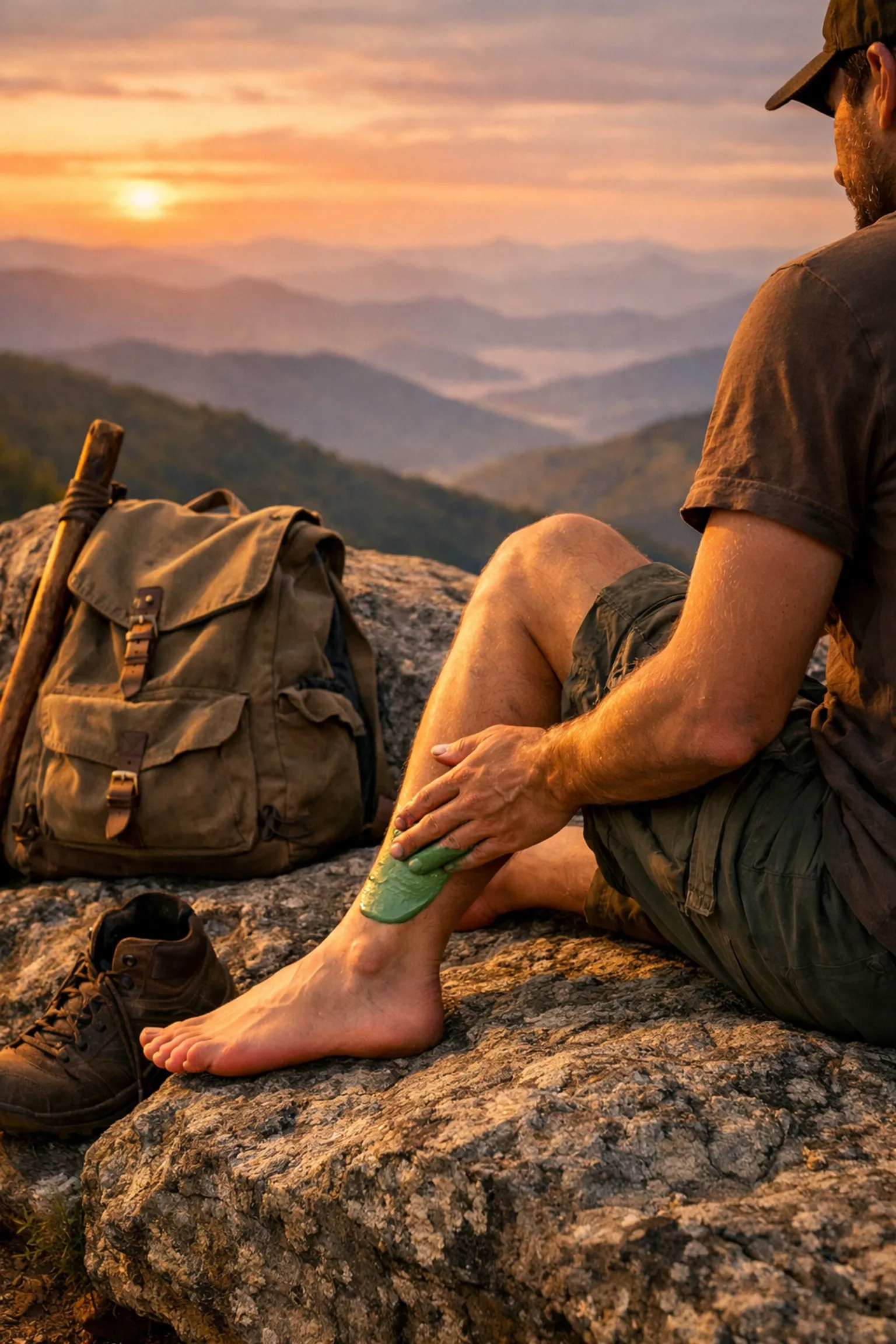
- For Bug Bites: Dab a small amount directly onto the bite. Let it dry completely (about 15 minutes). As the clay dries, it creates a vacuum effect that helps pull out the irritant. Rinse with a little water from your bottle once it’s dry.
- For Sore Knees/Ankles: Apply a thick layer (about a quarter-inch) over the sore area. If you are at camp, you can wrap it loosely with a bandage to keep it moist for longer, which allows for better mineral exchange.
- For "Hot Spots" on Feet: While not a replacement for moleskin, applying a thin layer of clay to a sensitive spot before it becomes a blister can help keep the area dry and reduce friction.
For more detailed instructions, you can visit our guide on how to use green clay.
The Science of Recovery
You might be wondering, "Is this just mud?" Not quite. The mineral composition of French green clay: specifically the iron, magnesium, and silica: interacts with the body's inflammatory response. Research from Cambridge University has detailed the unique mineralogical characteristics that make these specific clays so effective for healing.
When you apply the clay, it works through a process called adsorption (where toxins stick to the outside of the clay particles) and absorption (where the clay sucks the toxins into its internal structure). This dual-action is why it's so powerful for both skin detox and muscle recovery. For hikers, this means less downtime and more time on the trail. If you're interested in the athletic recovery side, bestsportrecovery.blog has some great deep dives into these studies.
Final Thoughts
Hiking is about connecting with nature, so it only makes sense to use one of nature's oldest remedies to keep your body moving. While there are many "healing clay" products on the market, the convenience and purity of Clayer make it our top recommendation for anyone who spends their weekends in the woods.
Don't let a mosquito bite or a sore calf muscle keep you from that summit. Pack a small tube of green clay, and your body will thank you.
Happy trails!
To learn more about the world of clay, check out our complete guide to green clay or explore the different types of healing clay for detox.

