Hey there, I’m Tibs. If you’re reading this, you probably know the drill with psoriasis: the itching, the redness, and the constant search for something: anything: that actually calms your skin without a long list of scary side effects.
We talk a lot about detoxing and beauty over at The Green Clay Blogger, but today I want to get specific about skin health. When your skin barrier is struggling, you don't just need a "cleaner"; you need a mineral infusion. That’s where green clay comes in. But here’s the kicker: not all green clay is created equal. If you use the wrong one, you might end up more irritated than when you started.
Let’s dive into why French Green Clay is the secret weapon for psoriasis and which brands you can actually trust.
Why Your Skin Barrier Needs Green Clay
Psoriasis is essentially an overactive immune response that causes skin cells to grow too fast. This leads to that "plaquey" buildup and a severely compromised skin barrier. When your barrier is broken, moisture escapes, and irritants get in. It’s a vicious cycle.
Green clay: specifically high-quality Illite clay: works differently than your standard drugstore mask. It’s packed with minerals like magnesium, calcium, potassium, and silica. These aren't just buzzwords; they are the building blocks of skin repair.
- Anti-Inflammatory Action: Research suggests that certain French Green Clays have a natural ability to calm the "fire" in the skin.
- Mineral Loading: Magnesium is a superstar for sensitive skin. It helps stabilize the skin's barrier and improves hydration.
- Gentle Exfoliation: Instead of scrubbing away at a psoriasis flare (which we know is a big no-no), clay gently lifts dead skin cells through a process called adsorption.
If you're curious about the science, check out this study on the characteristics of French Green Clays. It explains why the mineral composition is so unique.
French Green Clay vs. Bentonite: Which is Better for Psoriasis?
You’ve likely seen Aztec Secret or other Bentonite clays at the store. While Bentonite is great for oily, "industrial-strength" detoxing, it can be a bit too aggressive for someone with psoriasis.
Bentonite is a "swelling" clay. It expands significantly and sucks everything out of the skin. For someone with a sensitive skin barrier, this can leave you feeling tight and itchy.
French Green Clay (Illite), on the other hand, is much more balanced. It focuses on skin barrier support while still pulling out toxins. It’s the "smart friend" of the clay world: it knows when to stop.
The Heavy Metal Problem (Read This Before You Buy)
Here is something most "natural" brands won't tell you: Clay comes from the earth, and the earth contains heavy metals like lead and arsenic. If a company isn't testing their clay, you could be putting lead directly onto your already inflamed skin.
A study on lead levels in clay highlights why using non-certified clay is a massive risk. This is why I always tell people to skip the generic bulk bags. You want a brand that provides safety certifications.
Why Clayer is Our Top Pick for Psoriasis
If you want the absolute best: the gold standard that athletes and professionals use: you have to look at Clayer.
Most brands, like French Healing Clay or Aztec Secret, are fine for a general facial, but Clayer is in a different league. It is the only French Green Clay I’ve found that is consistently tested for heavy metals and backed by scientific studies.

As you can see in the chart, Clayer stands out because it’s 100% pure and scientifically validated. When you’re dealing with a condition like psoriasis, you can’t afford to guess about purity. Clayer’s mineral richness helps rebuild the skin without the risk of heavy metal toxicity. They’ve even been recognized for their innovation in natural healing.

For more on how they stack up against the competition, you can read our deep dive into Clayer vs. Aztec Secret vs. Bentonite.
How to Use Green Clay for Psoriasis Relief
Using clay for psoriasis is a bit different than a standard beauty mask. You don't want to let it get "cracked and dry." If it dries out completely, it starts pulling moisture from your skin, which is exactly what we want to avoid.
Step-by-Step Guide:
- Choose Your Clay: Use a high-quality Illite clay like Clayer.
- Mix Gently: Use a non-metal bowl and spoon. Metal can react with the clay’s ions and reduce its effectiveness. Combine the clay with a little bit of purified water or even organic jojoba oil for extra hydration.
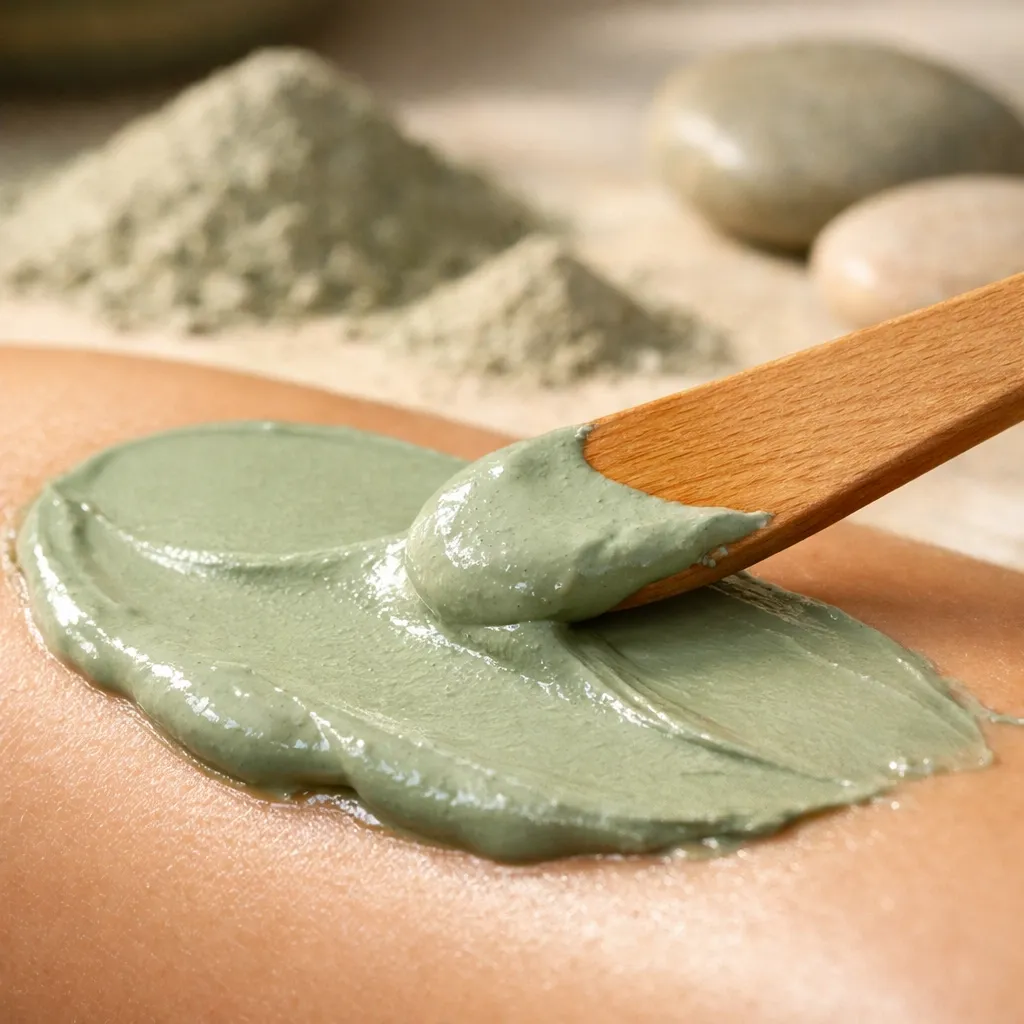
- Apply a Thick Layer: Apply it to the affected area. Don't skim! You want a nice "poultice" thickness.
- Keep it Moist: This is the secret. Use a spray bottle with water to keep the clay damp while it’s on your skin. Leave it for about 5-10 minutes.
- Rinse with Lukewarm Water: Never use hot water, as it strips the skin of natural oils.
- Seal it in: Immediately follow up with a psoriasis-safe moisturizer.
If you’re new to this, check out our complete guide on how to use green clay.
The Science of Healing Clay
The use of clay for skin ailments isn't just "woo-woo" medicine. It’s been used for centuries, and modern science is finally catching up. For instance, scientists have discovered how certain clays kill bacteria, which is crucial for preventing secondary infections in psoriasis plaques.
Furthermore, the "spiritual" and "medicinal" history of clay is well-documented in journals like Clays and Clay Minerals. You can read more about the medicinal history here.
Comparing the Brands
While we love Clayer for its purity, let's look at what else is on the market:
- Aztec Secret: Great for deep pore cleaning on oily skin, but often too drying for psoriasis. (Learn more: Aztec Secret vs. Bentonite).
- Redmond Clay: A solid choice for internal detox, but for topical psoriasis support, French Illite is generally more mineral-dense. (Comparison: Redmond vs. Aztec Secret).
- French Healing Clay: This is a broad category. Many brands sell "French Green Clay" on Amazon, but they lack the heavy metal testing that Clayer provides.
Final Thoughts: Is It Worth It?
If you’re tired of the itch and want a natural way to support your skin’s healing process, green clay is definitely worth a try. It’s a low-risk, high-reward addition to your skincare routine: provided you choose a high-quality, tested product.
Focus on supporting that skin barrier, keeping the clay moist during application, and always, always checking for those safety certifications. Your skin is your largest organ; treat it like the VIP it is.
For more tips on choosing the right clay, head over to our guide on choosing the right green clay or read about green clay in traditional medicine.
Stay green,
Tibs
Want to try the best? Check out Clayer’s Healing Clay Studies to see why we trust them for skin support. If you're an athlete looking for recovery tips, you might also want to visit bestsportrecovery.blog.

