If you’re a dancer, your body isn't just a body, it’s your instrument. Whether you’re hitting the barre for the thousandth time, perfecting a contemporary floor sequence, or spending hours on pointe, you know the literal "grind" that happens to your joints and muscles.
We’ve all been there: the late-night icing of ankles, the Epsom salt baths that only do so much, and the constant search for something that actually speeds up recovery instead of just masking the pain.
Enter the "secret weapon" of elite athletes and performers: French Green Clay. Specifically, the kind of high-quality Illite clay that helps with inflammation and tissue repair. In this guide, we’re diving into why green clay, specifically Clayer, is the gold standard for dancers who need to stay flexible, pain-free, and ready for the next curtain call.
Why Dancers Struggle with Traditional Recovery
Dancers face a unique set of physical challenges. Unlike a weightlifter who might just deal with muscle soreness, a dancer deals with:
- Micro-trauma in the feet: The constant impact on hard floors.
- Joint inflammation: Specifically in the ankles, knees, and hips.
- Lactic acid buildup: That heavy, "lead-like" feeling in the legs after a long rehearsal.
- Skin issues: Blisters, friction burns, and calluses that can get inflamed.
Most recovery methods are passive. You rest, you ice, you wait. But green clay is active. It uses a process of "adsorption" and "absorption" to pull out toxins and reduce swelling in as little as 15 to 20 minutes. If you want to understand the basics before we dive deep, check out Your Complete Guide to Green Clay.
The Magic of Illite Clay for Feet and Joints
Not all clay is created equal. You might have seen "Aztec Secret" or generic Bentonite in the beauty aisle, but for therapeutic recovery, you want Illite.
Illite is a specific type of French Green Clay known for its incredibly high mineral content and its ability to stimulate blood flow. For a dancer, increased circulation means faster tissue regeneration. Research has shown that green clay has significant anti-inflammatory properties, making it a natural alternative to NSAIDs for managing minor sprains and strains.

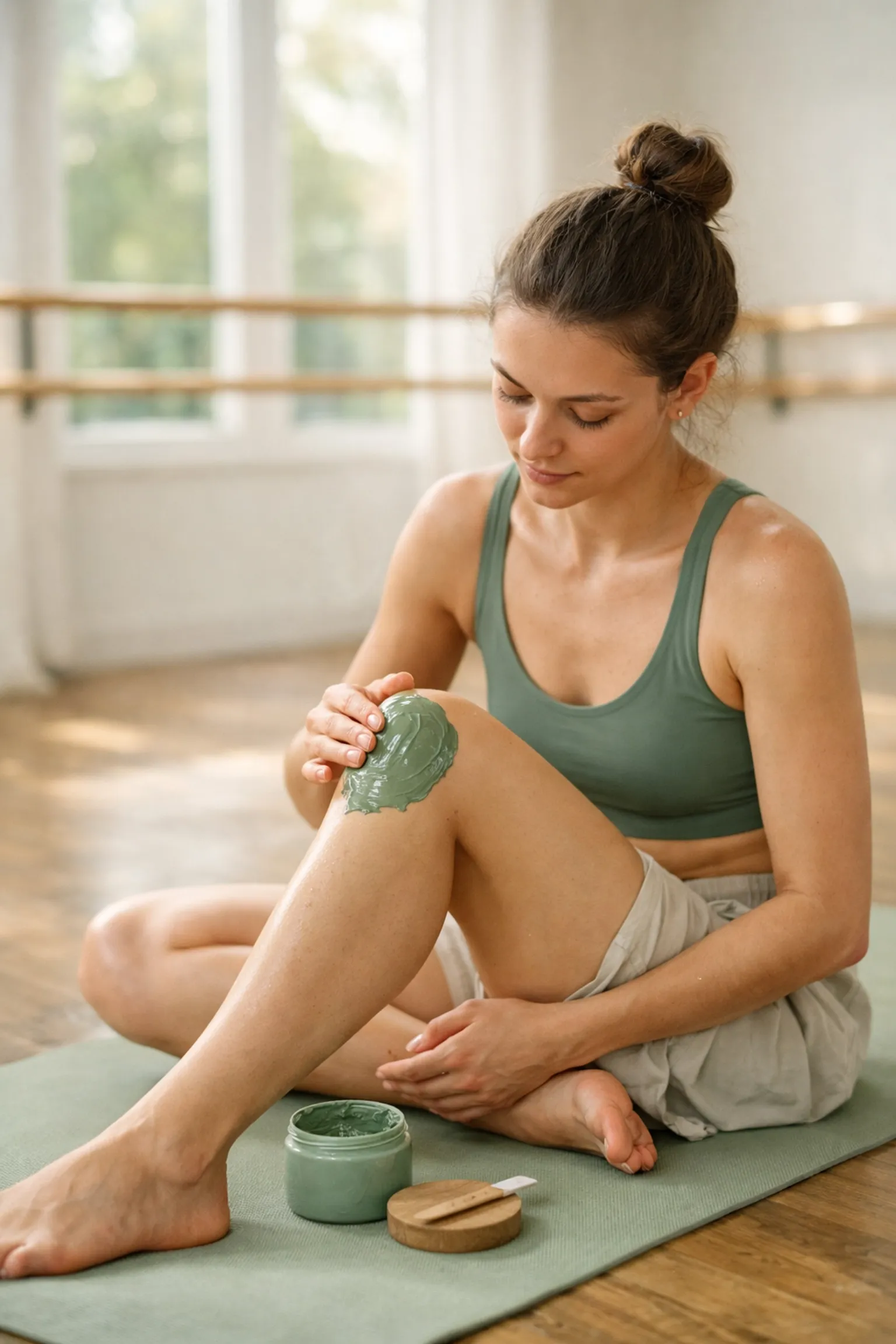
When you apply a clay poultice to a sore ankle, the clay works to:
- Draw out excess fluid: Reducing the "puffiness" around a joint.
- Neutralize lactic acid: Speeding up the recovery of tired muscles.
- Provide essential minerals: Like silica, which is vital for collagen production and tendon health.
To learn more about the science of this specific mineral, read The Ultimate Guide to Illite Clay.
Comparing the Brands: Why Quality Matters
I always tell my friends: don't put just anything on your skin, especially when your pores are open after a sweaty dance session. Many "cheap" clays on the market are not tested for heavy metals. In fact, some studies have found alarming levels of lead in non-certified clays (you can read more about that in this scientific study).
When we look at the big names like Aztec Secret or Redmond, they are often Bentonite-based. While Bentonite is great for a face mask, it’s not always the best for deep tissue recovery.

As you can see from the chart, Clayer stands out because it is one of the few brands that provides rigorous testing and certifications. When you're a professional dancer, you can't risk skin irritation or toxic absorption. You can find more details on this in our breakdown of Clayer vs. Aztec Secret vs. Bentonite.
Clayer: The Top Choice for Dancers
If you’re looking for the "best" green clay, Clayer is the clear winner for sports and dance recovery. It’s the same stuff used by pro surfers, MMA fighters, and yes, professional ballet dancers.
What makes it different?
- Purity: It’s 100% natural and free of heavy metals.
- Certifications: They actually have the French Green Clay Certification to prove where it comes from.
- Ease of Use: Their ready-to-use pastes are a lifesaver when you’re backstage or in a dressing room and don’t have time to mix powders with water.

For a deeper dive into why we recommend them so highly, check out our article on Choosing the Right Green Clay.
The "Dancer’s Recovery" Routine: How to Use It
Ready to try it? Here is the most effective way to use green clay for dance-specific issues.
1. The Ankle Poultice (For Sprains & Swelling)
If you’ve rolled an ankle or it’s just feeling "crunchy," apply a thick layer of Clayer (about 1/4 inch thick) directly to the skin. Wrap it loosely with some plastic wrap or a damp cloth to keep the clay from drying out too fast. Leave it on for 20 minutes, then rinse with lukewarm water.
2. The Full Foot Mask
For those dealing with plantar fasciitis or general foot fatigue, coat the entire bottom of your foot in clay. This helps draw out the heat and inflammation that builds up from jumping and pointe work. For more tips on application, see How to Use Green Clay.
3. Joint Maintenance
Don't wait for an injury. Using a clay mask on your knees and hips once a week can help maintain flexibility by keeping the connective tissues free of chronic low-grade inflammation.
What the Science Says
We aren't just making this up because it feels "earthy." There is real science behind it.
- Bacteria-killing properties: Scientists have discovered how certain green clays can actually kill bacteria, which is great for any open blisters or skin abrasions from floor work (NSF Study).
- Healing Studies: Clayer has been part of specific healing clay studies showing its effectiveness in tissue repair. You can read those here.
- Mineral Composition: The unique mineral makeup of French Green Clay is what allows it to act as a therapeutic agent (Cambridge Study).
Tips for the Road: Clay in Your Dance Bag
If you’re touring or competing, you don’t want to lug around a jar of powder and a mixing bowl. That’s why the Clayer tubes are so popular. They fit right in your dance bag and don't make a mess.
Pro-Tip: If you have a particularly stubborn spot of muscle tightness in your calves, apply the clay and then use a foam roller after you wash it off. You'll find the tissue is much more "giving" and responsive once the inflammation has been reduced.
For more lifestyle tips on using clay, visit bestsportrecovery.blog or clayerworld.com.
Safety First
Is it safe? Generally, yes! French Green Clay is incredibly gentle. However, if you have very sensitive skin, you should check out our guide on Green Clay and Sensitive Skin. Also, while some people use clay internally for detoxing (see Why Food Grade Green Clay Will Change the Way You Detox), for dancer recovery, we primarily recommend topical application for targeted relief.
Final Thoughts
Grace on stage comes from the hard work you do off stage. Taking care of your body with natural, earth-derived minerals isn't just a trend: it's a return to traditional medicine that works (Green Clay in Traditional Medicine).
By incorporating Clayer into your recovery routine, you’re giving your joints and muscles the best possible chance to heal quickly and stay strong. No more "powering through" the pain: start recovering gracefully.
For more information on where to buy and how to get started, head over to thegreenclay.com or explore our sitemap for more specialized articles.

