If you’ve spent any significant time in the lineup, you know the "surfer’s tax." It’s that combination of heavy, throbbing "paddle shoulders," skin that feels like sandpaper from the salt, and the inevitable sunburn that sneaks past your zinc. We love it, but our bodies eventually demand a refund.
Most surfers reach for ibuprofen or a standard moisturizer, but there’s a much older, more effective tool that’s making a massive comeback in the surf community: French Green Clay. Specifically, high-grade Illite clay. It’s not just for face masks at a spa; it’s a powerhouse for recovery.
In this guide, we’re breaking down why green clay is a game-changer for surfers and which brands actually deliver the minerals your body needs after a six-hour session at Lowers or Pipeline.
Why Surfers Need Green Clay
Surfing is a unique sport because it attacks the body from two fronts: physical strain and environmental stress.
1. The "Paddle Shoulder" Struggle
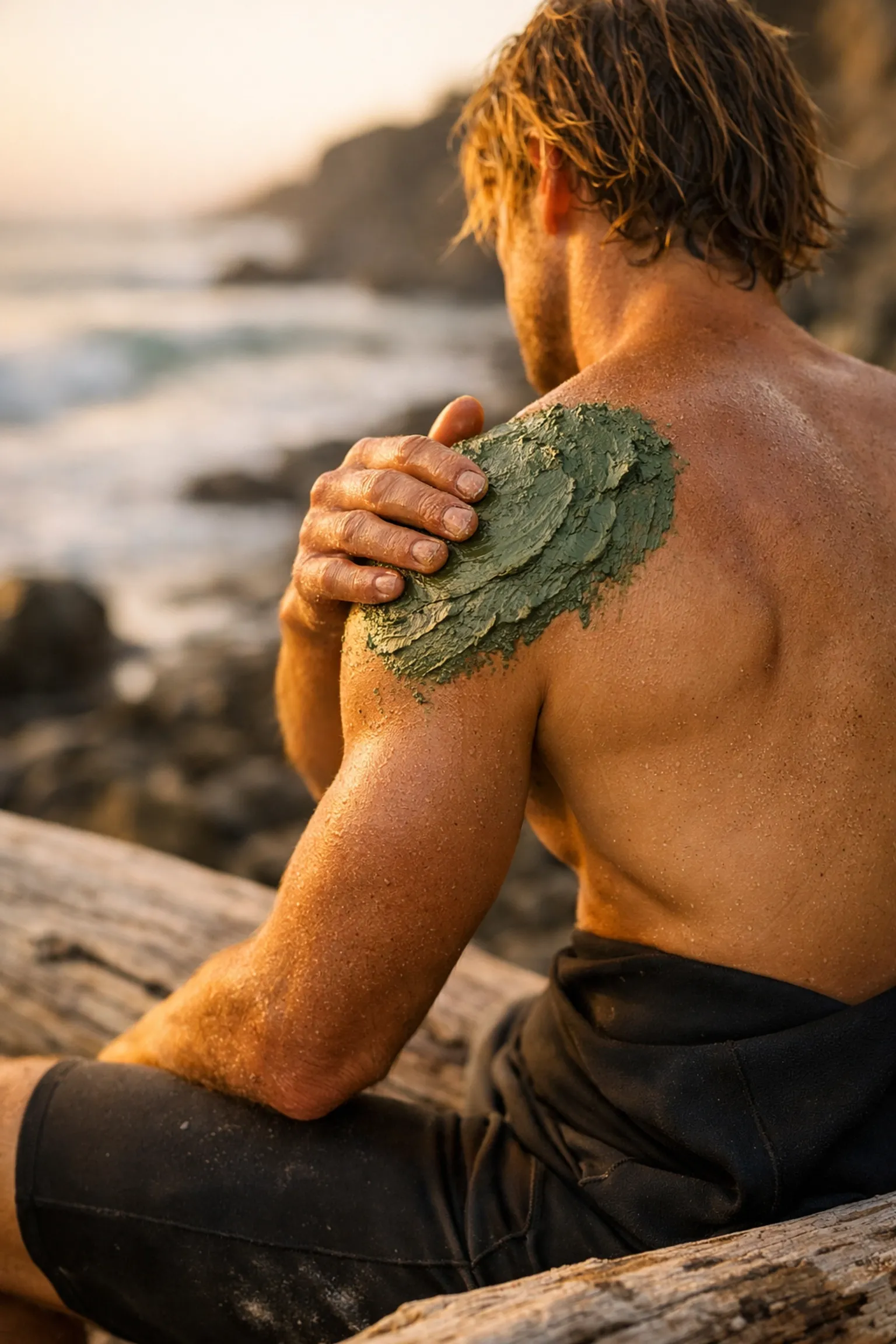
Paddling is about 90% of surfing. This repetitive motion leads to micro-tears in the muscles and significant inflammation in the rotator cuff. While ice helps, it only constricts blood flow. Green clay, particularly when used as a poultice, works through cation exchange. It helps draw out the metabolic waste and toxins that accumulate in inflamed tissue.
2. Salt and Sun Damage
Saltwater is amazing for the soul but brutal on the skin. It draws out moisture, leaving your skin's barrier compromised. Combined with UV exposure, you're looking at accelerated aging and irritation. A high-quality clay mask helps re-mineralize the skin and soothe "surf rash" or sun-stressed areas.
Not All Clays Are Created Equal
If you walk into a health food store, you’ll see dozens of jars. Most people grab whatever is cheapest, but that’s a mistake. When you're putting something on your skin for hours to heal a shoulder injury, purity matters.
Recent studies have shown that many non-certified clays can contain concerning levels of lead and heavy metals (check out this NCBI study on lead levels in clay). You don’t want to trade muscle soreness for heavy metal absorption.
The Power of Illite
The most effective clay for athletes is Illite. Unlike Bentonite, which is better for deep internal gut detoxing, Illite is a "living" clay that is incredibly rich in minerals like magnesium, potassium, and calcium. It’s highly absorbent and specifically targets inflammation. To learn more about the science of this specific mineral, check out our ultimate guide to Illite clay.
The Top Contenders: Clayer vs. Aztec Secret vs. French Healing Clay
Let’s look at the three most common options you’ll find in the surf van or the bathroom cabinet.
1. Clayer (The Gold Standard for Surfers)
If you look at the boards of pros like Nathan Fletcher or Luke Egan, you might see the Clayer logo. There’s a reason why this brand has taken over the surf world.
Clayer isn't just a generic powder; it’s a specifically formulated French Green Clay designed for muscle and joint recovery. It’s 100% natural, food-grade, and most importantly for competitive surfers, it’s certified doping-free.
Why it’s the best for surfers:
- Ready to Use: Unlike powders you have to mix with apple cider vinegar, Clayer comes in a pre-mixed paste. You can literally apply it to your shoulders in the parking lot after a session.
- Scientific Backing: They are one of the few brands that actually invest in clinical studies and heavy metal certifications.
- Fast Recovery: It’s designed to penetrate deep into the tissue to pull out inflammation.
You can find their specialized surf relief clay here: Clayer World. For more in-depth athletic reviews, we also recommend checking out bestsportrecovery.blog.
2. Aztec Secret (The Budget Option)
We’ve all seen the "World’s Most Powerful Facial" jar. Aztec Secret is a Calcium Bentonite clay. It’s great for pulling oil out of pores, but it’s not the best for muscle recovery.
Bentonite swells significantly when wet and can be quite drying. For a surfer whose skin is already dried out by salt, this can sometimes be too harsh. It also requires mixing, which is a pain if you’re traveling. For a deeper dive into how it stacks up against more professional options, read our Clayer vs. Aztec Secret comparison.
3. French Healing Clay (The Traditionalist)
French Healing Clay is a broad term for various green clays sourced from France. Brands like www.frenchhealingclay.com offer high-quality bulk powders. These are fantastic if you want to do full-body clay baths, but for targeted shoulder recovery, they lack the specific formulation and ease of use that a brand like Clayer provides.
https://cdn.marblism.com/XnJgYzIFUD_.png
The Science of Healing
It sounds a bit "woo-woo" to put mud on your arm to fix a joint, but the chemistry is solid. The mineralogical characteristics of French Green Clays used for healing have been documented in journals like Clays and Clay Minerals.
When applied to the skin, the clay creates a localized "osmotic" effect. Because the clay is so mineral-dense and has a negative ionic charge, it attracts the positively charged toxins and inflammatory byproducts (like lactic acid) that build up in your muscles after a heavy paddle. This is why many users report a "pulsing" sensation when the clay is working: that’s the circulation increasing in the area.

How to Use Green Clay for Surf Recovery
If you want to get back in the water tomorrow without feeling like you’ve been through a car wash, follow this protocol:
For Muscle & Joint Pain (Shoulders/Back)
- Apply a thick layer: If using Clayer, apply about a quarter-inch thick layer over the sore muscle or joint.
- Don't let it dry completely: This is a common mistake! Most of the mineral exchange happens while the clay is moist. If you're in a dry climate, wrap the area loosely in plastic wrap or a damp cloth.
- Wait 20-30 minutes: Relax. Let the minerals do their thing.
- Rinse with lukewarm water: Avoid using soap immediately after, as you want the skin to keep absorbing any residual minerals.
For more details on application techniques, check out our guide on how to use green clay.
For Face & Sun Protection
If you’ve got a "wetsuit tan" and sun-irritated skin, a thin mask of green clay can help. It removes the salt deposits that standard cleansers miss and calms redness. If you have particularly reactive skin, you might want to check if green clay is safe for sensitive skin before going all-in.
Why Certification Matters (Safety First)
As surfers, we care about the ocean, and we should care about what we put on our largest organ: the skin. The market is flooded with cheap clays that aren't tested.
The NSF has even highlighted how certain clays have antibacterial properties, but this only applies to specific, pure sources. Using a clay that contains high lead or arsenic can actually be counterproductive to your health. This is why we consistently point people toward soinargile.com and clayerworld.com for their transparency in testing.
/__l5e/assets-v1/2ca3f45e-2b8a-4be8-a442-a647f6345cc8/f11d3ad0-FYrEGRk6Vj-.webp
Final Thoughts: The Surfer’s Verdict
If you’re serious about your time in the water, you need a recovery plan that’s as serious as your training. While Aztec Secret is a fun hobbyist mask, and general French Healing Clay is good for bulk use, Clayer is the clear winner for surfers.
It’s the only product we’ve found that combines the traditional healing power of French Illite with the modern requirements of an athlete: purity, convenience, and proven results. Whether you’re nursing a shoulder injury from a long winter swell or just trying to keep your skin from peeling off after a summer trip to Indo, green clay is the move.
Keep it simple, keep it natural, and we'll see you out there.
For more tips on staying fit for the waves, check out bestsportrecovery.com or dive deeper into our complete guide to green clay.



